


An Opening of the Strait of Hormuz Affects More Than Oil
Key Points
Approximately one-third of helium -- which is used to make semiconductors -- is produced in Qatar.
The war has disrupted production and transport through the Strait of Hormuz.
- These 10 stocks could mint the next wave of millionaires ›
The Strait of Hormuz blockade has caused investors, consumers, and businesses to focus on surging oil prices. Oil affects the cost of every product, since land vehicles, ships, and aircraft need it for fuel. Higher shipping costs result in lower profit margins, and many companies try to pass some of these costs on to consumers.
Although oil gets headlines, tech investors have also been paying attention to the helium disruption caused by the war. Qatar produces about one-third of helium and uses the Strait of Hormuz for transport.
Will AI create the world's first trillionaire? Our team just released a report on the one little-known company, called an "Indispensable Monopoly" providing the critical technology Nvidia and Intel both need. Continue »
While helium isn't a buzzword like oil, it's an essential component for the fabrication of semiconductors. In other words, a sharp decline in the helium supply will translate into fewer artificial intelligence (AI) chips, as well as smartphones and other devices. In late March, The Hill reported that "the war with Iran has disrupted Qatari natural gas production and the helium that is extracted alongside it, while also bringing a key shipping corridor to a halt through the Strait of Hormuz."
On Tuesday, news of a ceasefire surfaced. On Wednesday morning, The Wall Street Journal reported that "Iran's foreign minister said that passage through the strait will be possible 'via coordination with Iran’s Armed Forces.' [U.S. President Donald] Trump said the U.S. 'will be helping with the traffic buildup' in the strait."
AI investors will be closely watching what comes next.
What AI investors are watching
AI chipmakers like Nvidia rely on helium for their chips. While you won't find helium inside a chip, the element is critical for chip production. Less available helium would result in fewer chips, and while demand for Nvidia's chips might remain insatiable, that demand wouldn't matter if the company can't produce them quickly enough.
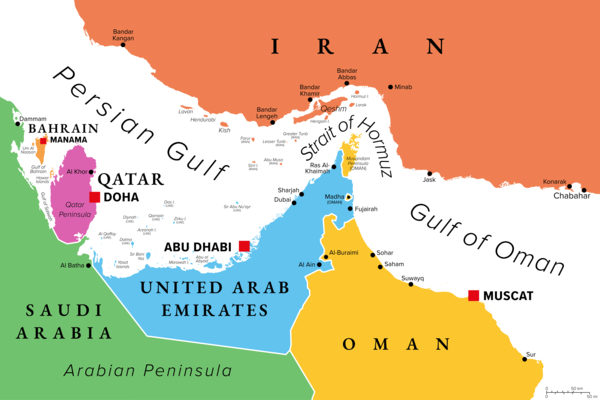
Image source: Getty Images.
In addition to the movement of ships through the Strait of Hormuz, investors will be watching how quickly Qatar can get production facilities damaged in the war back online. It's also not yet clear if the ceasefire will hold or what will happen next.
And it's not just AI chipmakers like Taiwan Semiconductor Manufacturing Co. and top chip names like Nvidia that feel the impact of helium disruption. Micron's memory storage solutions could also be impacted if Nvidia can't produce as many chips as expected.
Fewer chips could also translate into lower revenue for liquid-cooling solutions provider Vertiv, which generates most of its business from AI chip demand.
Any reduced production could also disrupt demand for AI data centers and the energy that's needed to power those data centers. These issues will likley be short-term, since the AI boom has translated into meaningful revenue growth and innovative products across multiple companies. The long-term thesis is intact, but it faces some meaningful hurdles in the short run thanks to the Iran war.
If you have meaningful exposure to tech stocks, you'll have to closely monitor the situation, but you shouldn't rush to sell. Selling out of panic is one of the biggest mistakes an investor can make.
Where to invest $1,000 right now
When our analyst team has a stock tip, it can pay to listen. After all, Stock Advisor’s total average return is 928%* — a market-crushing outperformance compared to 186% for the S&P 500.
They just revealed what they believe are the 10 best stocks for investors to buy right now, available when you join Stock Advisor.
See the stocks »
*Stock Advisor returns as of April 8, 2026.
Marc Guberti has no position in any of the stocks mentioned. The Motley Fool has positions in and recommends Micron Technology, Nvidia, Taiwan Semiconductor Manufacturing, and Vertiv. The Motley Fool has a disclosure policy.
Recommended Articles


