


Bitcoin Falls Below $63,000; Can US-Iran Negotiations Reverse the Downtrend?
TradingKey - Bitcoin fell sharply last week, testing the short-term defense line at $62,000, with the outcome of US-Iran negotiations becoming a key factor.
On August 3, Bitcoin ( BTC) extended its recent downward trend, falling below the $63,000 mark. Over the past 24 hours, the price of Bitcoin has dropped by more than 1%, temporarily trading at $62,731. Over the past week, impacted by the delay of the CLARITY Act, Bitcoin's price has continued to pull back, recording a cumulative decline of 4%.
Last week, reports emerged that the US Senate had suspended its review of the Digital Asset Market Clarity Act (CLARITY Act), which was followed by pressure from the Trump administration. For instance, SEC Chairman Paul Atkins and Treasury Secretary Scott Bessent published statements calling on the Senate to vote as soon as possible. However, no corresponding progress has been observed so far, which means the bill will not be able to enter the full floor vote before the congressional summer recess as expected.
The bill, highly anticipated by the crypto market and institutional investors, was designed to clearly delineate the regulatory jurisdictions of the SEC and CFTC over crypto assets, providing a clear compliance framework for decentralized finance (DeFi) and the entry of institutional capital. However, adjustments to the US Senate's schedule abruptly cooled expectations for the accelerated implementation of the compliance bill, prompting some institutional funds and short-term profit-takers—who traded on the compliance theme—to cash out at highs and move to the sidelines, directly creating overhead selling pressure on BTC prices.
Currently, Bitcoin remains within the range of $58,000 to $67,000, currently touching the midline of this consolidation range. If it falls further below this support level, it will continue to decline and test the bottom at $58,000. Conversely, if it holds this position, it is expected to rise again and challenge the high of $67,000.
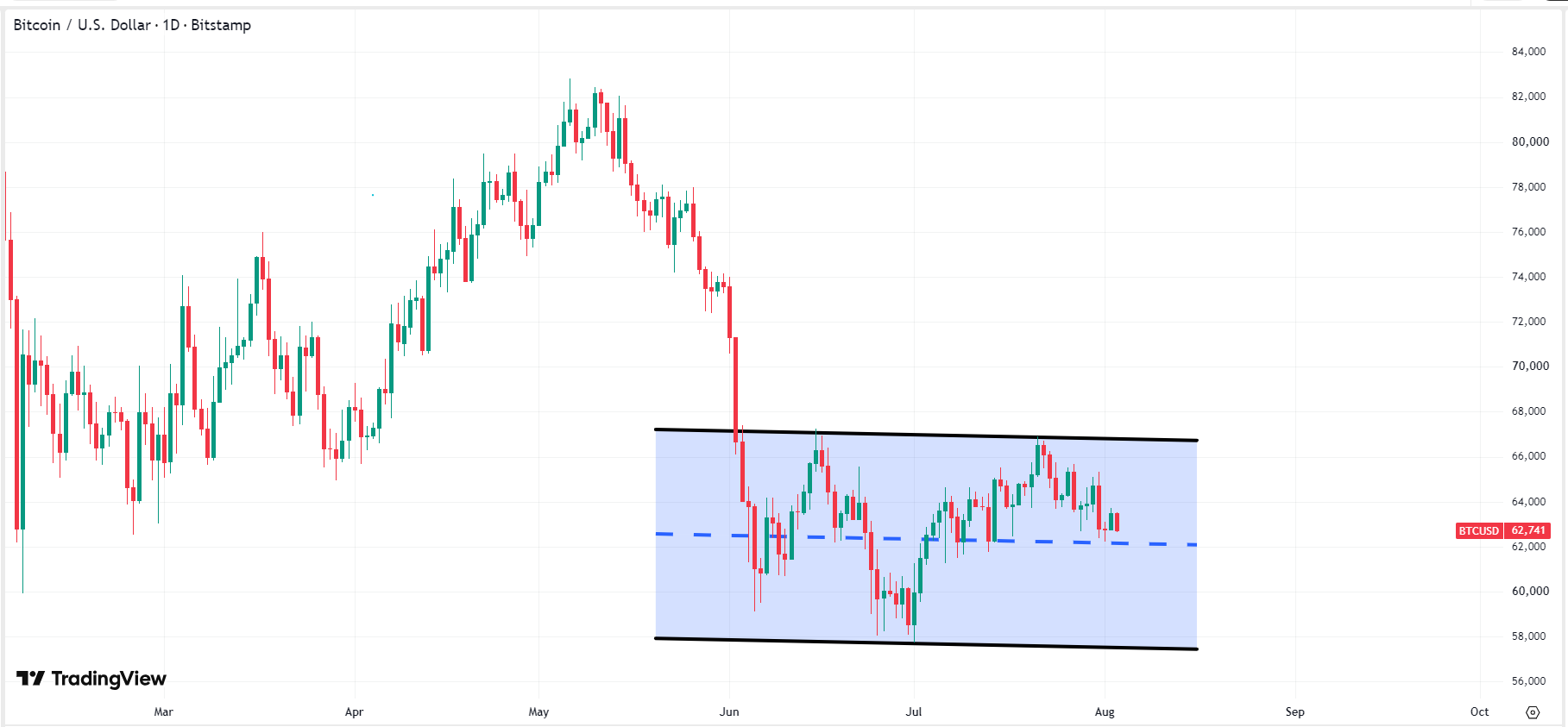 Bitcoin Price Chart, Source: TradingView
Over the weekend, US President Trump stated that US-Iran negotiations would begin today. If easing signals are released during the negotiations and geopolitical crises cool down, market risk aversion will significantly recede, and market liquidity and risk appetite will recover accordingly, thereby driving a technical rebound for Bitcoin.
Over the long term, breakthroughs in US-Iran negotiations are typically accompanied by the stabilization or decline of crude oil prices, which helps ease global inflationary pressures and boosts market expectations for future interest rate cuts by the Federal Reserve (Fed). A low-interest-rate environment is precisely the core catalyst for the strength of cryptocurrencies and tech stocks. Going forward, close attention should be paid to the dynamics of the US-Iran negotiations; whether a substantive ceasefire or a breakthrough in talks occurs will determine Bitcoin's near-term trajectory.
Recommended Articles


