


Why isn't Bitcoin crashing due to the Iran war?
After the US and Israel struck Iran, the consensus among most experts was for Bitcoin and the crypto market to see another round of sharp declines. Well, it didn’t happen. And almost one week afterward, crypto appears to be weathering the storm much better than other asset classes considered risky. Why is Bitcoin proving to be an outlier?
Since the COVID-19 pandemic, Bitcoin, and the crypto market by extension, has often faltered upon signs of geopolitical tensions or global uncertainties, pushing it into the risk-on asset class alongside stocks.
During COVID, Bitcoin fell alongside stocks and lost around 50% before later recovering. The cryptocurrency has shown similar sensitivity to geopolitical shocks, dropping about 8% after Iran’s attack on Israel in April 2024 and falling sharply again in early 2025 after the Liberation Day tariff announcements. More recently, the ongoing crypto market winter has erased over half the value of major digital assets, highlighting how geopolitical tensions and macroeconomic uncertainty can strongly impact cryptocurrency markets.
Bitcoin posts a contrarian move, outperforming Gold and equities
Despite a large sample of consistent underperformance during geopolitical tensions, Bitcoin has behaved somewhat differently over the past few days following the resumption of Middle East tensions.
-1772808815395-1772808815397.png)
In the same period, the S&P 500 has dropped by 1.4% while Gold and Silver have fallen by 5% and 10%, respectively. But what's different this time?
Under current market conditions, it's difficult to point to one event or metric as the driving force behind the top crypto's outperformance. A combination of several factors could be responsible.
From oversold conditions to Jane Street
Before the February 28 strike, Bitcoin had experienced a roughly 50% drawdown spanning nearly five months. The period was laced with strong distribution from long-term holders (LTHs), who booked profits based on Bitcoin's historical cyclical nature, and the washing out of retailers who are largely panic sellers.
At the peak of the sell-off, LTHs' distribution reached a 30-day rolling average of 1.2 million BTC while exchange-traded funds (ETFs) offloaded 90K BTC, according to K33 data.
"Bitcoin exposure has already been significantly de-risked by the investors most likely to respond to the broader implications of rising tensions in the Middle East, enabling BTC to deliver outlier performance relative to other asset classes," wrote K33 Head of Research Vetle Lunde in a March 3 report.
-1772808979064-1772808979065.png)
Despite Gold being the natural safe-haven option, overbought conditions could be prompting caution among investors, leading them to seek alternative commodity options. And what asset best fits that description than an oversold Bitcoin, often touted as “digital Gold."
Inflows across US spot Bitcoin ETFs, which pulled in $1.14 billion between March 2-4, according to SoSoValue data, aligns with the argument.
The top crypto was once considered a safe-haven asset in its early years, often rallying in the face of geopolitical tensions. However, its rising correlation with software stocks and crashes during recent geopolitical periods highlighted earlier has seen that narrative fade. But maybe the digital Gold could be in for a comeback.
Another section of the market believes Bitcoin's strength is largely tied to lawsuits against high-frequency trading firm Jane Street for allegedly playing a role in the collapse of Terra/Luna. Many accused the firm of suppressing Bitcoin's price through a systematic "10 AM dump" during US hours to hedge ETF exposure. Although a few top experts have discarded the "10 AM dump" as a conspiracy theory, Bitcoin's improvement since Jane Street was slammed with the suit is giving credence to the allegations.
Bitcoin’s rise may be short-lived
But let's not get ahead of ourselves.
Bitcoin has resumed its correlation with stocks, dropping 4% alongside a decline in stocks on March 5, while BTC ETFs recorded $227.8 million in outflows amid further escalation of Middle East tensions.
Former BitMex CEO and co-founder Arthur Hayes noted that recent crypto gains could be a “dead cat bounce,” citing correlations with software stocks.
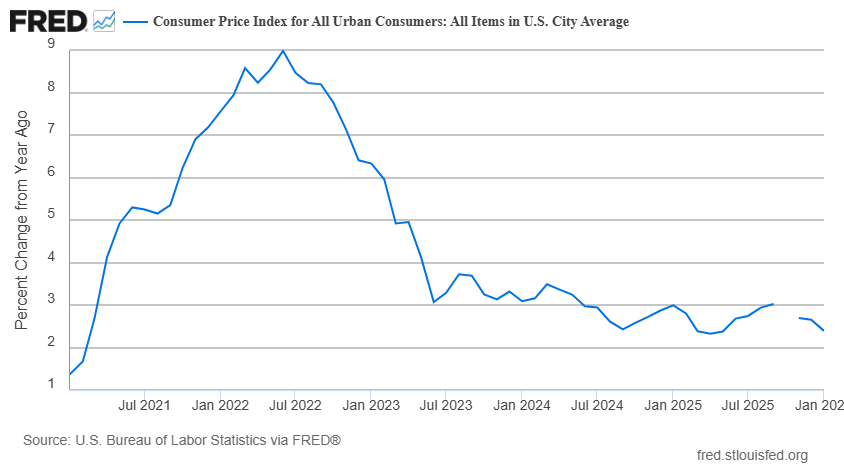
Bitcoin also faces the medium-term risk of a hawkish Federal Reserve capping price growth, as rising Oil prices could push inflation higher.
Citing a recent Fed study, The Kobeissi Letters founder Adam Kobeissi highlighted in an X post on March 5 that a $10 jump in Oil prices could push inflation up by 20 basis points.
From an on-chain perspective, CryptoQuant's Head of Research, Julio Moreno, shares a similar view. In a report on March 5, he noted that Bitcoin's push above $73,000 is likely a short-term relief rally rather than the beginning of a new bullish phase as the firm's Bitcoin Bull Score Index sits at 10 out of 100.
"Bitcoin is still inside a bear market, despite the recent price rally," said Moreno. "Fundamental and technical indicators still point to a bear market environment [...] As such, the current rally is best interpreted as a relief rally inside the ongoing bear market."
Bitcoin’s recent resilience may hint at a shifting narrative, but it is far too early to declare victory. For now, the rally looks more like a temporary divergence than a confirmed trend, with geopolitics and Fed policy still holding the key to Bitcoin’s short-to-medium term outlook. The comeback of the digital Gold narrative will have to wait.
Recommended Articles


