


Morgan Stanley Stock (MS) Closed Down by 3.16% on Aug 20: Drivers Behind the Movement
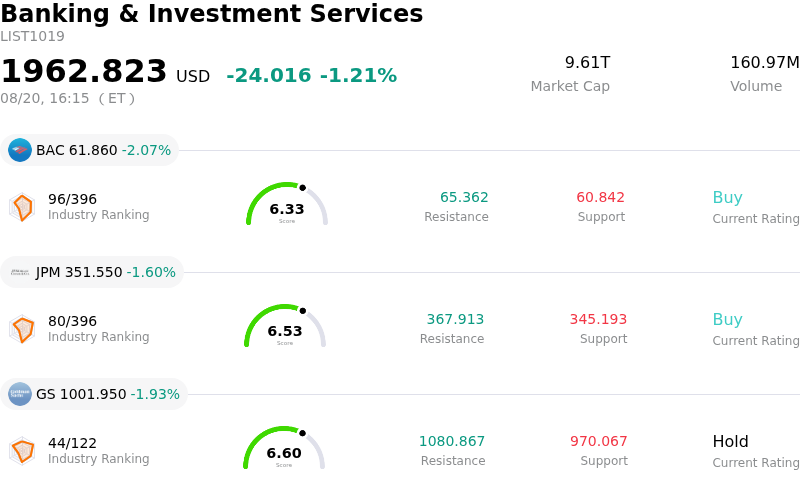
Morgan Stanley (MS) closed down by 3.16%. The Banking & Investment Services sector is down by 1.21%. The company underperformed the industry. Top 3 stocks by turnover in the sector: Bank of America Corp (BAC) down 2.07%; JPMorgan Chase & Co (JPM) down 1.60%; Goldman Sachs Group Inc (GS) down 1.93%.
What is driving Morgan Stanley (MS)’s stock price down today?
Macroeconomic factors and monetary policy uncertainty drove selling pressure across major financial institutions, negatively affecting Morgan Stanley. The recent release of Federal Reserve meeting minutes and shifting expectations around interest rate trajectories led to volatility in U.S. Treasury yields. Rate uncertainty often compresses net interest margins across wealth management segments while dampening debt and equity capital markets activity. As financial sector equities faced broader market weakness, investment banking heavyweights experienced notable intraday selling momentum.
Technical factors accelerated the downward movement as the stock breached key short-term moving average support levels. The breach of critical technical thresholds triggered automated sell programs and systematic stop-loss activity, exacerbating intraday price volatility. Short-term momentum indicators entering soft territory prompted risk-averse institutional desk traders to trim exposure, leading to liquidity-driven downside pressure during the trading session.
From an institutional portfolio perspective, investors are balancing Morgan Stanley's strategic initiatives against macroeconomic realities. While strategic announcements such as long-term U.S. innovation infrastructure commitments and steady preferred stock distributions underline fundamental business strength, macro sensitivity remains high. Near-term caution regarding wealth management net fee growth and the timing of corporate deal flow execution led institutional asset managers to reallocate capital into defensive assets ahead of upcoming economic catalysts.
Looking ahead, market sentiment surrounding Morgan Stanley will depend on the stabilization of interest rate expectations and sustained capital market recovery. While the firm's dual-engine model—anchored by recurring wealth management fees and opportunistic institutional securities trading—provides resilient cash flow, near-term volatility will likely persist until clearer monetary policy direction emerges and broader equity markets consolidate.
Technical Analysis of Morgan Stanley (MS)
Technically, Morgan Stanley (MS) shows a MACD (12,26,9) value of -0.902, indicating a neutral signal. The RSI at 40.127 suggests neutral condition and the Williams %R at 99.250 suggests oversold condition. Please monitor closely.
Media Coverage of Morgan Stanley (MS)
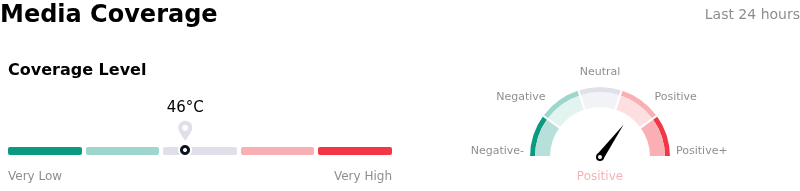
In terms of media coverage, Morgan Stanley (MS) shows a coverage score of 46, indicating a moderate level of media attention. The overall market sentiment index is currently in bullish zone.
Fundamental Analysis of Morgan Stanley (MS)
Morgan Stanley (MS) is in the Banking & Investment Services industry. Its latest annual revenue is $114.74B, ranking 3 in the industry. The net profit is $16.25B, ranking 2 in the industry. Company Profile
Over the past month, multiple analysts have rated the company as Buy, with an average price target of $241.11, a high of $262.00, and a low of $200.00.
More details about Morgan Stanley (MS)
Company Specific Risks:
- Valuation Multiples and Downside Volatility: Following recent equity gains, Morgan Stanley trades at an elevated price-to-book valuation premium relative to money-center peers, leaving shares vulnerable to intraday selling pressures and sharp re-ratings if market volatility or capital market activity cools.
- Deceleration in Wealth Management Fee-Based Flows: Recent underlying operating metrics indicate decelerating growth in fee-based asset inflows within the Wealth Management unit and weaker long-term net inflows in Investment Management, raising institutional concerns regarding the sustainability of recurring wealth advisory fees.
- Credit Underwriting and Capital Exposure in AI Infrastructure: As a primary lead arranger for massive debt financing initiatives across data centers and artificial intelligence hyperscalers, Morgan Stanley faces heightened credit exposure and spread-widening risk if borrower cash flow generation lags behind heavy capital expenditure commitments.
- Regulatory Oversight and Anti-Money Laundering Probes: Scrutiny from federal regulators—including the SEC, Treasury, and Federal Reserve—regarding wealth management client onboarding practices, E*TRADE platform integration, and anti-money laundering (AML) compliance creates lingering legal overhead and potential financial penalties.
Recommended Articles


