


USD/JPY (USDJPY) is up 0.51% on Jul 23: The Reason Has Emerged
USD/JPY (USDJPY) is up 0.51% at Jul 23 10:00(ET), now at $163.952, with a 7-day up of 0.97%.
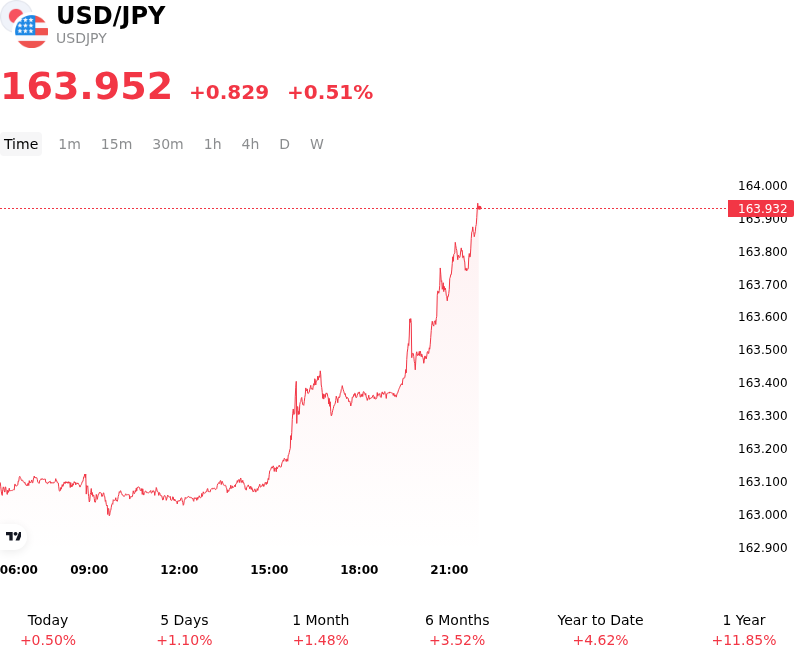
What is driving USD/JPY (USDJPY)’s stock price up today?
The appreciation in USDJPY is primarily driven by a widening of the yield differential between U.S. Treasuries and Japanese Government Bonds, as market participants recalibrate their expectations for the Bank of Japan’s policy trajectory. Despite persistent inflation in Japan, recent communications from BoJ officials have signaled a more cautious approach to quantitative tightening and interest rate hikes than previously anticipated. This perceived dovishness has triggered a liquidation of long-yen positions by institutional investors who had been hedging against a more aggressive normalization of Japanese monetary policy.
Simultaneously, the U.S. Dollar is finding renewed support from resilient macroeconomic data, particularly in the labor market and services sector, which has led to a hawkish repricing of the Federal Reserve’s terminal rate. As investors push back expectations for imminent rate cuts in the United States, the widening spread between the federal funds rate and the BoJ’s policy rate continues to favor carry trade strategies. This capital outflow from the yen into higher-yielding dollar-denominated assets remains a fundamental headwind for the Japanese currency.
The move is further exacerbated by shifts in global risk sentiment. A rebound in equity markets and stabilizing energy prices have reduced the demand for the yen as a safe-haven asset. Furthermore, technical factors are playing a role as USDJPY clears key psychological resistance levels, triggering stop-loss orders and momentum-driven buying. While Japanese authorities have previously expressed concern over excessive currency volatility, the lack of immediate verbal intervention or concrete steps toward yen-buying operations has allowed the pair to maintain its upward trajectory.
Looking ahead, the market remains highly sensitive to the upcoming central bank policy meetings. Investors are closely monitoring whether the Bank of Japan will provide a clearer timeline for reducing its bond purchases, which remains the primary risk to the current USDJPY upside. However, as long as the U.S. economy demonstrates structural resilience and the Fed maintains a restrictive stance, the path of least resistance for the pair appears skewed to the upside, supported by structural capital flows and interest-rate arbitrage.
Technical Analysis of USD/JPY (USDJPY)
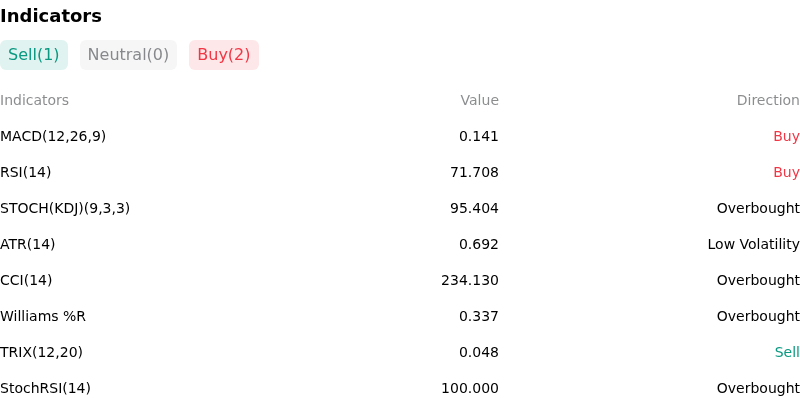
Technically, USD/JPY (USDJPY) shows a MACD (12,26,9) value of 0.141, indicating a buy signal. The RSI at 71.708 suggests buy condition and the Williams %R at 0.337 suggests overbought condition. Please monitor closely.
More details about USD/JPY (USDJPY)
Recent Events and Risks:
- Japanese Ministry of Finance Intervention Risk: Heightened verbal warnings from Japanese officials regarding "excessive" currency fluctuations have increased the immediate threat of direct MoF market intervention, creating significant downside tail risk for USDJPY longs and potential for sudden, high-magnitude liquidity shocks.
- Bank of Japan Quantitative Tightening Speculation: Emerging reports suggesting that BoJ policymakers are considering a formal reduction in monthly JGB purchases at the upcoming policy meeting have applied upward pressure on Japanese yields, threatening to narrow the US-Japan interest rate differential and trigger a carry trade unwind.
- US Economic Softening and Yield Compression: Recent downside surprises in US manufacturing and labor market data have stoked fears of a "hard landing" or a more aggressive Fed pivot, creating volatility as traders reposition for lower US Treasury yields which diminishes the dollar's primary support factor against the yen.
- Geopolitical Flight-to-Safety Flows: Escalating tensions in global geopolitical theaters have increased the risk of sudden risk-off sentiment; as a traditional safe-haven currency, any spike in global instability typically triggers rapid yen appreciation and a sharp technical breakdown in the USDJPY pair.
Recommended Articles


