


US Cocoa Futures (COCOA-F) Moved Sharply on Jul 7: Inventories, the Dollar, or Geopolitics?
US Cocoa Futures (COCOA-F) is up 2.31% at Jul 7 04:55(ET), now at $5846.5, with a 7-day up of 15.55%.
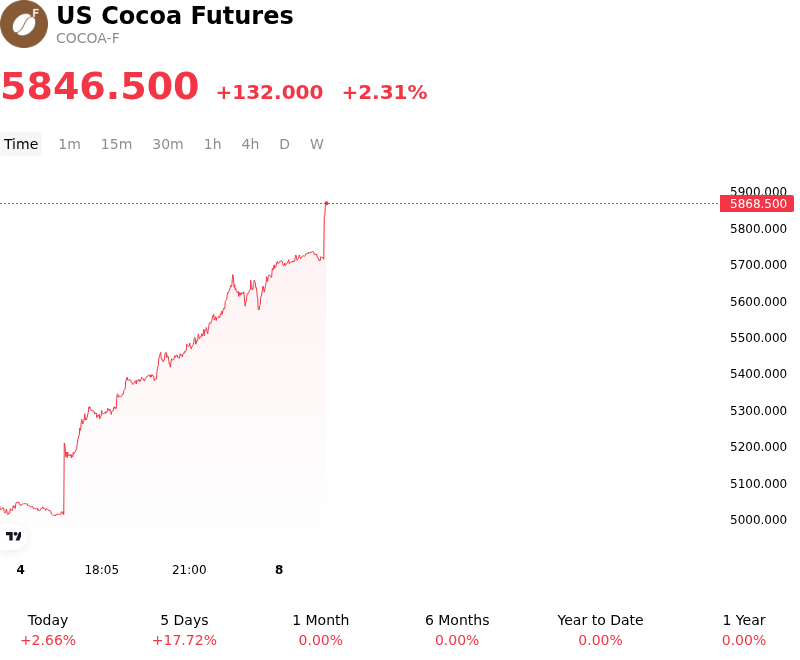
What is driving US Cocoa Futures (COCOA-F)’s stock price up today?
Cocoa futures continued their upward trajectory, driven primarily by mounting supply-side anxieties in key West African producing nations. The market is increasingly pricing in a significantly tighter supply outlook for the upcoming season, prompting short-covering and sustained buying interest from institutional market participants.
Unfavorable weather conditions across Côte d’Ivoire and Ghana remain the dominant catalyst. Persistent heavy rainfall over the last several weeks has saturated soils and flooded major arterial roads, severely disrupting the movement of beans from remote farming regions to coastal export ports. Beyond immediate logistical constraints, the excessive moisture has heightened concerns over crop health, as prolonged dampness increases the risk of fungal diseases, such as black pod and brown rot, which can drastically reduce agricultural yields.
These immediate wet-weather disruptions are compounding structural anxieties over the medium-term supply balance. Early field surveys for Côte d’Ivoire’s crop point to below-average cherelle formation, signaling poor pod development for the main harvest beginning in September. Preliminary estimates suggest Côte d'Ivoire's output could drop significantly to approximately 1.8 million metric tons, representing a steep decline from previous expectations. Compounding these concerns, meteorological agencies have flagged the potential emergence of a strong El Niño pattern. For West Africa, El Niño typically threatens the later stages of the growing season with hot, dry Harmattan winds that deplete soil moisture and severely stress young cocoa trees.
While recent exchange-certified inventory levels have remained somewhat elevated and historical demand indicators showed some price-induced softening earlier in the year, the threat of immediate harvest shortfalls has shifted the focus of market participants back toward structural deficits. Speculative short-covering has further accelerated the upward price momentum. Given the extreme geographical concentration of global cocoa production, structural supply risks—characterized by aging trees and persistent disease vulnerability in West Africa—are outweighing any bearish demand signals, prompting a significant repricing of risk premiums across the forward curve.
More details about US Cocoa Futures (COCOA-F)
Recent Events and Risks:
- Rising Exchange-Certified Inventories: ICE-monitored cocoa warehouse stocks have climbed to a near two-year high of 3,035,471 bags, providing a physical supply buffer that continues to weigh on futures and cap upward momentum.
- Expanding Port Shipments from Ivory Coast: Stronger-than-expected physical flows show Côte d'Ivoire port arrivals and shipments reached 2.04 million metric tons for the marketing year through late June, representing a 20% year-over-year increase that signals abundant near-term export availability.
- Severe Contraction in European and North American Demand: Grindings data—the industry’s primary metric for raw demand—revealed a sharp 7.8% year-over-year decline in Europe (reaching a 17-year low) and a 3.8% drop in North America, as chocolate manufacturers aggressively cut bar sizes and reformulated products to limit cocoa usage.
- Currency-Driven Pricing Pressure: Strengthening in the British pound against the U.S. dollar has accelerated intraday liquidation and selling pressure on London ICE cocoa futures, directly undercutting the value of contracts priced in sterling.
Recommended Articles


