


Strait of Hormuz Blockade: JPM Warns Crude Production May Halt After 25 Days. How Will US-Iran Conflict Trajectory Affect Global Oil Prices?

 Trending Articles
- Today’s Market Recap: US and Iran Signal Willingness to End Conflict, Three Major US Stock Indexes Surge, Dollar Ends Five-Day Winning Streak
- Trump Withdrawal Intent Reshapes Liquidity, Bitcoin Breaks $68,000 Mark
- Trump National Address ‘About-Face,’ Bitcoin Slumps Back to $66,000
- Gold Second-Quarter Outlook: Safe-Haven Failure or Pricing Logic Reshaping? Can Gold Enter a Major Rally?
- Gold Price Forecast: XAU/USD opens lower around $4,450 on fears of widening Iran conflicts
- USD/JPY Hits 160.00 Mark, Will Japanese Government Intervene? Will the Currency’s Rally Be Contained?
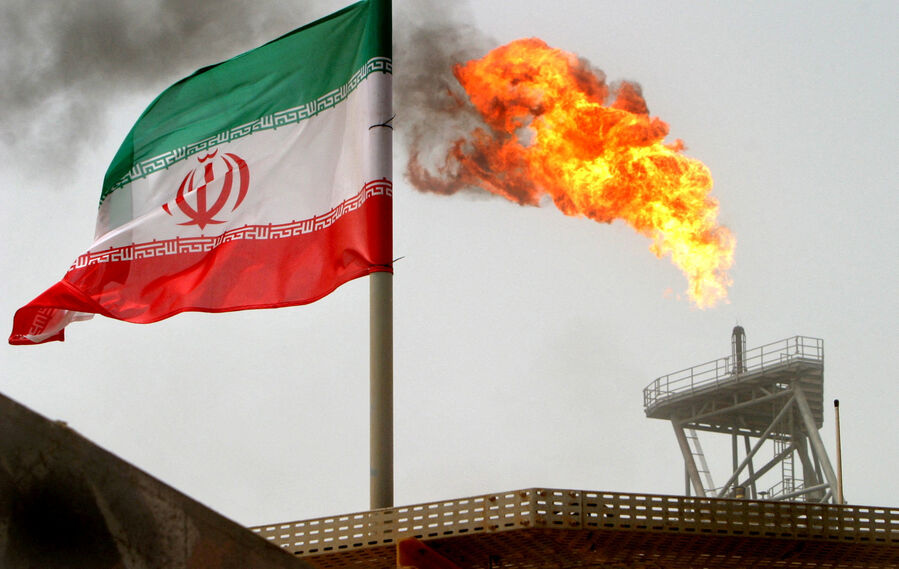
TradingKey - Following the announcement of a ban prohibiting all vessels from transiting the Strait of Hormuz on the evening of February 28, JPMorgan (JPM) warned that if the Strait of Hormuz is completely blocked, the combined onshore and offshore storage capacity of Middle Eastern oil-producing nations could only absorb approximately 25 days of stranded production.
JPMorgan stated that if the blockage persists, storage bottlenecks will lead to forced production shutdowns, resulting in a physical disruption of crude oil supply.
Currently, while the Strait of Hormuz has not been officially blocked, tanker traffic has effectively ceased. The Strait is a vital chokepoint for global crude oil transport, with approximately one-fifth of the world's daily crude oil and liquefied natural gas (LNG) typically passing through it.
Crude Oil Production Can Only Be Sustained for 25 Days at Most
By calculating the storage capacities of seven Gulf oil producers (Saudi Arabia, the UAE, Iraq, Kuwait, Qatar, Oman, and Iran), JPMorgan estimates that the onshore crude storage capacity of these nations is approximately 343 million barrels, equivalent to about 22 days of stranded output. Additionally, roughly 60 empty tankers in the Gulf region can store a combined total of about 50 million barrels.
JPMorgan predicts that in a scenario where the Strait is completely blocked, Middle Eastern oil producers can only maintain normal production for a maximum of 25 days. Once the blockage exceeds 25 days, crude storage will reach saturation, forcing producers to cut output or even halt production entirely.
How Will the US-Iran Conflict Evolve? Crude Oil Outlook Forecast
On February 28, U.S. and Israeli forces launched large-scale attacks on Iran, and tensions continue to escalate. Where will this conflict ultimately lead?
Trump stated bluntly that to achieve the goal of peace in the Middle East and the world, bombings will continue unabated. Although Iranian leader Khamenei has been killed, Linda Robinson, a senior fellow at the Council on Foreign Relations (CFR), stated that eliminating Khamenei is not synonymous with regime change; the Revolutionary Guard is the system itself, and the likelihood of achieving regime change through airstrikes alone is extremely low.
Robinson predicts that Trump will either have to scale back his objectives or face the risk of a prolonged military engagement. Ellie Geranmayeh, a senior policy fellow at the European Council on Foreign Relations (ECFR), also stated that this could mark the beginning of a new protracted war for the U.S. in the Middle East.
If the US-Iran conflict evolves into a long-term struggle, oil prices could remain volatile at high levels, driven by the dual factors of geopolitical risk and crude oil supply disruptions.
Saul Kavonic, a senior energy analyst at MST Marquee, stated that a prolonged disruption of most oil and LNG shipments through the Strait of Hormuz would have an impact more than three times greater than the two oil price shocks triggered by the 1970s Arab oil embargo and the Iranian Revolution. Oil prices could hit record highs, and global natural gas shortages would be severely exacerbated.
In this context, Citigroup (C) has raised its short-term Brent crude price forecast to $85, with the possibility of prices surging to $120 if regional oil and gas infrastructure is targeted.
However, as negotiations restart, the outlook for the US-Iran conflict could turn optimistic; Trump revealed on March 1 that he had agreed to talks with Iran's interim leadership. If an agreement is eventually reached and geopolitical risks subside, oil prices will return to fundamentals against a backdrop of strong global crude supply growth and weak demand.
Read more
* The content presented above, whether from a third party or not, is considered as general advice only. This article should not be construed as containing investment advice, investment recommendations, an offer of or solicitation for any transactions in financial instruments.


