




How to Read an Economic Calendar and Actually Use It Before a Trade (2026 Guide)

Most traders lose money around data releases not because they got the number wrong, but because they had no idea the number was coming. FOMC rate decisions alone generate average intraday swings of 1.2% in the S&P 500 and 80 to 120 pip moves in EUR/USD. Nonfarm Payrolls reports have triggered opening gaps exceeding 0.5% in equity futures on 73% of releases. These are not random moves. They happen on a schedule, and every trader has access to that schedule for free.
An economic calendar is that schedule. It tells you what data is coming, when it drops, what the market expects, and how big the potential impact is. Traders who check it before every session avoid nasty surprises. Traders who ignore it get stopped out by moves they never saw coming.
This guide covers what an economic calendar is, how to read it properly, which events matter most for AUD/USD and other instruments Australian traders follow, and how to actually use it to make better trading decisions. You will also find the Mitrade economic calendar built directly into the platform so you never need to check a separate tool mid-session.
What Is an Economic Calendar?
An economic calendar is a real-time schedule of upcoming economic data releases and central bank events that are likely to move financial markets, including forex, indices, commodities, and crypto.
Each event on the calendar shows four pieces of information. The release time tells you exactly when the data drops. The impact rating, usually shown as low, medium, or high, tells you how much the market is likely to move. The forecast shows what analysts expect the number to be. The previous figure shows what the last reading was.
When the actual number comes out, it appears on the calendar instantly and you compare it against the forecast. That gap between what was expected and what actually happened is what moves prices.
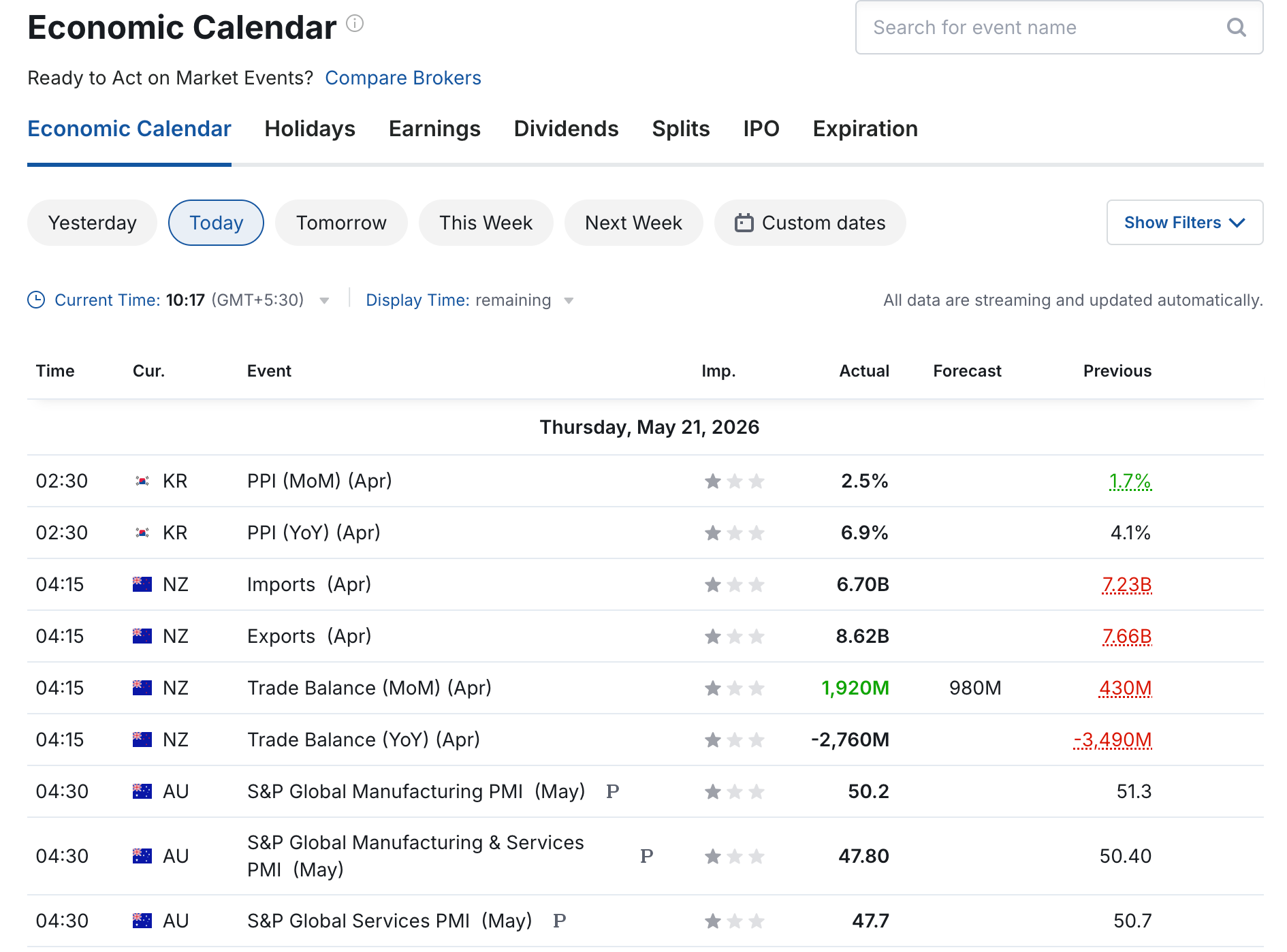
Source: Investing.com Economic Calendar
How to Read the Impact Levels
Not every event on the calendar deserves your attention. Setting your filter to medium and high impact only eliminates roughly 40 to 50% of remaining events and leaves you with only the releases that genuinely move markets.
Most calendar platforms use a colour or star system. High impact events are red or marked with three stars. These are the releases that can move a currency pair 50 to 150 pips in minutes and send indices up or down by 1% or more. Medium impact events are orange or two stars. These can cause short bursts of volatility but rarely change the trend on their own. Low impact events are grey or one star. You can safely ignore these most of the time.
If you trade US equities and major forex pairs, limiting your calendar to the United States, Eurozone, United Kingdom, Japan, and China eliminates roughly 60% of listed events and keeps your focus on the releases that actually affect your instruments.
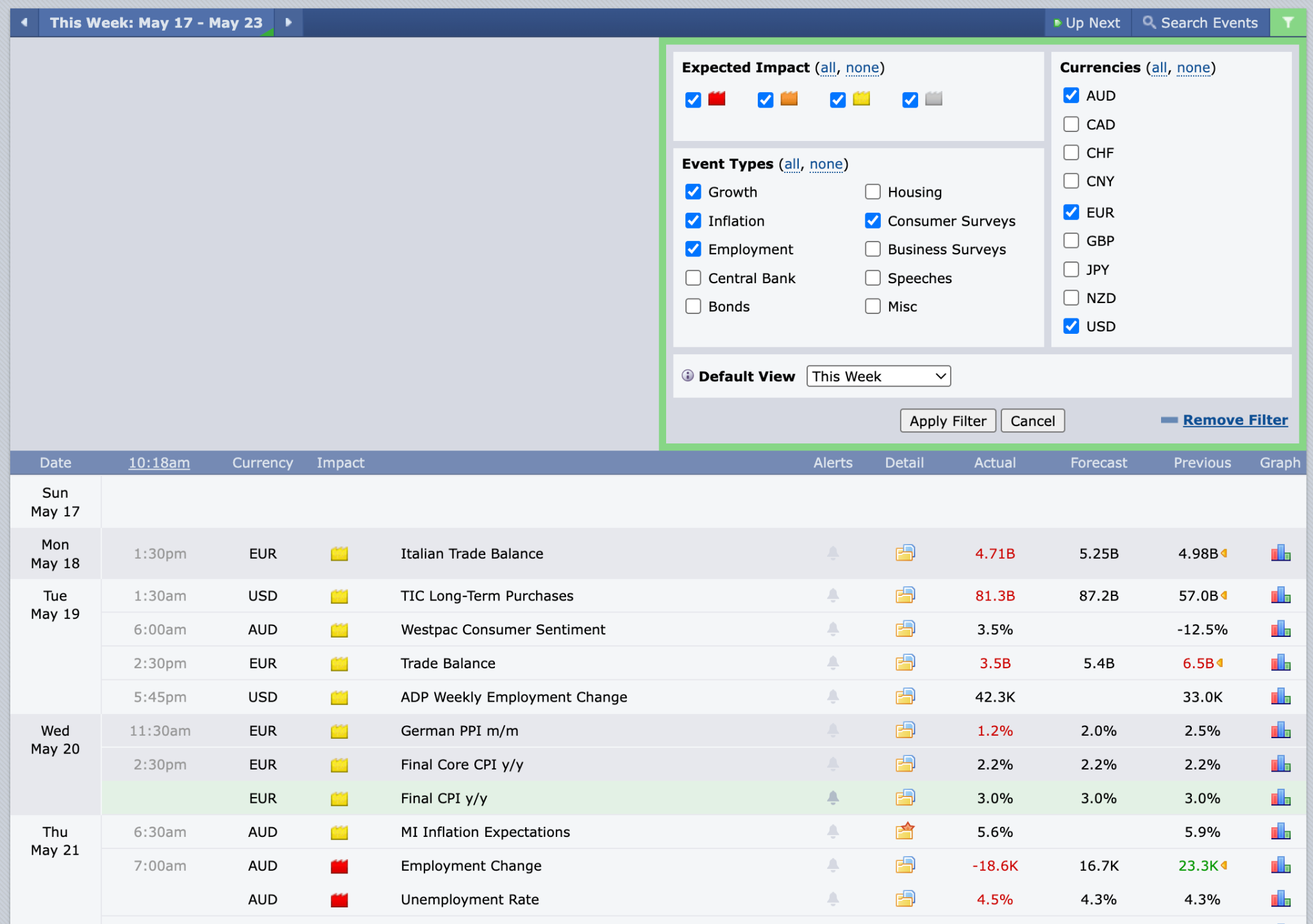
Source:Forex Factory
The Events That Matter Most for Australian Traders
Different events affect different instruments. Here is what Australian traders should have marked in their calendar every single week.
RBA Interest Rate Decision
The Reserve Bank of Australia meets eight times a year to decide whether to raise, hold, or cut the official cash rate. The RBA has now raised rates three consecutive times in 2026, bringing the official cash rate to 4.35% as of May. Every decision moves AUD/USD immediately and often sharply. The outcome of each meeting is announced at 2:30pm AEST on the second day of the board meeting, followed by a Governor press conference at 3:30pm. The next meeting is 15 to 16 June 2026. Mark it now.
US Nonfarm Payrolls (NFP)
NFP is released on the first Friday of every month by the US Bureau of Labor Statistics. It measures how many jobs the US economy added or lost in the previous month. A strong number signals a healthy economy, which pushes the US Dollar higher and typically sends AUD/USD lower. A weak number does the opposite. This is the single most watched scheduled event in the forex market every month.
US CPI (Consumer Price Index)
CPI measures inflation in the United States. When CPI comes in above forecast, markets expect the Fed to keep rates higher for longer, which strengthens the US Dollar. When it misses, rate cut expectations rise, the Dollar weakens, and risk assets including AUD typically rally. A 0.1% miss on CPI can move markets further than an on-target GDP print that meets expectations.
FOMC Interest Rate Decision
The US Federal Reserve meets eight times a year to set interest rates. Every FOMC decision and the press conference that follows moves forex pairs, US indices, gold, and oil simultaneously. This is the highest-impact scheduled event in global financial markets.
Australian Employment Change
Released monthly by the Australian Bureau of Statistics, this measures how many jobs were added or lost in Australia. Strong jobs data supports the case for the RBA to keep hiking, which pushes AUD higher. Weak jobs data raises doubts and sends AUD lower. This one is underestimated by a lot of beginners and directly affects every AUD pair.
China PMI
The Purchasing Managers Index for China is not directly on the AUD calendar but it moves AUD almost as much as domestic Australian data. China is Australia's largest trading partner and the world's biggest buyer of iron ore. When Chinese manufacturing activity expands, commodity demand rises, Australian export income improves, and AUD strengthens.
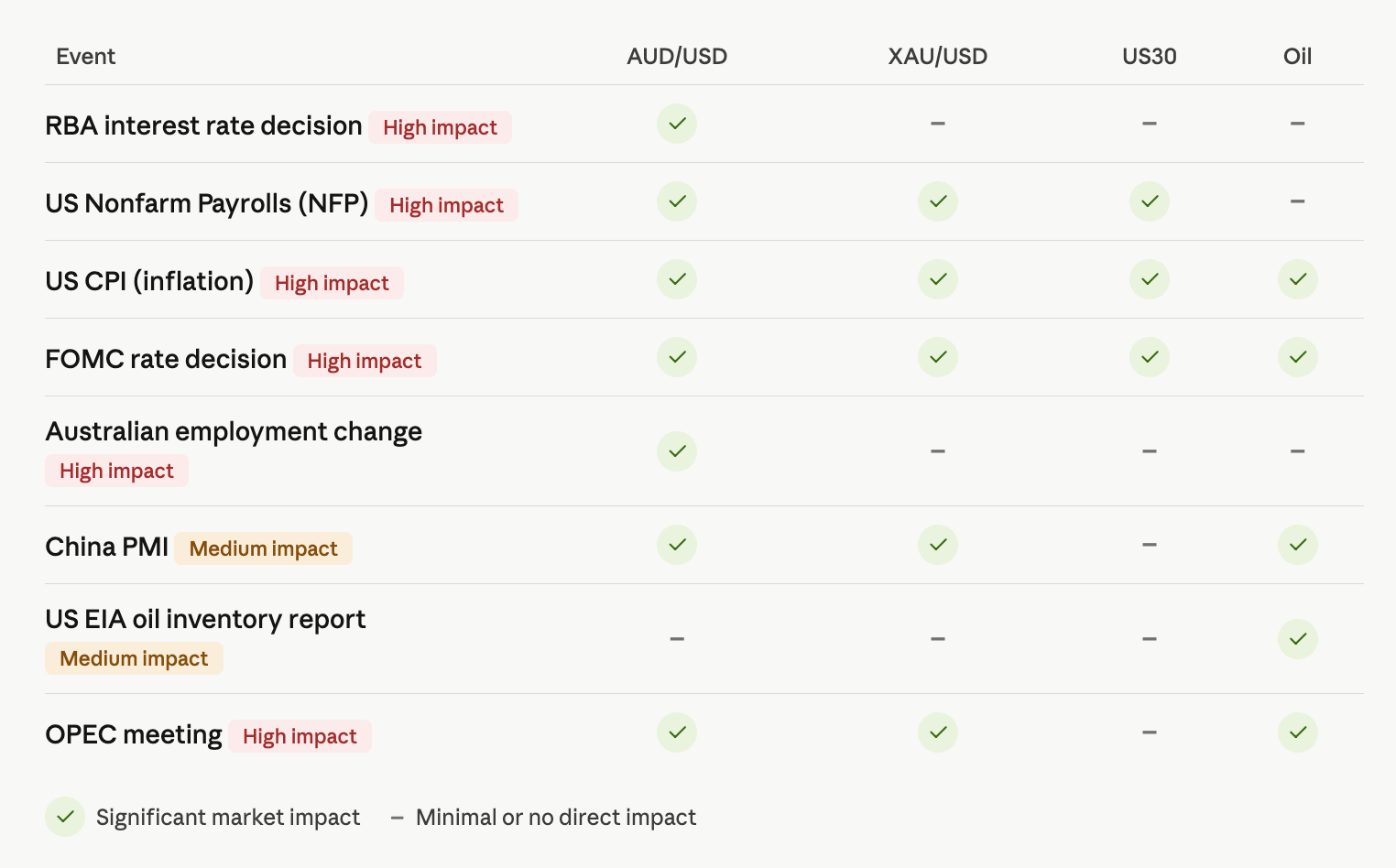
Impact of economic events on different Forex markets
“Trade CFDs with an ASIC-regulated broker. Fast AUD funding via PayID. ”
How to Actually Use the Calendar Before a Trade
Reading the calendar is one thing. Using it to make better decisions is another. Here is exactly how to do it.
Check it before every session, not after
Setting mobile alerts 15 to 30 minutes before high-impact releases reduces missed trades by an estimated 40%. Open the calendar at the start of your session, note every high-impact event for that day, and know the exact release time before you place a single trade.
Understand what the market is already pricing in
The forecast figure on the calendar represents what analysts and the market collectively expect. The actual number only matters relative to that forecast. If NFP is forecast at 180,000 jobs and the actual reading is 250,000, that is a massive positive surprise and the Dollar will rally hard.
If it comes in at 170,000, that is a miss and the Dollar typically sells off. The raw number on its own means nothing without the forecast to compare it to.
Decide your approach before the release, not during it
There are two ways traders handle high-impact events. The first is to close or reduce positions before the release to avoid the volatility entirely. The second is to wait for the release, let the initial spike settle, and then trade the new direction once the market has absorbed the news.
The initial spike-and-reversal pattern occurs on roughly 55 to 60% of high-impact releases, making the first three to five minutes unreliable for directional signals. Deciding your approach before the data drops stops you from making emotional decisions in the middle of a 100-pip candle.
Never hold a leveraged position through a high-impact release without a plan
This is where most beginner traders get hurt. They hold a position into an FOMC decision or NFP without widening their stop loss or reducing their size, get stopped out by the spike, and then watch the market go exactly where they expected. If you are going to hold through a release, know in advance exactly where your stop loss sits and what size position is appropriate for that level of volatility.
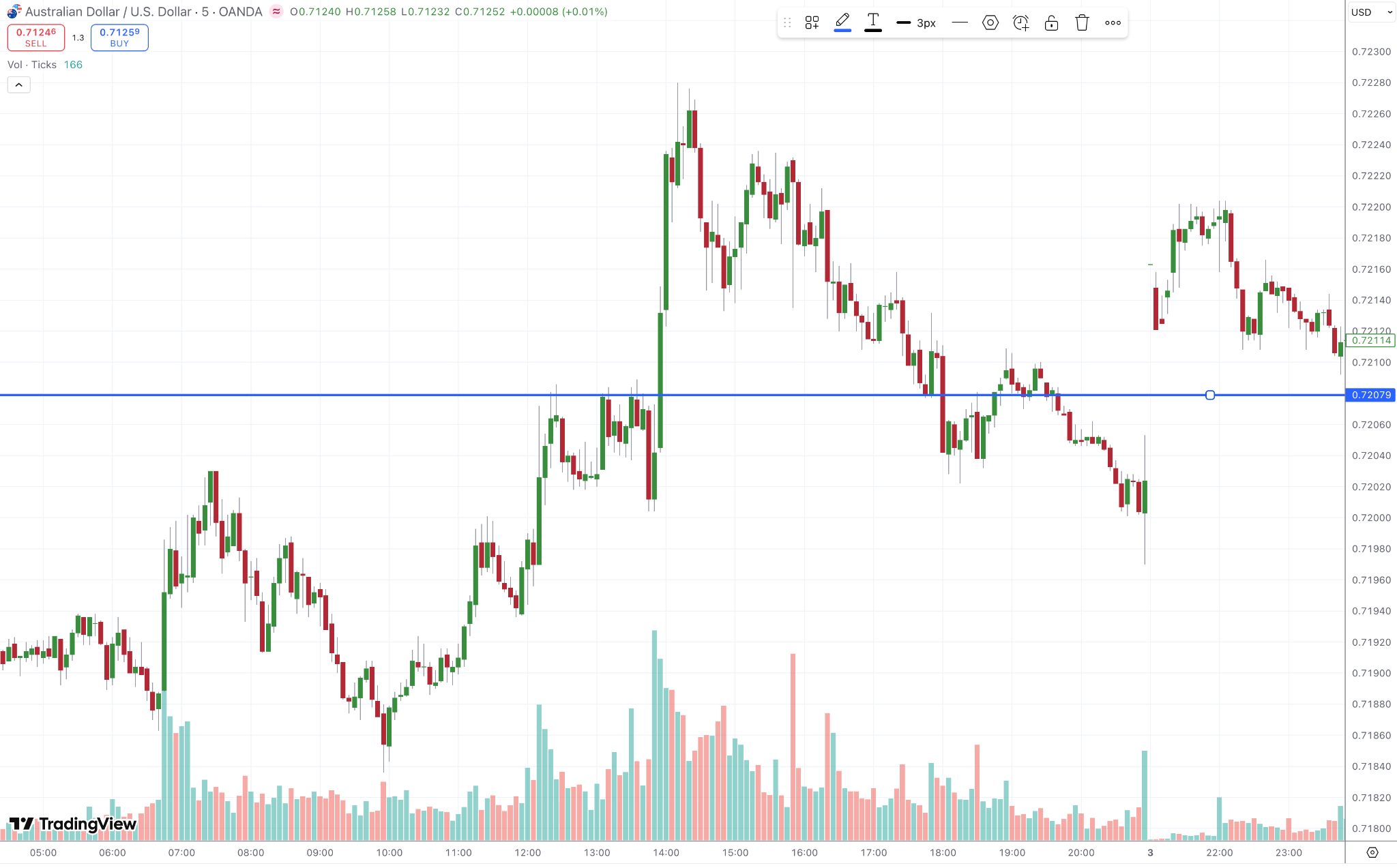
Price spike visible on the AUD/USD chart with a clear spike after the NFP release Source: TradingView
Pros and Cons of Trading Around Economic Events
Where to Find a Reliable Economic Calendar
Several free tools are widely used by retail traders. Forex Factory is the most popular among forex traders and is clean, filterable, and updates in real time. Investing.com covers a broader range of global events and is reliable for equities and commodity traders as well. Myfxbook is another widely used option with good filtering tools.
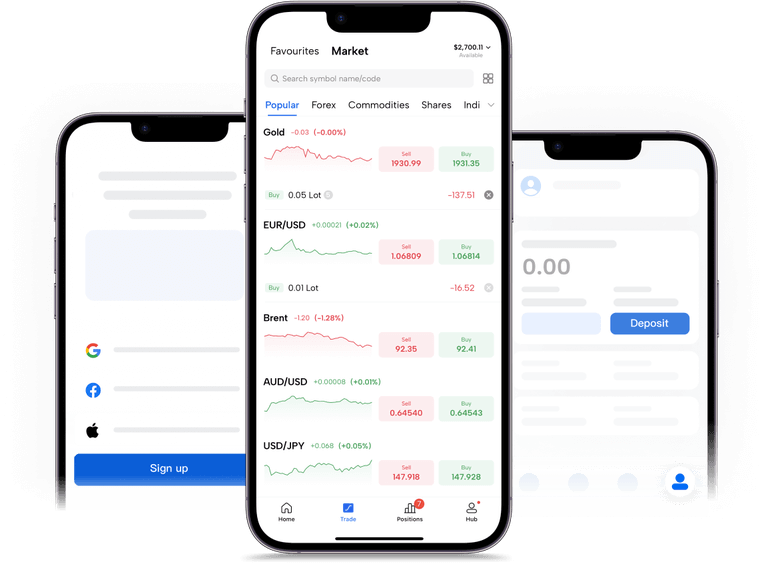
For Australian traders using Mitrade, the economic calendar is built directly into the platform and updates automatically so you never need to switch tabs or check a separate site during a live session.
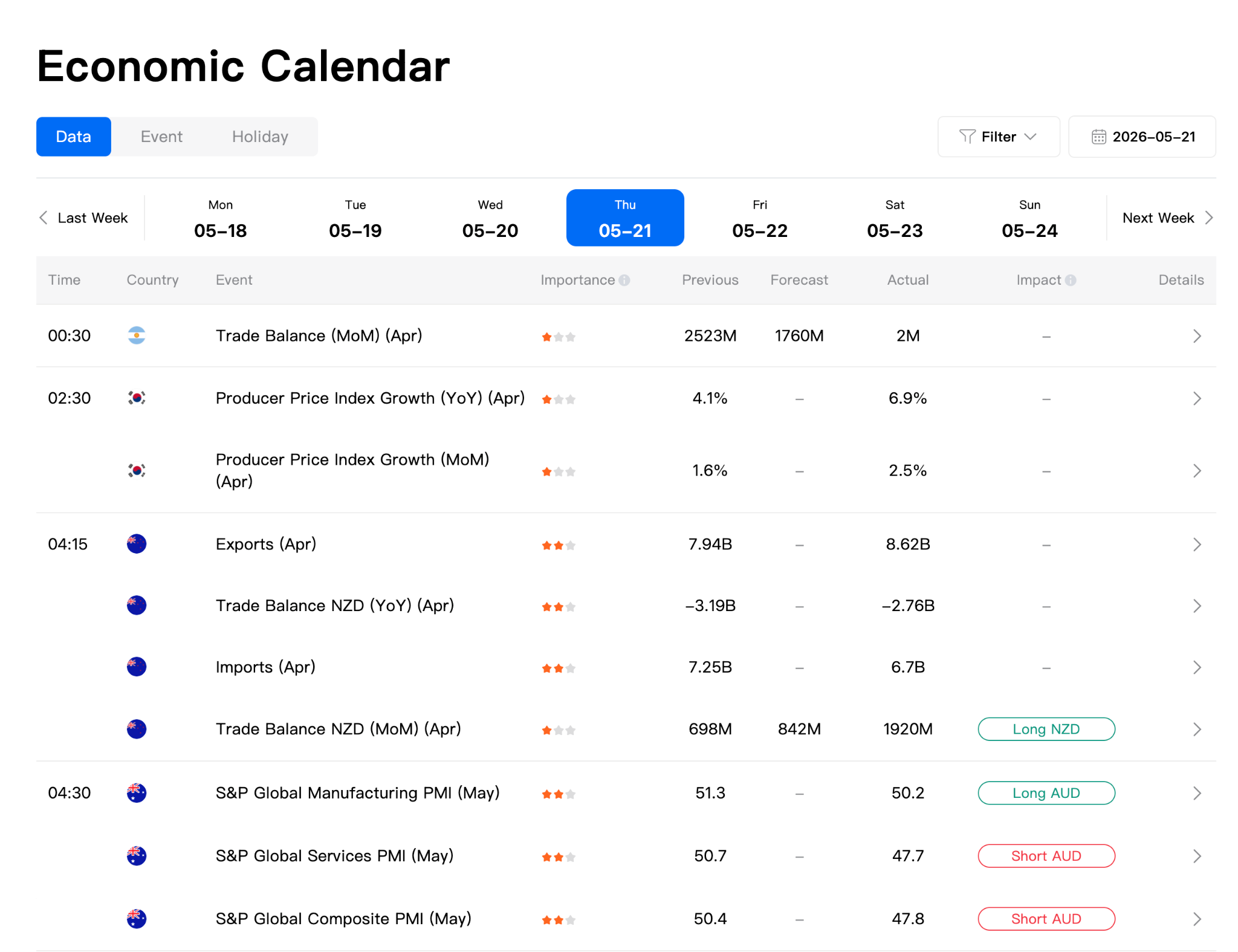
Source - Mitrade Economic Calendar


1. What is an economic calendar and why do traders use it?
An economic calendar is a schedule of upcoming economic data releases and central bank events, including CPI, NFP, GDP, and interest rate decisions, that are likely to cause significant price moves across forex, indices, commodities, and crypto. Traders use it to know when volatility is coming so they can prepare, reduce risk, or position around the release rather than being caught off guard by it.
2. Which economic events move AUD/USD the most?
The RBA interest rate decision, Australian employment change, US Nonfarm Payrolls, and US CPI are the four events that move AUD/USD most consistently. Chinese PMI and trade data also carry significant weight given Australia's export relationship with China.
3. Should I trade before or after a major data release?
Most experienced traders either reduce their position size before a high-impact release or wait for the initial spike to settle before entering. Trading in the first three to five minutes of a major release is high risk because of spike-and-reversal patterns that occur in the majority of cases. Waiting for a confirmed direction after the dust settles produces more reliable signals.
4. Where can I find a free economic calendar?
Forex Factory, Investing.com, and Myfxbook all offer free, filterable economic calendars that update in real time. Australian traders using Mitrade also have access to a built-in economic calendar directly inside the platform.
5. What does the forecast number on the economic calendar mean?
The forecast represents the consensus expectation from economists and analysts ahead of the data release. The actual number only matters relative to this forecast. A result that beats the forecast is a positive surprise and typically pushes the relevant currency or asset in one direction. A miss does the opposite.
6. Does Mitrade have an economic calendar?
Yes. Mitrade includes a built-in economic calendar inside the platform that shows upcoming high-impact events, release times in your local timezone, forecast versus previous figures, and the actual result the moment data is published. It is available on both desktop and mobile without needing to open a separate tool.
Disclaimer: The content presented above, whether from a third party or not, is considered as general advice only. CFD trading involves significant risk of loss. Past performance does not guarantee future results. This article serves informational purposes only and does not constitute financial advice. Consider your risk tolerance before trading.


