




Broadcom vs. Micron Technology: Which Tech Stock Is the Better Buy for 2027?
Key Points
Broadcom designs custom chips and software for networking and storage, but a handful of customers account for about 40% of its revenue.
Micron’s memory business is booming on AI demand, but its results depend on memory prices staying high.
The deciding factor may be which business keeps growing if the AI boom stops lifting everything.
- 10 stocks we like better than Broadcom ›
The artificial intelligence (AI) boom is forcing investors to choose between established infrastructure giants and pure-play hardware providers. Deciding between Broadcom (NASDAQ:AVGO) and Micron Technology (NASDAQ:MU) depends on your specific goals.
Broadcom excels at providing custom chips and software for large enterprises and government entities. Micron specializes in the memory and storage components that power everything from data centers to smartphones. While both benefit from the surge in tech spending, they operate in different corners of the hardware market.
Broadcom: Custom AI chips and a growing profit engine
Broadcom designs semiconductor and software products for networking, wireless, and storage markets. Its semiconductor business relies on distributors and large manufacturers, with the top five customers accounting for roughly 40% of revenue. Customer concentration like this adds a layer of risk to the business. Broadcom maintains long-term design relationships with major entities, including Apple.
In the 12 months ended Aug. 2, 2026, revenue reached $89 billion, representing approximately 49% growth. Net income was $38 billion during this period. This performance was significantly higher than the roughly $5.9 billion in net income reported in the fiscal year ended Nov. 3, 2024.
As of its August 2026 balance sheet, the debt-to-equity ratio is approximately 0.6x, and the current ratio is roughly 2.5x. The debt-to-equity ratio compares total debt to the value of shareholder equity, while the current ratio measures the ability to pay short-term bills.
In the 12 months ended Aug. 2, 2026, free cash flow was $39 billion, which is the cash a company generates after accounting for spending on physical assets. Note that stock-based compensation accounted for roughly 27% of operating cash flow, inflating reported cash generation, since SBC is a non-cash expense added back to cash flow.
Micron: Memory demand has sent profits soaring
Micron Technology is a global leader in memory products such as DRAM and NAND, used in data centers and automotive applications. It manages a global network and often uses take-or-pay arrangements, in which customers must pay even if they do not take delivery. Approximately half of its total revenue comes from its top ten customers. These customers include various hyperscale cloud providers and automotive manufacturers.
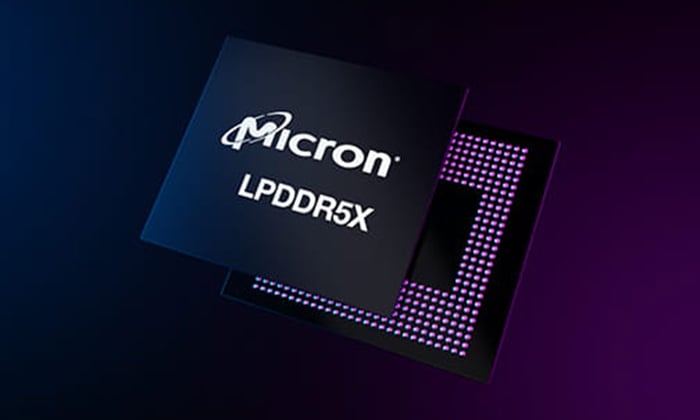
Image source: Micron.
In the 12 months ended Sept. 3, 2026, revenue reached $133 billion, which was a massive 256% increase over the previous year. Net income for the same period was approximately $85 billion. This performance is a sharp turn from the roughly $778 million in net income reported in the fiscal year ended Aug. 29, 2024.
As of its September 2026 balance sheet, the current ratio is roughly 3.3x, and the debt-to-equity ratio is approximately 0.0x. A zero debt-to-equity ratio suggests the company has negligible debt relative to its equity.
Trailing free cash flow reached nearly $59 billion.
Risks to watch: Customer concentration and memory price swings
Broadcom faces risks related to high customer concentration and operates in a cyclical industry where chip prices can fall if demand softens. It also deals with intense regulatory scrutiny and complex trade restrictions that limit where it can sell its products.
Micron faces intense competition from global memory manufacturers like Samsung and SK Hynix. The company is sensitive to geopolitical risks and export restrictions and faces legal challenges, including ongoing antitrust litigation related to the supply of memory chips. Operational risks like power shortages or labor disputes at manufacturing sites could also disrupt production.
Micron looks cheaper, but is it the better deal?
Micron Technology appears cheaper than Broadcom based on its significantly lower Forward P/E, using future earnings estimates, and its P/S ratio, which measures price against sales over the past twelve months.
| Metric | Broadcom | Micron Technology |
|---|---|---|
| Forward P/E | 17.5x | 3.9x |
| P/S ratio | 18.6x | 5.9x |
Valuation metrics include those sourced from Financial Modeling Prep (FMP) and may differ from those of other data providers.
Which stock would I buy for 2027?
It's a tough call, because I can see both stocks recovering from their recent pullback and heading to new highs next year. For me, the tiebreaker is which stock I would feel most comfortable holding for the long term. That is Broadcom.
Micron's business is still vulnerable to swings in memory prices, though that's unlikely in 2027 given current demand, but it's a risk Broadcom doesn't face.
Analysts expect Broadcom's earnings to exceed $30 per share by fiscal 2028. That puts the stock's forward P/E looking two years out at about 11x, which is cheap.
Investors can outperform the market with Broadcom without worrying about whether memory supply catches up to demand, which Micron depends on for higher pricing and earnings growth.
The main risk for Broadcom is tied to the broader semiconductor industry and potential data center delays, which could delay its revenue. The higher forward P/E reflects investor expectations for Broadcom to experience smoother earnings growth than Micron.
Looking out five years, Broadcom could see substantial growth as custom AI chips, or XPUs, gain share from traditional chips like graphics processing units (GPUs). Micron has a long history of experiencing financial swings, while Broadcom has a long history of delivering wealth-building returns to shareholders. For these reasons, I like Broadcom for 2027 and beyond.
Should you buy stock in Broadcom right now?
Before you buy stock in Broadcom, consider this:
The Motley Fool Stock Advisor analyst team just identified what they believe are the 10 best stocks for investors to buy now… and Broadcom wasn’t one of them. The 10 stocks that made the cut could produce monster returns in the coming years.
Consider when Netflix made this list on December 17, 2004... if you invested $1,000 at the time of our recommendation, you’d have $327,620!* Or when Nvidia made this list on April 15, 2005... if you invested $1,000 at the time of our recommendation, you’d have $959,410!*
Now, it’s worth noting Stock Advisor’s total average return is 802% — a market-crushing outperformance compared to 205% for the S&P 500. Don't miss the latest top 10 list, available with Stock Advisor, and join an investing community built by individual investors for individual investors.
See the 10 stocks »
*Stock Advisor returns as of November 17, 2026.
John Ballard has no position in any of the stocks mentioned. The Motley Fool has positions in and recommends Apple, Broadcom, and Micron Technology. The Motley Fool has a disclosure policy.
Recommended Articles


