




US May PCE Preview: Inflation May Continue to Heat Up, How Will US Stocks, Dollar and Gold React in the Short Term?
TradingKey - The United States is set to release the May PCE price index on June 25 at Eastern Time. This is one of the Federal Reserve's most favored inflation gauges and will serve as a critical data point for the market to judge the Fed's short-term policy path. For investors, the focus is on whether the data can alter interest rate expectations following the Fed's recent hawkish stance.
From the perspective of market expectations, May PCE inflationary pressures are likely to remain elevated. According to market estimates, headline PCE in May is expected to rise by 0.4% month-on-month and potentially increase to around 3.4% year-on-year. Core PCE is projected to grow by 0.3% to 0.4% month-on-month, while holding steady at around 3.3% year-on-year.
The significance of this data lies in the fact that the Federal Reserve has just sent a hawkish signal. Although the Fed kept interest rates unchanged at 3.50% to 3.75% at its June policy meeting, the dot plot showed that nine officials expect at least one more rate hike this year. The new Federal Reserve Chairman, Warsh, also emphasized that the Fed remains committed to achieving its 2% inflation target and will not rush to pivot toward easing while inflation remains above target. Therefore, if the May PCE continues to run hot, the market may further upwardly revise the probability of a rate hike this year.
For US stocks, a higher-than-expected PCE would be clearly bearish, especially for the Nasdaq Index and AI tech stocks, which are more sensitive to interest rate expectations. If month-on-month core PCE reaches 0.4% or higher, the market may perceive that disinflation has stalled, leading to an increased risk of a Fed rate hike this year and higher US Treasury yields, which would pressure high-valuation growth stocks. Conversely, if core PCE falls to around 0.2%, indicating that inflationary pressures have eased, US stocks could experience a short-term rebound, with tech and small-cap stocks showing greater upside.
For the US dollar, a stronger PCE is typically bullish. This is because higher inflation increases the likelihood that the Federal Reserve will maintain high interest rates or even continue to raise them, thereby strengthening the dollar's interest rate differential advantage over other currencies. If the PCE falls below expectations, the market may price in a "moderation of rate hike pressures," and the US dollar could retreat.
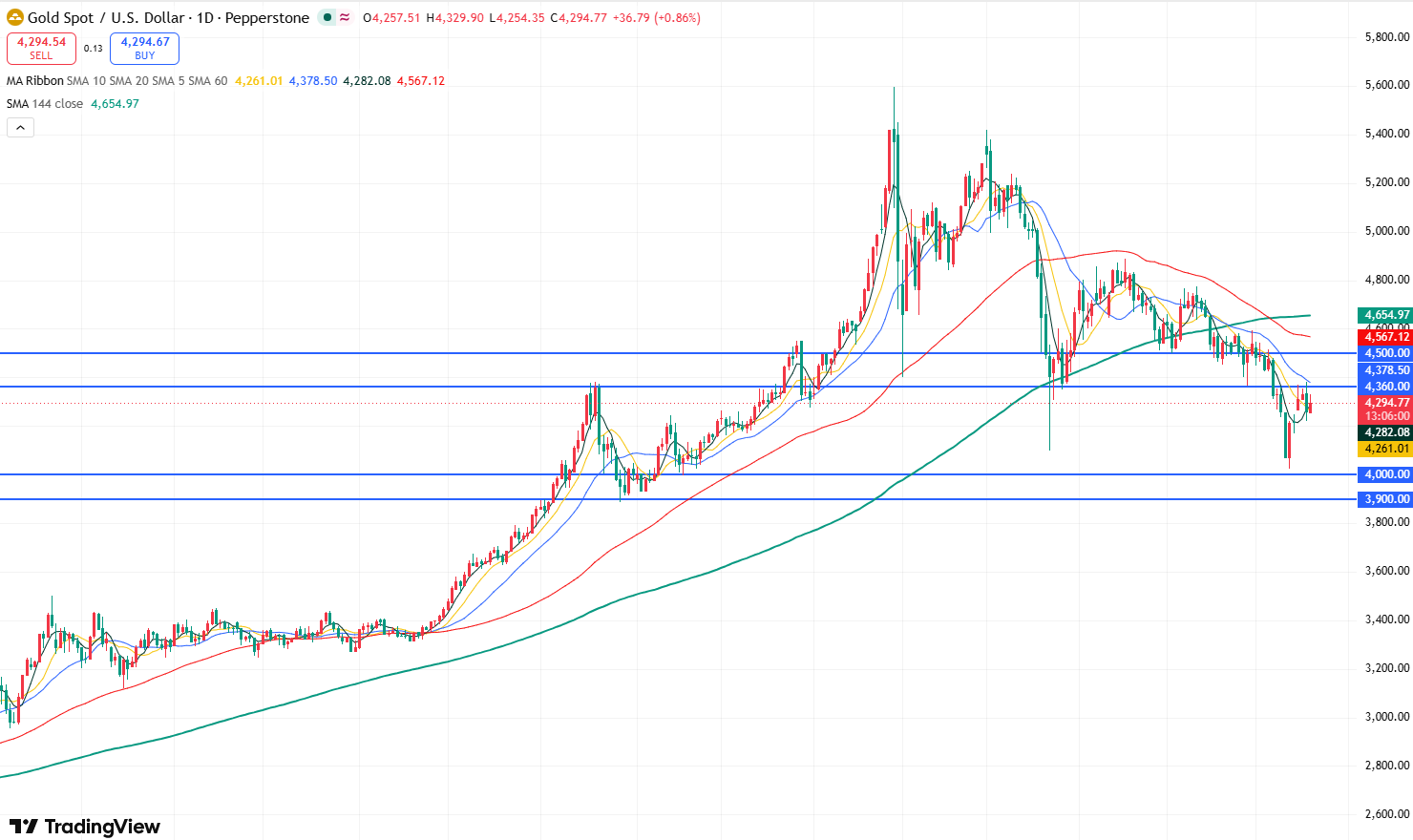
Gold Price Daily Chart, Source: TradingView
For gold ( XAUUSD ), theoretically, high inflation itself is favorable for gold's inflation-hedging properties, but the core of current market pricing is the Fed's interest rate expectations. If the PCE is higher than expected, the actual outcome is often a strengthening of US Treasury yields and the US dollar, which increases the opportunity cost of holding gold. Consequently, gold prices may come under short-term pressure, potentially extending the recent downward trend to test the $4,000 mark. If the PCE is lower than expected, expectations of rate hikes will cool, the dollar and Treasury yields will retreat, and gold is expected to gain rebounding momentum to continue testing the resistance level at $4,360.
It should be noted that the recent US-Iran agreement has driven oil prices lower, which may alleviate energy inflation pressures in the coming months, but the May PCE may still be affected by the prior rise in oil prices. If energy prices push headline PCE higher while core PCE remains stable, the market reaction may be relatively mild. However, if core services, housing, and consumer prices all show strength simultaneously, the Fed's hawkish logic will be further reinforced.
Recommended Articles


