




The 2026 Copper & Lithium Boom: A focused look at trading "Green Energy" commodities
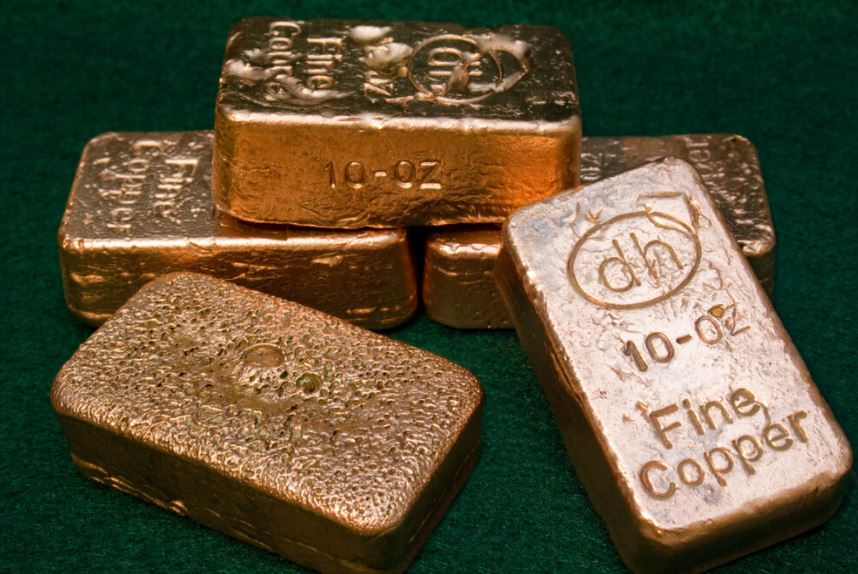
Copper and lithium have become two of the most closely watched commodities in global markets. As countries expand power grids, build renewable energy infrastructure, and accelerate electric vehicle production, demand for both metals remains closely tied to the pace of global electrification.
Historically, investors seeking exposure to these markets often relied on mining stocks, accepting company-specific risks that could have little to do with underlying commodity prices. Today, CFDs offer a more direct way to trade the price movements of copper and lithium without taking ownership of the underlying assets.
Both commodities have experienced significant volatility in recent years as supply constraints, government policy, and changing demand expectations have influenced prices.
In this guide, traders will learn what is driving demand for copper and lithium in 2026, how these green energy commodities and CFDs work, the key factors influencing price movements, and how traders can access these markets through a regulated CFD platform.
Copper and Lithium at the Centre of the Electrification Trend
Few commodities are as closely linked to global electrification as copper and lithium. As traditional energy frameworks transition toward renewable alternatives, both metals have become the benchmark green energy commodities driving modern industrial demand.
Copper plays a critical role in power grids, renewable energy infrastructure, electric vehicles, and charging networks. As governments invest heavily in upgrading ageing electricity systems and expanding clean energy capacity, demand for the metal continues to grow.
Lithium remains a key component in modern battery technology. From electric vehicles to large-scale energy storage systems, battery manufacturers rely on lithium to support the shift toward lower-emission transportation and more resilient energy networks.
This combination of infrastructure spending, renewable energy investment, and EV production has placed both commodities firmly on traders’ watchlists. Because copper and lithium prices can respond quickly to changes in supply, government policy, and industrial demand, they have become increasingly popular markets for traders seeking exposure to one of the decade’s most significant economic themes.
Trading Copper and Lithium CFDs vs Traditional Investing
While mining stocks remain a popular way to gain exposure to copper and lithium, CFDs provide a more direct way to trade movements in the underlying commodities. The table below highlights the key differences between commodity CFDs, mining shares, and physical ownership:
“Trade Copper & Lithium with an ASIC-regulated broker. Fast AUD funding via PayID. ”
What is Driving Copper Prices in 2026?
Copper prices are heavily influenced by global industrial activity and infrastructure spending. Because copper is used throughout the electrification economy, changes in demand or supply can have a significant impact on prices.
Key drivers include:
Power grid investment: Upgrades to ageing electricity networks require large amounts of copper wiring and equipment.
Renewable energy projects: Solar farms, wind turbines, and energy storage systems all consume substantial quantities of copper.
Construction and infrastructure spending: Residential, commercial, and public infrastructure projects remain major sources of demand.
Chinese demand: As the world’s largest consumer of copper, economic activity in China often influences global pricing trends.
Supply disruptions and mine production: Labour disputes, permitting delays, and production shortfalls can tighten supply and support prices.
What Drives Lithium Prices in 2026?
Lithium prices are closely tied to the growth of the battery industry. Shifts in demand expectations or changes in supply can lead to significant price volatility.
Key drivers include:
EV production trends: Electric vehicle manufacturing remains the largest source of lithium demand.
Battery manufacturing growth: Expanding battery production capacity continues to increase lithium consumption.
New lithium supply: Additional mines and processing facilities can help balance supply and demand.
Government policies and subsidies: Incentives supporting EV adoption and clean energy investment can influence demand forecasts.
Battery technology developments: Advances in battery chemistry can affect future lithium consumption patterns.
Because copper and lithium can react quickly to changes in demand, supply, and policy expectations, many traders actively monitor these factors when looking for potential trading opportunities.
How Traders Approach Copper and Lithium Markets
Understanding what drives prices is only one part of the equation. Many traders also focus on how markets react to new information, using a combination of technical analysis, economic data, and risk management to identify potential opportunities.
Common approaches include:
Trend trading: Following sustained upward or downward price movements as broader market themes develop.
News-driven trading: Reacting to major announcements involving supply, production, trade policy, or demand forecasts.
Economic calendar events: Monitoring interest rate decisions, economic data releases, and policy announcements that may influence commodity markets.
Inventory and supply data: Tracking production figures, stockpile levels, and supply disruptions that can affect market balances.
Managing volatility: Using stop-loss orders and position sizing to manage risk during periods of heightened price movement.
While copper and lithium can offer attractive trading opportunities, both markets are susceptible to sudden shifts in sentiment and supply-demand expectations. Understanding these risks is an important part of developing a disciplined trading approach.
“Trade Copper & Lithium with an ASIC-regulated broker. Fast AUD funding via PayID. ”
Risks of Trading Commodity CFDs
Copper and lithium can experience significant price movements in relatively short periods of time. While this volatility can create trading opportunities, it also increases risk, particularly when leverage is involved.
Key risks include:
Commodity volatility: Prices can move sharply in response to economic data, policy changes, or shifts in market sentiment.
Leverage risk: CFDs allow traders to control larger positions with less capital, which can magnify both gains and losses.
Geopolitical events: Trade disputes, sanctions, and political instability can affect commodity supply chains and pricing.
Supply shocks: Mine disruptions, production cuts, and processing bottlenecks can quickly alter supply expectations.
Risk management considerations: Stop-loss orders, position sizing, and clear trading plans can help traders manage exposure during volatile market conditions.
Successful commodity trading often depends as much on risk management as market analysis. Many experienced traders focus on protecting capital first, allowing them to remain active when new opportunities arise.
Understanding Copper and Lithium CFD Leverage in Australia
Australian retail day traders utilize CFDs primarily to access margin-based trading. Leverage allows a trader to control a larger overall market position with a smaller initial capital outlay, amplifying both potential profits and potential losses proportionately.
To shield retail investors from excessive risk, the Australian Securities and Investments Commission (ASIC) enforces strict limits on leverage across different financial markets. Under current ASIC mandates, the maximum leverage cap available to retail clients trading commodities like copper and lithium is 10:1. This means that for every $1,000 held as margin in a trading account, a trader can control a maximum market exposure of $10,000.
While unregulated offshore brokers may market higher ratios, the 10:1 cap is a universal legal safeguard for all standard retail accounts operating within Australia. Managing this leverage through strict stop-loss parameters is a crucial component of trading volatile energy metal cycles safely.
Trading Copper and Lithium CFDs with Mitrade
Once traders have identified an opportunity, efficient execution and risk management become the next priority. Access to real-time pricing, charting tools, and integrated risk controls can make it easier to monitor fast-moving commodity markets.
For traders interested in copper and lithium CFDs, Mitrade provides:
Access to both markets from one account: Trade copper and other major commodity markets through a single platform.
0% Commission pricing: Minimize transaction friction with a commission-free model where execution costs are incorporated entirely within the competitive bid-ask spread, eliminating separate ticket fees.
Built-in charting and risk tools: Analyse price movements using technical indicators while managing positions with stop-loss and take-profit orders.
Mobile and desktop access: Monitor markets and manage trades from virtually anywhere through web and mobile platforms.
ASIC regulation: Mitrade operates under the oversight of the Australian Securities and Investments Commission (ASIC), with client funds held in segregated trust accounts.
Permanent demo account availability: Refine commodity strategies and practice position sizing using a robust virtual testing environment pre-loaded with $50,000 in virtual funds.
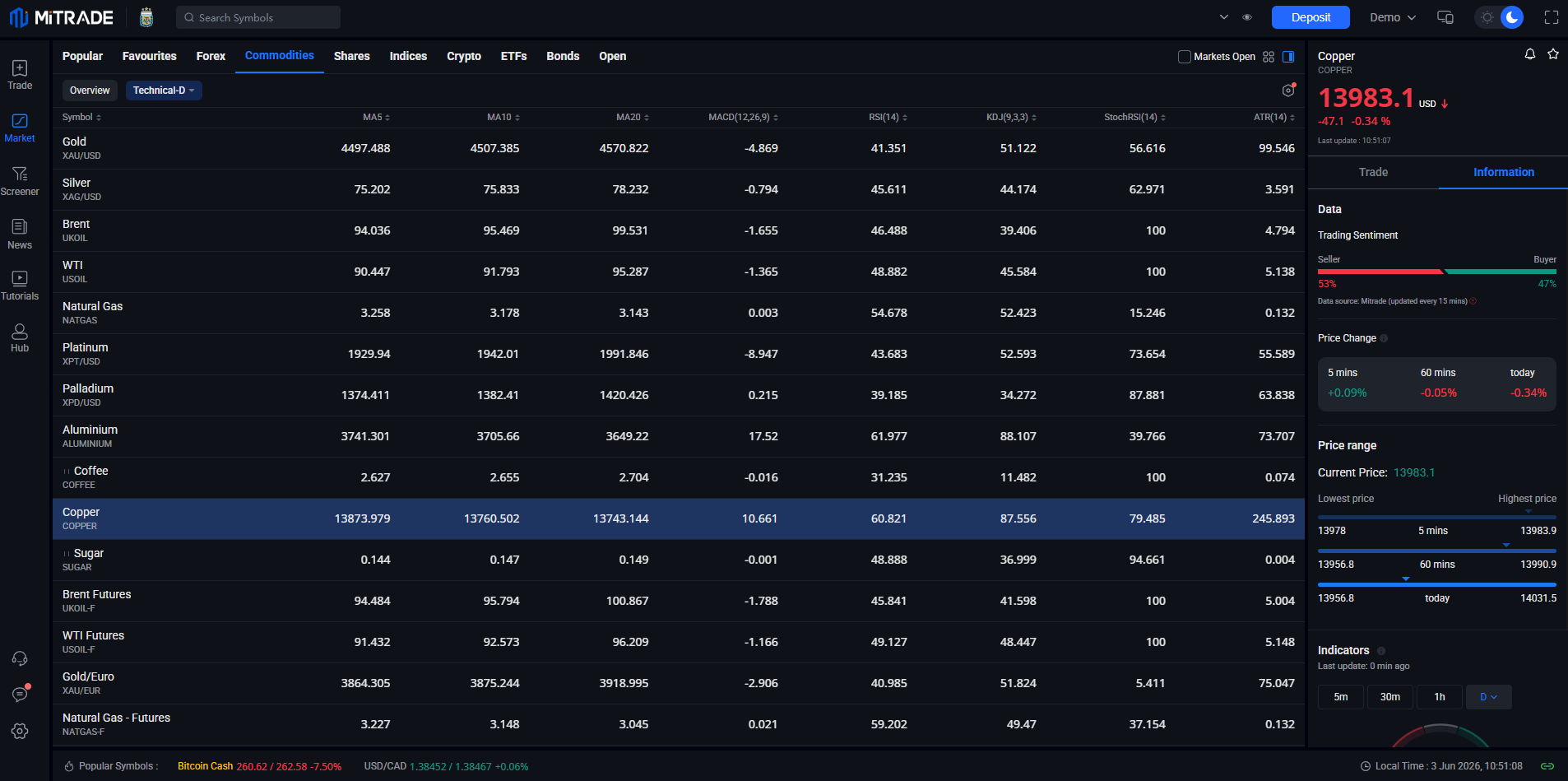
By combining market access, charting tools, and risk management features within a single platform, Mitrade provides traders with a streamlined way to participate in commodity markets as opportunities arise.
Ready to put your strategies to the test? Open your account today and start trading copper and lithium CFDs and other global markets.


1. Can Australians trade copper CFDs?
Yes. Australian traders can access copper CFDs through ASIC-regulated CFD providers. CFDs allow traders to speculate on price movements without owning the underlying commodity.
2. What trading hours apply to commodity CFDs?
Trading hours depend on the specific market being tracked. Most commodity CFDs operate for extended hours during the trading week, allowing traders to respond to global developments as they occur.
3. Are copper and lithium CFDs suitable for short-term trading?
Many traders use commodity CFDs for short-term trading because prices can respond quickly to economic data, policy announcements, and changes in supply and demand expectations. However, volatility can increase both potential opportunities and risks.
4. Can beginners practise commodity trading before risking real money?
Yes. Many CFD providers, including Mitrade, offer demo accounts that allow traders to practise strategies and familiarise themselves with market behaviour using virtual funds.
Disclaimer: The content presented above, whether from a third party or not, is considered as general advice only. CFD trading involves significant risk of loss. Past performance does not guarantee future results. This article serves informational purposes only and does not constitute financial advice. Consider your risk tolerance before trading.


