




Gold Price Today Australia (19 October 2026): XAU/USD Eyes $4,200 as Fed Rate Hike Bets Ease

Gold prices edged higher on Monday, 19 October 2026, with spot gold trading around US$4,175–US$4,185 per troy ounce as investors reassessed the Federal Reserve's interest rate outlook.
The precious metal is recovering after a volatile week dominated by stronger-than-expected US inflation data, fluctuations in Treasury yields and concerns about global financial conditions.
According to Reuters, spot gold rose 0.3% to US$4,175.60 per ounce in early Monday trading, while US gold futures for December delivery climbed 0.4% to US$4,196.40.
For Australian investors, gold was trading near A$6,000 per ounce, with movements in AUD/USD adding another important factor to the local gold price outlook.
The immediate question is whether XAU/USD can break through the US$4,200 resistance level, or whether persistent US inflation and expectations of further interest rate increases will limit the recovery.
Gold Price Today: Key Market Highlights
Immediate resistance: US$4,200, followed by the key breakout zone at US$4,220–US$4,225
Key support: US$4,165–US$4,150, followed by the major psychological support level at US$4,100.
US Treasury yields: The benchmark 10-year Treasury yield declined to approximately 5.065%, easing the opportunity cost of holding non-yielding assets such as gold.
US inflation and Fed outlook: Persistent inflation remains a concern, but markets priced in only a 13% probability of an October Fed rate hike, while expectations of a December increase remained elevated.
Market sentiment: Softer oil prices, concerns over AI-related financing risks and uncertainty surrounding US monetary policy have supported defensive demand for gold. Investors are closely watching the upcoming Fed meeting for further direction.
Why Is Gold Going Up Today?
Gold's recovery is being supported by a shift in US interest rate expectations, lower Treasury yields and continued demand for defensive assets.
Although recent inflation data suggests that US price pressures remain elevated, traders have reduced expectations that the Federal Reserve will immediately raise interest rates at its October meeting.
This change has helped gold recover despite an uncertain broader monetary policy outlook.
1. Federal Reserve Rate Hike Expectations Ease
The Federal Reserve's policy outlook remains one of the most important influences on gold prices.
Last week's stronger-than-expected US inflation data initially increased concerns that the central bank might need to maintain a more restrictive monetary policy stance.
However, recent remarks from Federal Reserve Chair Kevin Warsh have led investors to reassess the probability of an October interest rate increase.
Market pricing cited in Monday's reports suggested an approximately 15% probability of an October rate hike, while expectations of a potential December increase remained substantially higher.
This distinction matters for gold.
Gold does not pay interest, meaning that higher interest rates generally increase the opportunity cost of holding the metal.
When expectations of near-term rate increases decline, gold may become relatively more attractive.
Nevertheless, reduced expectations of an October hike do not necessarily signal the end of the Federal Reserve's tightening cycle.
The next Federal Open Market Committee (FOMC) meeting, scheduled for 27–28 October, could therefore become an important catalyst for XAU/USD volatility.
2. US Treasury Yields Retreat Towards 5%
Another factor supporting gold is the recent decline in US government bond yields.
On Monday, the benchmark US 10-year Treasury yield fell to approximately 5.065% during Asian trading.
The move followed a period of elevated borrowing costs and renewed investor concerns about the sustainability of debt-financed investment.
Lower Treasury yields can reduce the opportunity cost of holding gold, particularly when inflation-adjusted yields also decline.
However, investors should distinguish between nominal Treasury yields and real yields.
Gold is often more sensitive to changes in real interest rates, which account for expected inflation.
If nominal yields decline but inflation expectations fall even faster, real yields could remain elevated and limit gold's upside.
For this reason, gold traders should monitor both Treasury yields and US inflation expectations rather than relying on a single indicator.
3. Falling Oil Prices Ease Some Inflation Concerns
Oil prices are another important influence on the gold market.
After a strong rally in energy prices during the previous week, softer oil prices on Monday helped reduce some immediate concerns about additional inflationary pressure.
Lower energy prices can ease inflation expectations and potentially reduce the need for aggressive monetary tightening.
This may support gold if investors consequently anticipate lower future interest rates.
However, the relationship between oil and gold is not fixed.
Rising oil prices can sometimes support gold through inflation-hedging demand, while at other times they may weigh on gold by pushing bond yields and interest rate expectations higher.
The broader monetary policy response remains crucial.
4. Financial Market Uncertainty Supports Safe-Haven Demand
Gold has also benefited from concerns about fiscal sustainability, financial market volatility and the financing requirements of large-scale AI infrastructure investment.
Data centres, advanced computing infrastructure and related energy projects require substantial capital expenditure.
Investors are increasingly examining whether future revenues can support the financing costs associated with these investments.
At the same time, elevated US government borrowing costs and fiscal deficits continue to attract attention.
These concerns can encourage some investors to diversify into defensive assets, including gold.
ANZ analysts have highlighted fiscal and debt-sustainability concerns as potential longer-term supports for bullion, even though high yields and a strong US dollar may constrain prices in the short term.
Still, safe-haven demand does not guarantee positive returns. Gold can fall during periods of forced selling, liquidity stress or rapid changes in interest rate expectations.
Gold Price Forecast: Can XAU/USD Break Above US$4,200?
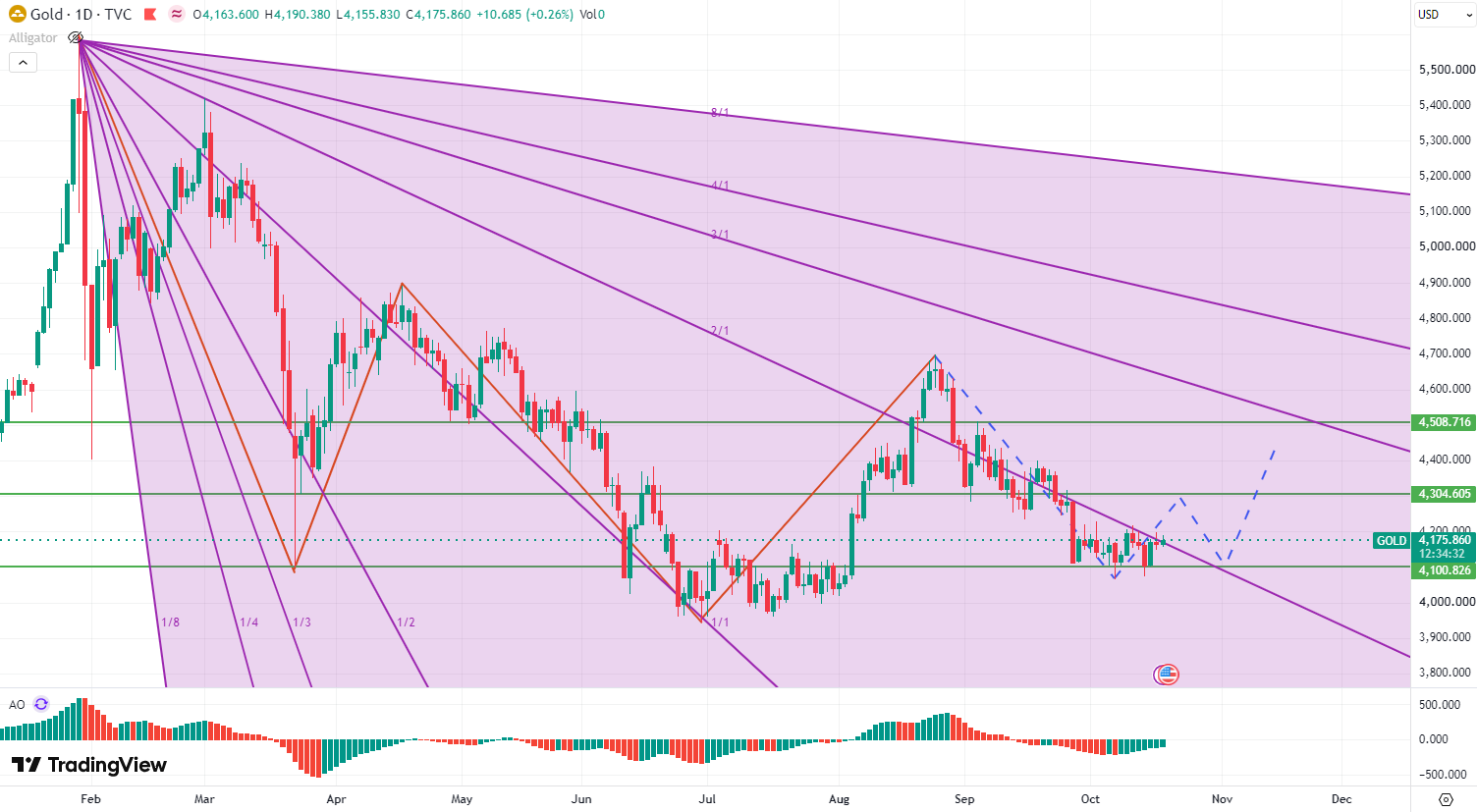
Source: Tradingview
From a technical perspective, gold has recovered after testing the US$4,100 region last week.
The rebound suggests that buyers remain active around lower support levels, but the metal has yet to confirm a sustained breakout above US$4,200.
The latest price action places XAU/USD close to an important decision area.
A sustained move above US$4,200–US$4,220 could improve the short-term bullish outlook, while failure to break resistance may result in further consolidation.
Gold Technical Analysis: Key Support and Resistance Levels
Bullish Scenario: Gold Breaks Above US$4,220
If XAU/USD moves decisively above US$4,200 and maintains momentum beyond US$4,220, the near-term recovery could gain strength.
Under this scenario, traders may begin focusing on US$4,300 as the next potential upside objective.
A more extended rally towards US$4,500 would likely require additional support from falling real yields, a weaker US dollar or stronger safe-haven demand.
A sustained daily close above resistance would provide stronger technical confirmation than a brief intraday move.
However, breakouts can fail, particularly around major central bank announcements.
Bearish Scenario: Gold Falls Below US$4,150
If gold fails to sustain its recovery, the US$4,165–US$4,150 area becomes the first important support zone.
A sustained break below US$4,150 could expose the US$4,100 level.
If US$4,100 fails to hold, the technical outlook would weaken further, potentially bringing the US$4,075 region into focus.
Possible bearish catalysts include:
Stronger-than-expected US economic data.
Renewed expectations of Federal Reserve rate increases.
Rising US real Treasury yields.
A strengthening US dollar.
Reduced demand for defensive assets.
Neutral Scenario: Gold Consolidates Between US$4,100 and US$4,220
Gold may also remain range-bound ahead of the Federal Reserve's October meeting.
If neither buyers nor sellers establish a sustained directional advantage, the metal could continue fluctuating between major support and resistance areas.
In this environment, traders should remain alert to false breakouts and sharp intraday reversals.
How to Trade Gold CFDs in Australia
For Australian traders interested in speculating on gold price movements without purchasing physical bullion, gold contracts for difference (CFDs) are one possible trading instrument.
Gold CFDs allow eligible traders to take positions based on changes in the underlying gold price.
Unlike physical gold ownership, CFD trading does not involve taking delivery of bullion.
Depending on the product and market conditions, traders may be able to speculate on both rising and falling prices.
However, CFDs are leveraged products and carry significant risks.
Trading Gold CFDs with Mitrade
Mitrade offers CFD trading services that allow eligible clients to access financial markets, including gold.
Through the Mitrade trading platform, traders can explore XAU/USD price charts, monitor market movements and use available risk management tools.

Trade XAU/USD with Tight Spreads
What Should Australian Gold Traders Watch This Week?
Several market developments could influence gold prices over the coming sessions.
Federal Reserve expectations: Changes in the probability of future interest rate increases could create volatility in XAU/USD.
US Treasury yields: A continued decline in yields could support gold, particularly if real yields also fall.
US dollar movements: A stronger US dollar may pressure gold prices, while a weaker dollar can provide support.
Energy prices: Oil market developments may influence inflation expectations and bond yields.
AUD/USD movements: Australian-dollar fluctuations can change the local value of gold independently of US-dollar price movements.
Technical levels: Traders may focus on whether gold can sustain a breakout above US4,200 or maintain support around US$4,150.
You might be interested in…
Disclaimer: The content presented above, whether from a third party or not, is considered as general advice only. CFD trading involves significant risk of loss. Past performance does not guarantee future results. This article serves informational purposes only and does not constitute financial advice. Consider your risk tolerance before trading.


