




Global Oil Prices Surge Then Retreat as New Signals Emerge on US-Iran Deal
TradingKey - On August 11, international crude oil prices surged and then pulled back. Driven by uncertainties in US-Iran negotiations and supply risks in the Strait of Hormuz, WTI crude (USOIL) briefly rose above $84 intraday, and Brent crude (UKOIL) reached a high of $90; however, as Pakistan signaled that the US and Iran were "close to reaching an arrangement," the market renewed bets on de-escalation, and oil prices subsequently pulled back significantly from intraday highs.
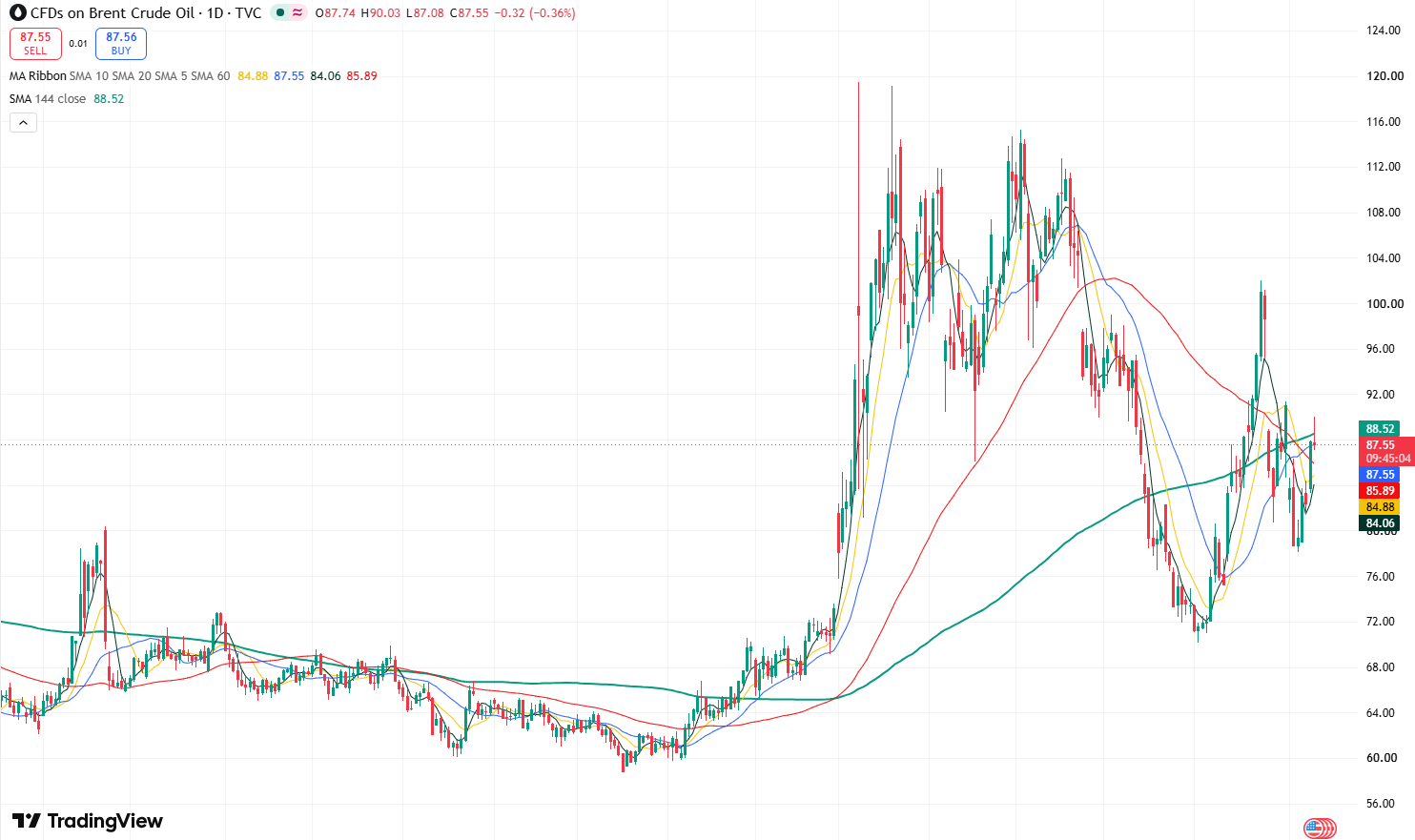
Brent crude oil price daily chart, Source: TradingView
Earlier in the day, oil prices extended their gains from the previous trading session. US President Donald Trump demanded compensation from Iran for damages caused by past conflicts, while Iran insisted on lifting sanctions, obtaining war reparations, and ending military threats, leaving clear public disagreements between the two sides. Meanwhile, vessel traffic through the Strait of Hormuz remained far below normal levels, and market concerns that Middle East crude exports would continue to be restricted rapidly pushed up the geopolitical risk premium.
As a result, WTI crude briefly rose to $84.61 intraday, while Brent crude touched $90.03, both reaching their highest levels since late July. In the previous trading session, both WTI and Brent surged by about 5%, indicating that the market had previously been pricing in stalled US-Iran negotiations and supply disruption risks.
However, oil prices subsequently pulled back. Pakistani officials stated that based on signals from the US and Iran, the two sides were "close to reaching an arrangement." As Pakistan had been involved in diplomatic mediation between the US and Iran, this statement renewed market expectations for a ceasefire and the gradual resumption of vessel traffic through the Strait of Hormuz.
Recommended Articles


