


SpaceX Rises Over 6% on $100 Billion Share Unlock as Traders Bet on Bottom
TradingKey - SpaceX ( SPCX) saw its first batch of restricted shares, valued at approximately $100 billion, officially unlocked from trading, yet the massive sell-off previously feared by the market did not materialize.
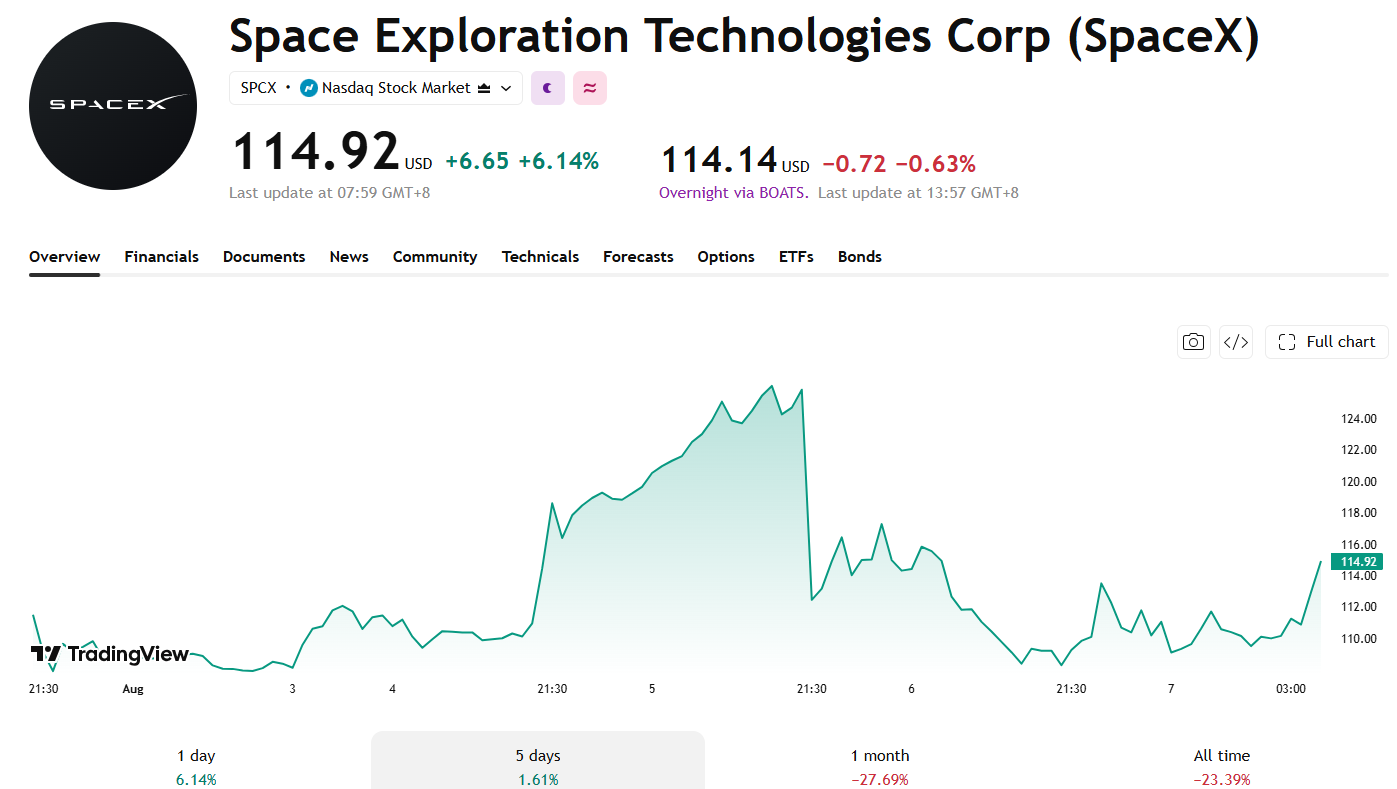
On Thursday Eastern Time, SpaceX experienced its first major lock-up expiration since its listing, with approximately 911.5 million shares becoming eligible for trading. This increased the number of tradable shares from about 639 million at the time of the IPO to approximately 1.55 billion, more than doubling the public float. However, the market did not witness the anticipated stampede. SpaceX shares ultimately rose 6.1% on the day, with trading volume exceeding 250 million shares, marking a new high since its debut week and indicating that the vast amount of newly available shares was smoothly absorbed by the market.
This performance stood in stark contrast to the previous trading day. On Wednesday, the company released its first quarterly earnings report since listing. As investment in artificial intelligence infrastructure was far higher than market expectations, the scale of capital expenditure triggered investor concerns, causing the stock price to plunge nearly 14% in a single day.
Source: TradingView
Lockup Expiry Fails to Trigger Stampede
Generally speaking, the expiration of large-scale lockups on restricted shares means a sudden surge in market supply, which can easily weigh on the share price. However, SpaceX's performance this time was relatively stable, indicating that the market had already fully priced in this risk beforehand.
Many market participants believe that Wednesday's sharp drop was itself the result of funds adjusting their positions in advance. Some investors had previously bet that insiders would take profits collectively after the lockup expired, and therefore established short positions ahead of time.
Once the lockup expiration phase actually began, the actual selling pressure was not as aggressive as the market expected, which instead prompted some short-sellers to cover their positions, providing support for the share price.
Charu Chanana, Chief Investment Strategist at Saxo Bank, stated that the significant increase in trading volume indicates that some early investors indeed chose to sell shares. However, the fact that the share price could still rise reflects that market buying power is sufficient to absorb the new supply. She believes there has been no significant deterioration in the company's fundamentals, and the fact that the current share price remains below the offering price also reduces the willingness of some insiders to exit immediately.
Although the first batch of restricted shares has been successfully released, this does not mean the supply pressure is over.
Unlike most companies that release restricted shares all at once 180 days after listing, SpaceX adopted a more complex phased lockup expiration arrangement. According to the prospectus, the company will still go through several important lockup expiration milestones in the future, with a large number of shares continuing to enter the market over the coming months.
Among them, the milestone with the most significant impact will occur in June 2027. At that time, approximately 6.4 billion Class A common shares held by Musk will become eligible for trading, which will further increase the volume of tradable shares in the market.
Veteran Traders Start Betting on a Bottom
Prior to this lock-up expiration, the market's primary concern came from short sellers.
Data from S3 Partners shows that as of Wednesday's close, approximately 36% of SpaceX's public float had been sold short, with short sellers accumulating more than $9 billion in floating paper profits. Some short sellers were not betting against the company's fundamentals, but rather wagering that the lock-up expiration would trigger concentrated profit-taking, thereby further dragging down the stock price.
However, when the anticipated selling pressure failed to materialize, some shorts began to face pressure to cover.
Meanwhile, retail money continued to buck the trend and flow in. Data from Vanda Research showed that on the day the stock plummeted following SpaceX's earnings release, U.S. retail investors net bought approximately $22.7 million in shares during the first hour of trading, marking the third-highest first-hour capital inflow since its listing and indicating that many investors viewed the correction as an opportunity to reposition.
Some experienced traders also began to shift their strategies.
SpotGamma data shows that several large risk reversal trades—selling puts and buying calls—emerged in the options market on Thursday. This type of strategy typically indicates that investors are not betting on a rapid surge in the stock price, but rather believe the downside is limited and have higher confidence in a rebound over the coming months.
Among these, one trade sold approximately $12 million worth of puts expiring next June with a strike price of $90 while buying calls with a strike price of $220, essentially wagering that SpaceX will not experience another sharp decline over the next ten months while retaining the upside potential of a doubling in the stock price.
Some technical traders also noted that since late July, SpaceX's stock price has largely consolidated around $110. Technical indicators such as the RSI have gradually stabilized, and implied volatility has retreated in tandem, indicating a marked improvement in market sentiment compared to before the earnings release.
Recommended Articles


