


Trump Says US ‘Takes Over’ Strait of Hormuz, WTI and Brent Crude Prices Both Top $80
TradingKey - On July 13 Eastern Time, US President Trump stated that the United States will ensure the Strait of Hormuz remains open and may directly manage this crucial global energy transit corridor. Trump said the US would become the guardian of the strait, while announcing the reinstatement of a maritime blockade against Iran and planning to charge vessels passing through the strait 20% of their cargo value to offset the costs incurred by the US in providing security.
Prior to Trump's remarks, Iran announced the suspension of vessel transit through the Strait of Hormuz, stating that transit permits would only be reissued after stability is restored to the region, while the US emphasized that the strait remains open. Since the weekend, both the US and Iran have continued to launch missile, drone, and airstrike operations, putting the previously reached temporary de-escalation arrangement at risk of collapse.
The Strait of Hormuz accounts for about one-fifth of global crude oil and liquefied natural gas (LNG) shipments. If the US expands its maritime blockade and Iran continues to restrict vessel transit, Gulf countries' crude oil exports, tanker insurance, and shipping costs could rise further, and the oil price risk premium will also continue to expand.
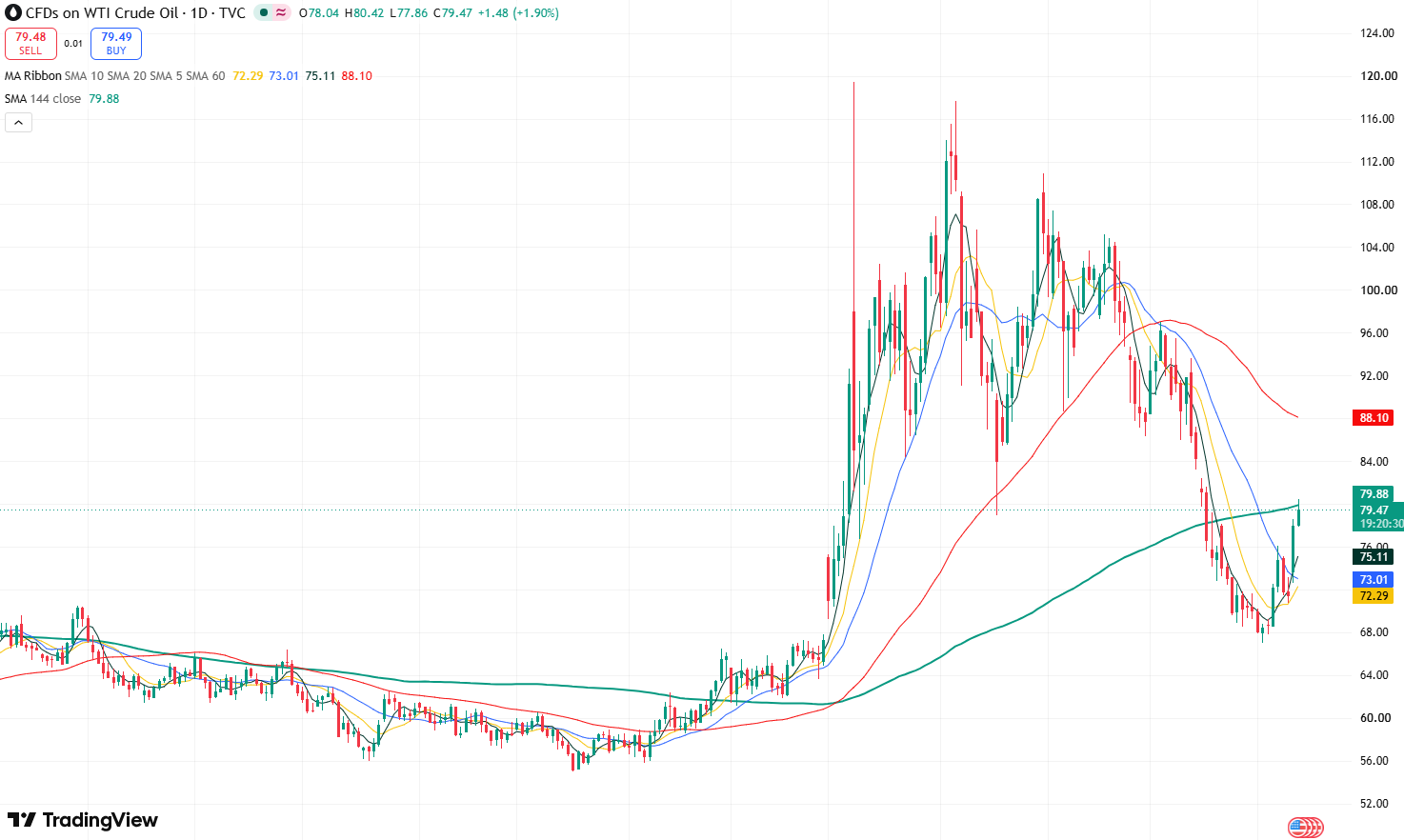
WTI Crude Oil Price Daily Chart, Source: TradingView
Driven by fears of supply disruptions in the Strait of Hormuz, international oil prices have risen sharply for consecutive days. On Monday, WTI ( USOIL) crude oil closed up 9.08% at $77.99; Brent ( UKOIL) crude oil closed up 10.76% at $83.31. Moving into Tuesday's trading session, oil prices moved even higher, with WTI crude oil hitting an intraday high of $80.42 and Brent crude oil reaching a high of $85.64, both benchmarks breaking above the $80 threshold.
A sustained rise in oil prices could also push up gasoline and shipping costs, adding to global inflationary pressures and influencing the Federal Reserve's interest rate decisions. However, Trump's so-called 'takeover' is currently mostly a policy proposal; whether the US can actually implement tolls and maintain long-term control over the strait remains subject to significant legal and operational uncertainties. The subsequent trajectory of oil prices will depend on the actual shipping conditions in the strait and whether the US-Iran conflict escalates further.
Recommended Articles


