


GBP/USD attempts another rebound, but technical ceiling remains
- GBP/USD bounced half of a percent on Thursday.
- Trade concerns are on the rise, but Pound traders are shrugging off tariff risks.
- Key US inflation data looms ahead on Friday, but first UK GDP growth and Retail Sales.
GBP/USD found the gas pedal on Thursday, rallying one-half of one percent and climbing back over 1.2900. The 1.3000 major price handle remains out of reach for Pound bidders, but the fight against a downside pullback resumes.
UK Prime Minister Kier Starmer warned on Thursday that while US tariffs will be “crippling” to the UK economy, policymakers remain committed to fighting back against US President Donald Trump’s lopsided approach to global trade policy. PM Starmer’s comments matched similar intonations from Canadian Prime Minister Mark Carney as most of the US’s former trading partners turn increasingly hostile on trade talks with the Trump administration.
The next batch of key UK data will be Friday’s final Q4 Gross Domestic Product (GDP) and Retail Sales updates. UK GDP growth is expected to match the previous figures during the fourth quarter of 2024, but Retail Sales figures are expected to contract slightly in February.
US GDP growth figures are also due on Thursday, but the non-preliminary print is unlikely to drive much momentum in either direction. This week’s key US data release will be Core Personal Consumption Expenditure Price Index (PCE) inflation due on Friday. Investors will be hoping that a recent upturn in inflation figures will prove to be temporary, but median forecasts are expecting annualized PCE inflation to rise to 2.7% YoY in February.
GBP/USD price forecast
Despite a near-term uptick in bidding pressure, GBP/USD remains capped below the 1.3000 major price handle. Downside momentum remains limited, and buyers remain on the books, keeping Cable bolstered above the 200-day Exponential Moving Average (EMA) near 1.2720.
GBP/USD daily chart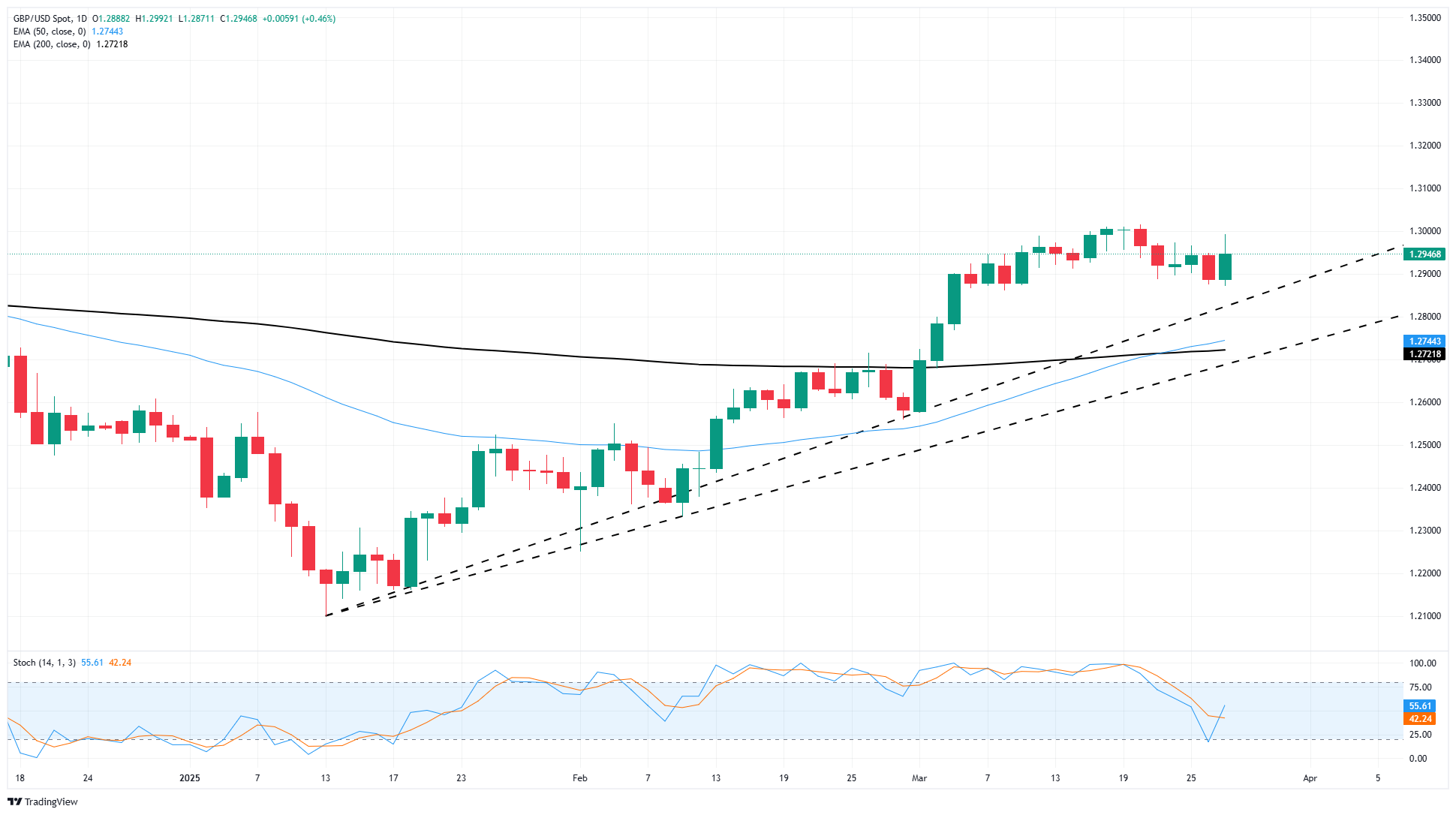
Pound Sterling FAQs
The Pound Sterling (GBP) is the oldest currency in the world (886 AD) and the official currency of the United Kingdom. It is the fourth most traded unit for foreign exchange (FX) in the world, accounting for 12% of all transactions, averaging $630 billion a day, according to 2022 data. Its key trading pairs are GBP/USD, also known as ‘Cable’, which accounts for 11% of FX, GBP/JPY, or the ‘Dragon’ as it is known by traders (3%), and EUR/GBP (2%). The Pound Sterling is issued by the Bank of England (BoE).
The single most important factor influencing the value of the Pound Sterling is monetary policy decided by the Bank of England. The BoE bases its decisions on whether it has achieved its primary goal of “price stability” – a steady inflation rate of around 2%. Its primary tool for achieving this is the adjustment of interest rates. When inflation is too high, the BoE will try to rein it in by raising interest rates, making it more expensive for people and businesses to access credit. This is generally positive for GBP, as higher interest rates make the UK a more attractive place for global investors to park their money. When inflation falls too low it is a sign economic growth is slowing. In this scenario, the BoE will consider lowering interest rates to cheapen credit so businesses will borrow more to invest in growth-generating projects.
Data releases gauge the health of the economy and can impact the value of the Pound Sterling. Indicators such as GDP, Manufacturing and Services PMIs, and employment can all influence the direction of the GBP. A strong economy is good for Sterling. Not only does it attract more foreign investment but it may encourage the BoE to put up interest rates, which will directly strengthen GBP. Otherwise, if economic data is weak, the Pound Sterling is likely to fall.
Another significant data release for the Pound Sterling is the Trade Balance. This indicator measures the difference between what a country earns from its exports and what it spends on imports over a given period. If a country produces highly sought-after exports, its currency will benefit purely from the extra demand created from foreign buyers seeking to purchase these goods. Therefore, a positive net Trade Balance strengthens a currency and vice versa for a negative balance.
Artigos Recomendados


