

Binance Asia Head talks about end of a cycle, start of a new era in crypto
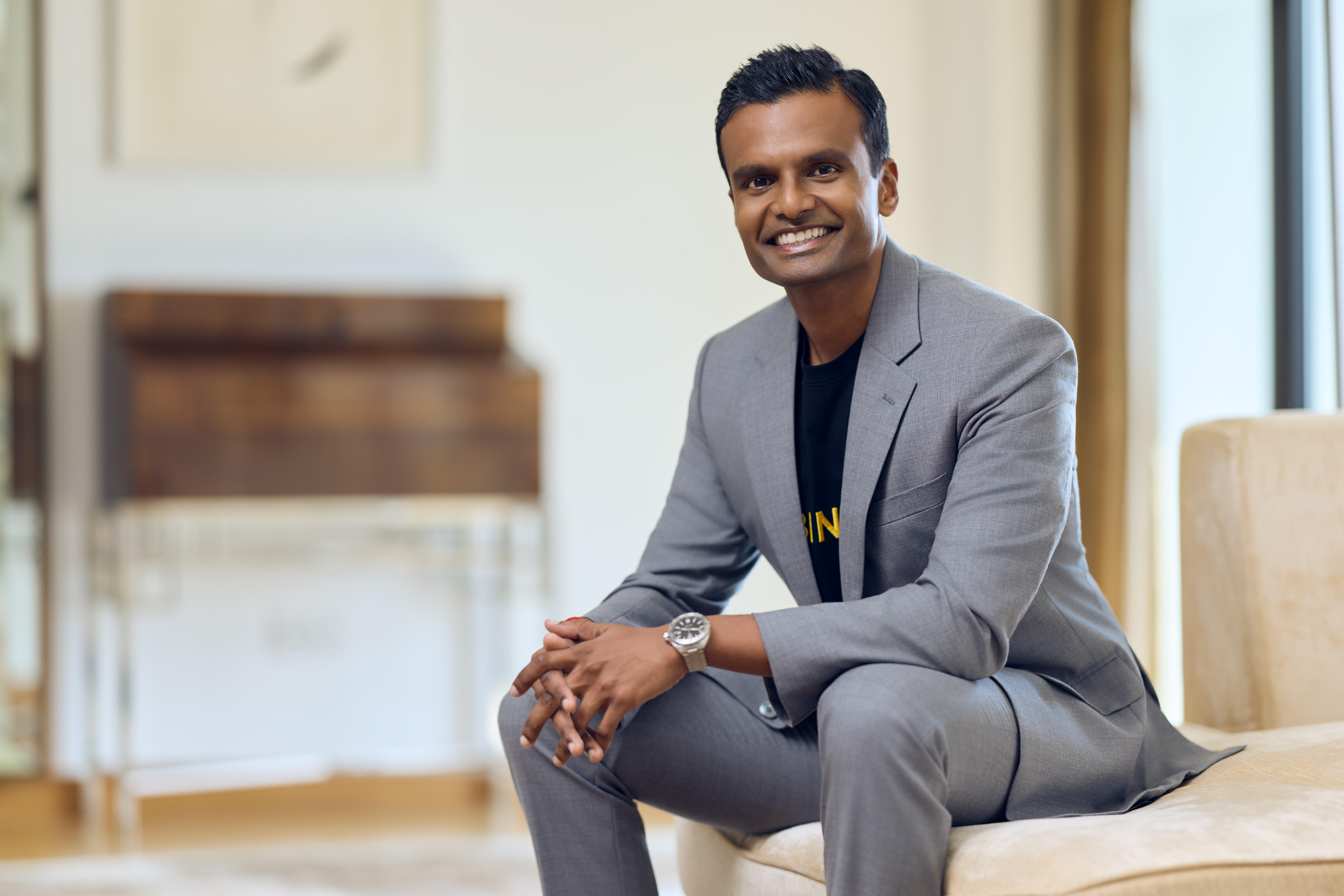
SB Seker is head of Asia Pacific at Binance, one of the largest centralized cryptocurrency exchanges. Seker steers regional strategy, operations, and regulatory engagement across Asia-Pacific markets. Bringing over 20 years of experience across legal, compliance, public sector and blockchain markets, Seker is committed to growth, user protection and close cooperation with policy makers across Asia-Pacific.
FXStreet interviewed Seker for insight on the four year crypto market cycle, Binance's plans for web3 and crypto users and crypto regulation and adoption in India, Asia.
Do you believe the 4-year cycle has ended and we are in a prolonged bull market? Any thoughts on the way crypto could evolve in the next 5 years?
Digital assets have evolved from niche, retail-driven products into a mainstream investment ecosystem, demonstrating resilience across market cycles. Institutional, corporate, family office, and sovereign interest continue to grow, all building long-term positions.
While global digital asset adoption is around 7–8%, significant room for growth remains. Market corrections are normal stages in an emerging asset class’s maturation process. Though volatility persists, improving infrastructure, regulatory clarity, and increased institutional participation, particularly across Asia, support a bullish long-term outlook.
This year alone, Bitcoin and Ethereum's ecosystems continues to grow with record on-chain activity, and stablecoins now account for nearly US$300 billion in circulation.
Over the next five years, we expect this evolution to accelerate across four dimensions: institutional integration, tokenization of real-world assets, stablecoin utility, and regulatory alignment.
At Binance, our focus is on building the infrastructure that powers this next phase investing in compliance-first operations, supporting partnerships across APAC, and enabling new use cases. We build platform, products and tools to be cycle-agnostic and to deliver best-in-class performance and experience for our users 24-7.
In that sense, whether you call it the end of a cycle or the start of a new era, what we are witnessing is digital assets evolving from an alternative asset class into an integral part of the global economy.
What are Binance’s expansion plans in Asian countries with little to no regulatory clarity?
Asia-Pacific remains one of the most dynamic regions for digital-asset adoption, combining strong grassroots participation, growing institutional engagement, and progressive regulatory frameworks. As the fastest growing region in the world in terms of on-chain value received, APAC has emerged as a key growth driver globally, frequently ranking second only to Europe in terms of volumes and occasionally outpacing North America in monthly totals.
Within the APAC region, key markets follow distinct adoption paths. India continues to experience high transaction volumes and strong community participation.
South Korea benefits from the implementation of the Virtual Asset User Protection Act in 2024, along with increasing activity in KRW-backed stablecoins.
Japan records the fastest year-on-year growth, driven largely by yen-backed stablecoins and growing corporate adoption.
Singapore and Hong Kong lead in regulatory innovation, placing strong emphasis on transparency and investor protection. Meanwhile, Australia is modernising its compliance landscape through updated AML/CFT laws and digital-asset licensing frameworks.
Our approach to expansion is rooted in responsibility and collaboration. As the most licensed digital asset exchange globally, with 22 regulatory approvals, we operate to the highest standards of AML and KYC compliance. In jurisdictions, where regulatory clarity is still evolving, our focus is not on driving trading volumes, but on building trust through dialogue, collaboration, and education. Sustainable adoption can only happen when innovation and regulation grow together.
Education remains a major pillar - Binance Academy has trained over 64 million users worldwide, with a large portion of learners coming from Asia. We also conduct capacity-building sessions and training programs with police forces, cybercrime units, and national agencies, strengthening their ability to investigate and recover digital assets.
Do you see India regulating crypto in the next five years?
India remains the fastest-growing major market for digital asset adoption, ranking first globally for three consecutive years in the Chainalysis Global Crypto Adoption Index.
Currently, digital asset exchanges in India operate under an AML registration framework with FIU-IND. Over the next five years, we expect regulation to evolve into a licensing regime that balances innovation with investor protection.
Binance actively collaborates with the FIU on training, asset recovery, and AML-related cases. These partnerships demonstrate that compliance is not a future commitment but an operational reality.
India’s regulatory journey will likely be deliberate and innovation-friendly, aligning with its leadership role in the G20’s financial inclusion and digital economy agenda. At Binance, we are committed to supporting this vision through education, compliance, and sustained dialogue to help shape the next phase of India’s Web3 ecosystem.
What is the single biggest challenge facing crypto in Asia?
Asia-Pacific is both our biggest opportunity and our greatest test. Between mid-2024 and mid-2025, digital asset inflows in the region grew nearly 69%, from US$1.4 trillion to US$2.3 trillion, making it the fastest-growing market globally.
The challenge lies in navigating regulatory diversity. While Singapore, Hong Kong, South Korea and Japan have clear frameworks, others are still defining foundational rules. We’ve also seen that stronger regulation brings measurable benefits: digital assets-related fraud in APAC has fallen by approximately 23% since 2023, highlighting the importance of credible governance in building long-term trust.
Our focus is therefore to lead responsibly within this diversity, engaging regulators, contributing to policy design, and ensuring transparency. In this region, sustainable success doesn’t come from moving the fastest, but from moving the most transparently.
What are your thoughts on tokenization and do you agree with the World Economic Forum’s prediction that 10% of Global GDP will be tokenized by 2027?
Tokenization of real-world assets (RWA) is a foundational opportunity, by converting ownership rights in assets, such as real estate, bonds, or funds, into digital tokens, we unlock liquidity, accessibility, and efficiency at scale.
The World Economic Forum’s prediction that 10% of global GDP could be tokenized by 2027 is ambitious yet aligns with market trends and industry analyses, such as the report from Boston Consulting Group and ADDX projecting a tokenized asset market reaching around US$16 trillion by 2030.
With evolving regulatory frameworks in key markets providing clear pathways, the momentum for tokenization is growing steadily. In Singapore, RWA tokens representing underlying instruments (such as bonds, equities, funds, and government bonds) are governed by existing securities rules, providing a clear regulatory pathway for licensed participants. Hong Kong requires licenses for both securities and virtual asset activities, while Dubai's approach under the VARA (Virtual Assets Regulatory Authority) framework promotes compliance innovation.
Stablecoins continue to anchor a broader RWA economy. Over the past year, new frameworks such as the U.S. "GENIUS Act" and "CLARITY Act," as well as Hong Kong's "Stablecoin Act," have been enacted, officially recognizing stablecoins as regulated digital assets and directly linking their growth to RWA demand.
For Binance, the goal is to bridge ambition with execution. We’re investing in compliant infrastructure, engaging with regulators, and enabling institutions and individuals to access tokenized assets responsibly.
Do you think the next million users onboarded by Binance will trade or is the exchange interested in developing its peer-to-peer, lending and staking business as well?
As the world’s leading digital asset exchange, Binance recognizes that onboarding new users is not just about growing volume, it’s about deepening engagement and empowering diverse participation across the digital asset ecosystem.
Our approach is deliberate: we serve three key groups, retail users, businesses, and institutional investors, each have specific needs and tailored solutions on the platform.
For retail users, especially in the Asia-Pacific region where many are new to digital assets, education and ease of use are paramount. Since launching Binance Academy in 2018, we’ve provided free, multilingual courses covering blockchain fundamentals, trading, and risk management. Our Binance App enables seamless digital asset transactions and incorporates innovations like AI-powered Smart Wallets, simplifying self-custody with enhanced security and usability.
For businesses, Binance Pay continues to open doors. From e-commerce marketplaces in Southeast Asia to luxury brands in the Middle East, Binance Pay processed over $72.4 billion in merchant transaction volume in 2024, enabling businesses to tap into the rapidly growing digital asset-spending demographic.
Institutional adoption has been accelerated by Binance’s scale, liquidity, and advanced market intelligence tools. The platform routinely processes over $16 billion in daily trading volume and close to 1.5 million transactions per second - ensuring deep liquidity for large block trades. A key differentiator in 2024 has been Binance Alpha, the exchange’s institutional-grade analytics platform, which offers macroeconomic insights, on-chain data visualizations, and predictive market models tailored for professional traders and asset managers. Combined with services like Binance Custody, offering segregated cold storage and high-performance trading APIs, Binance Alpha has become a central tool for hedge funds, family offices, and proprietary trading desks seeking an edge.
With innovations like AI-powered wallets and institutional intelligence platforms, Binance’s “secret sauce” is no longer just about access, it’s about empowering every type of market participant to operate with confidence in the global digital asset ecosystem.
Our next hundred million users will not just be interested to trade - all of the above indicates an across the board adoption of a suite of products by each of our distinct customer segments.
Do you consider the U.S. the crypto capital of the world? If yes, then what’s the role of Asian markets?
The United States has long been a global hub for technological innovation, and that extends to digital assets. Initiatives such as the GENIUS Act, market-clarity frameworks, and structured legislation have greatly benefited the industry, marking a pivotal moment as the government recognizes blockchain and digital assets as integral to the financial ecosystem.
Clear regulation is already driving results with major banks now entering the stablecoin space, institutions are pursuing tokenization, and Binance has also partnered with Franklin Templeton in the U.S. to support their tokenization initiatives.
What sets Asia apart is the combination of a young, digitally native population and a thriving ecosystem that translates technology into real-world impact. Asia’s regulatory landscape remains diverse while markets like Singapore and Japan lead with progressive frameworks, others are evolving steadily toward clearer, more structured regulations.
So, while the U.S. continues to set important policy and institutional benchmarks, Asia has become the heartbeat of digital asset adoption. For Binance, APAC is not just a growth market, it is where the future of Web3 utility and user engagement is being defined. The U.S. is reaffirming its leadership through policy clarity; Asia is driving the next wave through participation and scale.
추천 기사


