


Bloom Energy vs. Constellation Energy: On-Site Power or Grid Power, Which Wins the Data Center?
Key Points
Modern AI data centers require a lot of electricity, driving strong demand for both on-site and grid-scale power solutions.
Bloom Energy offers speed with its solid-oxide fuel cells, bypassing lengthy grid interconnection queues.
Constellation Energy boasts a massive nuclear fleet and has long-term power purchase agreements with major technology companies that bring new energy capacity online.
- 10 stocks we like better than Bloom Energy ›
According to the International Energy Agency (IEA), global data center electricity consumption is projected to roughly double by 2030, reaching approximately 945 terawatt-hours (TWh), while Goldman Sachs forecasts a 165% jump in power demand by the end of the decade, compared to 2023 levels.
This push for power has put energy providers in the spotlight, from power equipment providers like Bloom Energy (NYSE: BE) to utility power producers like Constellation Energy (NASDAQ: CEG).
Missed Nvidia in 2009? This Rare Signal Is Flashing Again. In 2009, a "Double Down" signal flashed for a little-known chipmaker called Nvidia. For the first time in years, that same "Total Conviction" signal is flashing for a company 1/100th the size of Nvidia. Continue »
The choice between Bloom Energy and Constellation Energy boils down to one question: Do hyperscalers prefer on-site, "behind-the-meter" power solutions or baseload utility-scale grid power for their data centers? Here's who data centers are going with.
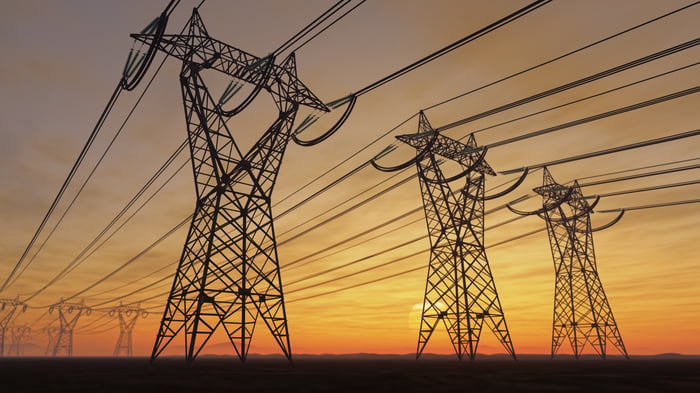
Image source: Getty Images.
Bloom Energy helps data centers get power quickly
Bloom Energy's biggest advantage for technology companies seeking on-site solutions is its time-to-power advantage. For many data center developers, the biggest bottleneck is interconnection wait times. It can take up to seven years or more in constrained energy regions.
Bloom's solid-oxide fuel cells have become a popular solution after the company in 2025 delivered to Oracle's data center in just 55 days, well ahead of its 90-day target. This led to a massive deal with Oracle, which the companies expanded upon earlier this year.
On top of that, Brookfield Asset Management, another major data center developer, expanded its financing framework with Bloom Energy fivefold, from $5 billion to $25 billion, earlier this year.
Constellation Energy is the largest nuclear operator in the U.S.
Constellation Energy's advantage is its massive nuclear energy fleet, the largest in the United States, and its merchant power producer business model. For technology companies looking to reduce carbon emissions while meeting growing electricity demand, nuclear energy has emerged as a popular solution.
Constellation is structuring its deals with hyperscalers through power purchase agreements (PPAs) that provide long-term revenue for Constellation while data centers secure long-term power.
Regulators have scrutinized deals by power producers, primarily concerned that residential customers will have to foot the bill for rising electricity costs and power grid build-out. To address these concerns, Constellation is bringing new energy capacity online, including Three Mile Island Unit 1 as part of its deal with Microsoft, to reduce strain on the grid. It has similar arrangements in place with Meta Platforms, Amazon, Alphabet, and Walmart.
Bloom Energy vs. Constellation Energy: Which is the better investment?
Technology companies are leaving no stone unturned in their search for power solutions, benefiting both Bloom and Constellation.
Bloom Energy offers higher upside potential, especially in the next few years as data centers scramble to install on-site power for data centers coming online. That said, its solid-oxide fuel cells use natural gas (with the option for hydrogen), which still produces emissions and is viewed as a bridge fuel.
Constellation Energy is a better long-term play, given its massive nuclear energy fleet and long-term agreements with major technology companies. For investors seeking a long-term stock poised to benefit from growing energy demand in the coming decades, Constellation is an excellent choice.
Should you buy stock in Bloom Energy right now?
Before you buy stock in Bloom Energy, consider this:
The Motley Fool Stock Advisor analyst team just identified what they believe are the 10 best stocks for investors to buy now… and Bloom Energy wasn’t one of them. The 10 stocks that made the cut could produce monster returns in the coming years.
Consider when Netflix made this list on December 17, 2004... if you invested $1,000 at the time of our recommendation, you’d have $348,060!* Or when Nvidia made this list on April 15, 2005... if you invested $1,000 at the time of our recommendation, you’d have $1,067,492!*
Now, it’s worth noting Stock Advisor’s total average return is 849% — a market-crushing outperformance compared to 210% for the S&P 500. Don't miss the latest top 10 list, available with Stock Advisor, and join an investing community built by individual investors for individual investors.
See the 10 stocks »
*Stock Advisor returns as of November 13, 2026.
Courtney Carlsen has positions in Alphabet, Bloom Energy, Constellation Energy, Goldman Sachs Group, Meta Platforms, Microsoft, and Oracle. The Motley Fool has positions in and recommends Alphabet, Amazon, Bloom Energy, Brookfield Asset Management, Constellation Energy, Goldman Sachs Group, Meta Platforms, Microsoft, Oracle, and Walmart. The Motley Fool has a disclosure policy.
Recommended Articles


