


Kospi Erases Gains to Fall Below 5,300 as SK Hynix Drops 3%, SoftBank Slumps 5%
TradingKey - Japanese and South Korean stocks diverged in the afternoon, with the KOSPI turning negative to close down 0.98%, while the Nikkei rebounded 0.53% to reclaim the 61,000-point mark.
During Asian trading hours on November 13, Japanese and South Korean stock markets both opened sharply higher in the morning driven by semiconductor buying, but diverged in the afternoon, showing a pronounced split with Japan rising and South Korea falling. The KOSPI index gapped up more than 2% in morning trade, but faced heavy net selling by foreign investors in the afternoon, reversing from gains to losses during the session to ultimately close down 0.98% at $5,290.53.
Both of South Korea's heavyweight stocks rallied before paring gains, with Samsung Electronics closing up 0.96% to remain above the 200,000 threshold at 206,000 won, while SK Hynix tumbled 3.03% to 1,216,000 won.
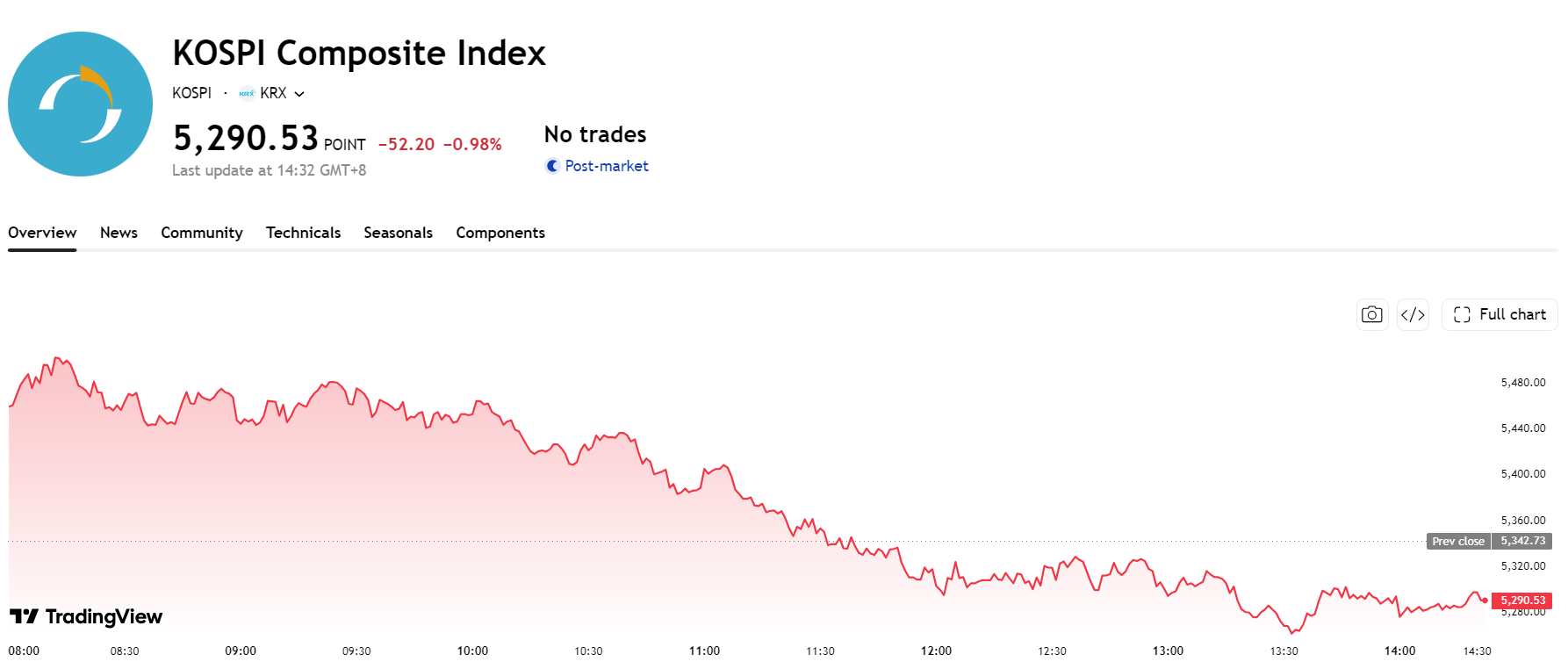 KOSPI Index Chart, Source: TradingView
The Nikkei 225 Index surrendered part of its early gains as afternoon gains narrowed due to weekend profit-taking, but still finished up 0.53% at 61,142.35 points, successfully reclaiming the 61,000 mark lost the previous day; Kioxia fell 2.25% to close at 9,091 yen, while SoftBank tumbled 5.11% to 3,547 yen.
In the morning session, Samsung Electronics and SK Hynix led the advance, at one point surging over 3%. However, foreign investors reversed course in the cash market in the afternoon to net sell over 550 billion won, concentrating their selling on the electrical and electronics and semiconductor sectors, with the pullback in SK Hynix and Samsung Electronics directly weighing on the KOSPI. In addition, the US dollar rose 6.0 won against the Korean won to 1,336.7 won in the Seoul foreign exchange market, further increasing foreign capital outflow pressure.
Dollar strength kept the yen hovering near the 160 threshold against the greenback, continuing to provide foreign exchange tailwinds for Japanese exporters. Meanwhile, semiconductor test equipment makers such as Micronics Japan raised their full-year financial forecasts, and steady performances from domestic-demand value stocks, including banks and trading houses, offset afternoon selling pressure from profit-taking at highs.
Recommended Articles


