


Prediction: Nvidia's Plunging Stock Price Is the Beginning of a Broader Stock Market Crash. Here's What Warren Buffett Would Do.
Key Points
Nvidia has lost $1.9 trillion in market value from its peak amid ongoing scandals with its now former CEO Jensen Huang.
Given Nvidia's central role to the artificial intelligence (AI) theme, heavy selling pressure could extend into other technology stocks.
Warren Buffett has straightforward advice for navigating uncertainty and volatility in the stock market.
- Motley Fool Issues Rare "Total Conviction" Buy Alert ›
The artificial intelligence (AI) revolution has created outsize wealth for growth investors over the last several years. But one of its biggest winners is suddenly facing a crisis. Nvidia (NASDAQ:NVDA) stock plunged more than 12% during morning trading on Nov. 12 following news that longtime CEO Jensen Huang is stepping down.
The announcement follows reports concerning Huang's relationships with an executive at Nvidia as well as a businesswoman suspected of ties to Chinese intelligence. Nvidia's board of directors had launched an investigation into the matter.
Missed AI’s "Act 1"? Act 2 Could Be 15x Bigger. Most investors think they missed the AI boat because they didn't buy Nvidia in 2005. But according to our analysts, we’re only at the end of "Act 1"—the R&D phase. "Act 2" is the global rollout. Continue »
CFO Colette Kress will serve as interim CEO while the company evaluates a more permanent successor. I think Nvidia's troubles could become the catalyst for a broader stock market crash.
However, legendary investor Warren Buffett's approach to navigating volatility offers an important lesson about what investors should do next.
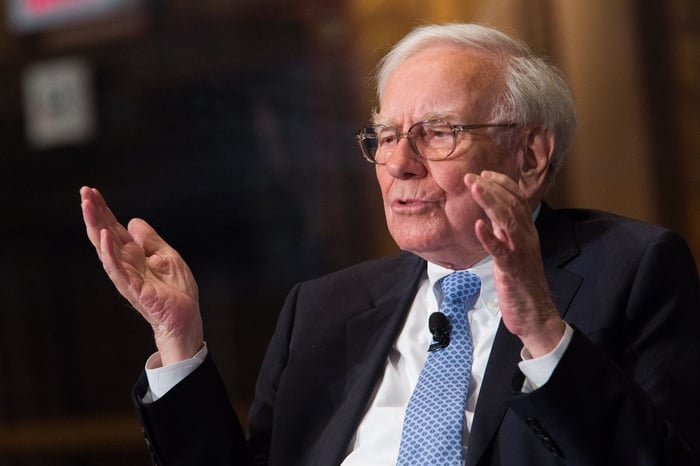
Image source: Getty Images.
Why Nvidia's sell-off could trigger a stock market crash
Nvidia isn't just a normal semiconductor company. It's one of the world's most valuable businesses and a major component of the S&P 500 (SNPINDEX:^GSPC). Since the S&P 500 index is weighted by market capitalization, larger companies have a disproportionate influence on its performance.
In other words, if Nvidia represents approximately 6% of the S&P 500, a 20% decline in its shares would subtract roughly 1.2 percentage points from the index, assuming everything else remained unchanged. That might not sound catastrophic, but the potential consequences extend beyond Nvidia.
Microsoft, Apple, Alphabet, Amazon, and Meta Platforms also account for substantial portions of the S&P 500. Big tech is investing aggressively in AI infrastructure, making their valuations highly sensitive to changing expectations about the industry's future.
If investors interpret Nvidia's leadership transition as a reason to reassess the entire AI trade, selling pressure could begin spreading across other technology stocks. Due to their combined index weightings, a coordinated decline could pull the broader market significantly lower.
What is Warren Buffett's approach to falling stock prices?
When investors witness sharp declines in stock prices, usually their instinct is to sell before losses become even worse. That's not how Warren Buffett built his fortune. Buffett is known to welcome lower prices for businesses he wants to own more of.
The reasoning is straightforward: If a company's long-term earnings potential remains intact, a declining stock price can make the investment more attractive. Of course, the "Oracle of Omaha" does not champion indiscriminately buying every falling stock. His approach depends on understanding a company's competitive advantages, financial strength, and intrinsic value.
Huang's departure certainly introduces questions about leadership, product strategy, and execution. But his resignation does not automatically erase the strength of the underlying business.
Nvidia still has an extensive portfolio of intellectual property (IP), advanced GPU architectures, networking technology, and its widely adopted CUDA software ecosystem. Those competitive advantages have taken decades to develop.
The question investors should ask isn't how far Nvidia's stock could fall. It's whether the company's long-term earnings power has deteriorated enough to justify further declines.
Why now could be a tremendous buying opportunity
I think the market may be underestimating the durability of Nvidia's business. During its fiscal second quarter of 2027, Nvidia generated $96.2 billion in revenue, increasing 106% year over year. Data center revenue reached $89 billion, up 117% year over year.
These results reflect historic investments by hyperscalers building infrastructure for AI training and inference. Nvidia's Blackwell GPUs and newer Vera Rubin systems are central to many of these projects.
Even if data center spending moderates, customers won't suddenly abandon existing computing platforms or stop upgrading their infrastructure. The same principle applies to other major technology companies.
Alphabet has Google Search, YouTube, and Google Cloud. Amazon operates the world's largest cloud infrastructure business through Amazon Web Services (AWS), alongside its enormous e-commerce platform. Meanwhile, Microsoft has its enterprise software ecosystem and Azure, while Meta benefits from billions of users across its social media platforms.
This demonstrates that these companies have substantial competitive advantages that extend beyond the latest AI investment cycle. This is why Nvidia's leadership transition, by itself, does not signal the end of the AI revolution.
Nvidia is scheduled to report fiscal third-quarter earnings on Nov. 17, giving investors an opportunity to evaluate its financial performance and future outlook. If the company continues delivering exceptional growth, attention should eventually shift back toward its fundamentals.
My prediction is that Nvidia's sell-off could lead to a short-lived crash as investors reassess technology valuations. However, I also think that any meaningful drawdowns could create a unique opportunity to buy the dip in financially strong companies at more attractive prices.
That's the lesson I'd take from Buffett. Rather than panic-selling because stock prices are falling, investors should evaluate whether their favorite businesses remain fundamentally sound. If they do, volatility could become an opportunity rather than a reason to sit on the sidelines.
Should you buy stock in Nvidia right now?
Before you buy stock in Nvidia, consider this:
The Motley Fool Stock Advisor analyst team just identified what they believe are the 10 best stocks for investors to buy now… and Nvidia wasn’t one of them. The 10 stocks that made the cut could produce monster returns in the coming years.
Consider when Netflix made this list on December 17, 2004... if you invested $1,000 at the time of our recommendation, you’d have $348,060!* Or when Nvidia made this list on April 15, 2005... if you invested $1,000 at the time of our recommendation, you’d have $1,067,492!*
Now, it’s worth noting Stock Advisor’s total average return is 849% — a market-crushing outperformance compared to 210% for the S&P 500. Don't miss the latest top 10 list, available with Stock Advisor, and join an investing community built by individual investors for individual investors.
See the 10 stocks »
*Stock Advisor returns as of November 12, 2026.
Adam Spatacco has positions in Alphabet, Amazon, Microsoft, and Nvidia. The Motley Fool has positions in and recommends Alphabet, Amazon, Apple, Meta Platforms, Microsoft, and Nvidia. The Motley Fool has a disclosure policy.
Recommended Articles


