


3 AI Power Stocks to Buy in November
Key Points
Constellation Energy has a massive nuclear energy fleet and is adding capacity through expansions and uprates.
Bloom Energy's fuel cells can be delivered in 90 days or less and help data centers bypass grid constraints.
Southern Company offers exposure to a fast-growing region and a conservative way to invest in the AI power theme.
- 10 stocks we like better than Constellation Energy ›
The artificial intelligence trade is getting a reality check. Democrats' decisive midterm wins in the House and Senate, alongside local resistance to new data centers, have investors questioning how quickly the massive AI build-out can continue. Stocks tied to AI, including those that power the expansion, have taken a hit.
But a slower build-out doesn't change the investment thesis. Data centers already approved or coming online will still need electricity, even if future projects face hurdles. On top of that, many AI power stocks have already taken a hit this year as regulators scrutinize new data center electricity deals.
Missed AI’s "Act 1"? Act 2 Could Be 15x Bigger. Most investors think they missed the AI boat because they didn't buy Nvidia in 2005. But according to our analysts, we’re only at the end of "Act 1"—the R&D phase. "Act 2" is the global rollout. Continue »
For patient investors, I believe the recent sell-off could offer an opportunity to invest in AI's long-term power needs. Here are three energy stocks that are down and worth a closer look this November.
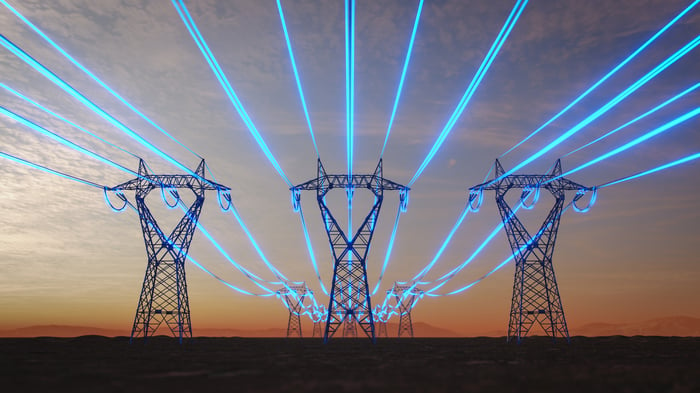
Image source: Getty Images.
1. Constellation Energy is adding power capacity as part of its hyperscale PPAs
Regulators have scrutinized data center power deals, and lawmakers are taking steps to ensure these deals don't drive up energy costs and place an extra burden on household budgets. To ensure this, regulators are requiring technology companies to provide their own power and bring capacity online to offset their increased usage.
One example of this is Constellation Energy's (NASDAQ: CEG) 20-year power purchase agreement (PPA) with Microsoft. This deal serves as a blueprint for other energy operators by bringing additional energy capacity online by restarting Three Mile Island Unit 1, a nuclear reactor that was closed in 2019. By restoring and modernizing this plant, Constellation will bring 835 megawatts of clean-burning nuclear energy online.
That said, Constellation doesn't rely solely on AI hyperscale data centers. While data centers have driven much of its long-term deal growth, the company serves a massive customer base that includes 80% of Fortune 100 companies and 2.5 million customers nationwide. In the second quarter, it signed 920 MW of PPAs, including a 176-MW deal with Walmart to expand capacity at the Dresden Clean Energy Center in Illinois.
The AI power trade has been lackluster this year, even before the recent election results. Constellation Energy stock has fallen 35% from its 52-week high and is priced at 18.5 times forward earnings, giving investors an opportunity to buy at a more attractive price than at any point in the past year.
2. Bloom Energy addresses residential concerns around hyperscalers' growing power needs
When technology companies hit grid constraints, many are turning to "behind-the-meter" power solutions that bypass the traditional grid entirely. Bloom Energy's (NYSE: BE) solid-oxide fuel cells provide reliable baseload energy powered by natural gas, with the option to use hydrogen or biogas.
Bloom Energy's fuel cells are factory-fabricated units that can be assembled and delivered on-site in 90 days or less. This "speed-to-power" has been a massive advantage for Bloom Energy and is the primary reason why the company has secured deals with Oracle, data center developer Brookfield Asset Management, and utility provider American Electric Power.
Fuel cells were also highlighted in Virginia Governor Abigail Spanberger's 2026 Energy Plan, which highlights how non-combustion fuel cells could help reduce emissions in the region dubbed "Data Center Alley."
Because Bloom Energy's fuel cells help bypass grid interconnection queues, they have become a popular choice among data center developers and offer workarounds that address regulators' concerns about rising energy prices. Down 47% from its recent high, Bloom Energy is another AI power stock to buy and hold for the long haul.
3. Southern Company offers a measured approach to the AI power trade
For investors seeking a more measured, conservative approach to the AI power trade, Southern Company (NYSE: SO) is a top utility to consider. The company is seeing strong growth in its regions, including at regulated utilities such as Georgia Power and Alabama Power, driven by data centers. Georgia Power entered into a 25-year agreement to provide power for OpenAI's data center campus.
To ensure residential customers don't foot the bill, Southern Company's large-load contracts include minimum-bill provisions that require customers to pay at least 100% of the incremental cost to serve, preventing cost shifting to residential customers. As a result, it expects retail base rates in Georgia and Alabama to remain stable through 2029.
The company is also seeing strong demand for its on-site power generation systems and natural gas turbines for behind-the-meter power through its subsidiaries, PowerSecure and Southern Power.
If you're seeking exposure to growing electricity demand from AI data centers but prefer a more conservative approach or want passive income, Southern Company, with its 3.2% dividend yield, is an attractive stock to buy now.
Should you buy stock in Constellation Energy right now?
Before you buy stock in Constellation Energy, consider this:
The Motley Fool Stock Advisor analyst team just identified what they believe are the 10 best stocks for investors to buy now… and Constellation Energy wasn’t one of them. The 10 stocks that made the cut could produce monster returns in the coming years.
Consider when Netflix made this list on December 17, 2004... if you invested $1,000 at the time of our recommendation, you’d have $341,966!* Or when Nvidia made this list on April 15, 2005... if you invested $1,000 at the time of our recommendation, you’d have $1,146,819!*
Now, it’s worth noting Stock Advisor’s total average return is 852% — a market-crushing outperformance compared to 203% for the S&P 500. Don't miss the latest top 10 list, available with Stock Advisor, and join an investing community built by individual investors for individual investors.
See the 10 stocks »
*Stock Advisor returns as of November 10, 2026.
Courtney Carlsen has positions in Bloom Energy, Constellation Energy, Microsoft, and Oracle. The Motley Fool has positions in and recommends Bloom Energy, Brookfield Asset Management, Constellation Energy, Microsoft, Oracle, and Walmart. The Motley Fool has a disclosure policy.
Recommended Articles


