


The Impact Trump's Tariffs Are Having on Your 401(k)
Key Points
Tariffs tend to have an indirect impact on 401(k)s and other retirement accounts.
It's possible that any U.S.-based companies in your portfolio are benefiting from tariffs.
The U.S. stock market appears to be more resilient than expected.
- The $23,760 Social Security bonus most retirees completely overlook ›
President Donald Trump has imposed tariffs of 10% to 12.5% on 60 trading partners, building what Reuters describes as a "near-global tariff wall." A tariff is a tax on imported goods, collected from the importer at the border, and typically passed along to U.S. businesses and consumers through higher prices.
To date, Trump's tariffs have created a mixed picture for your 401(k). On one hand, they inject the market with greater short-term volatility and sector-specific risks. So far, though, tariffs have coexisted well with strong overall market gains. Here, we look at the way these tariffs are impacting your retirement account -- both positively and negatively.
Where to invest $1,000 right now? Our analyst team just revealed what they believe are the 10 best stocks to buy right now, when you join Stock Advisor. See the stocks »
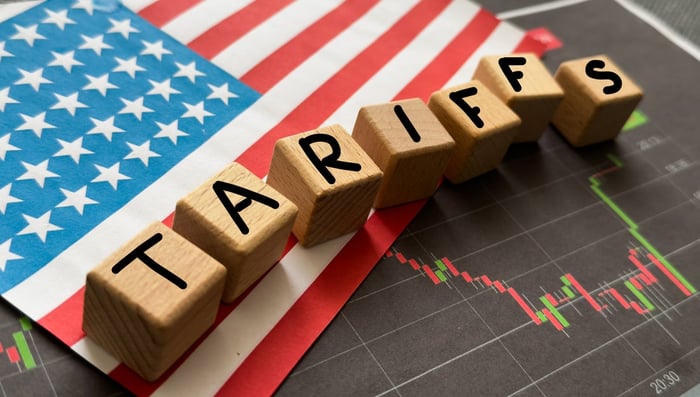
Image source: Getty Images.
How tariffs reach your 401(k)
Tariffs don't touch your 401(k) directly. Instead, they create indirect market reactions that can impact your account. For example, on July 20, Trump announced that the U.S. would be imposing an additional 50% tariff on specific Canadian goods. While Trump's announcement covers a wide swath of Canadian goods, CBC reports that the electronics sector is expected to take the biggest hit.
If you're heavily invested in the electronics sector or Canada chooses to retaliate, it's possible that your 401(k) could feel the impact through weaker market gains in that sector.
Where the real pain lies
Let's say your 401(k) holds impacted sectors, such as industrial exporters, autos, retail apparel, or agriculture. Those industries face higher costs and supply chain issues that can put pressure on the stocks held in 401(k)s. In addition, trading partners face new uncertainty, which can amplify market volatility.
The costs of tariffs also show up as higher prices. Research by the Federal Reserve Bank of New York finds that roughly 90% of the economic burden of recent tariffs is borne by U.S. companies and everyday consumers, costing the average household about $1,100 annually.
The better news
Despite tariff shocks, the overall stock market has continued to deliver strong returns, boosting the typical 401(k) balance. In addition, tariff scares sometimes produce rapid "slingshot rallies" once policies are paused, rewarding investors who remain invested.
In addition, domestically focused sectors included in your 401(k) are likely to experience gains due to the reduction in foreign competition -- at least for now. By ensuring that your 401(k) is well diversified, those gains may partially offset any losses.
The keys to getting through this period of tariffs relatively unscathed are to avoid emotional decision-making, maintain broad diversification across sectors and geographic regions, and recognize that trade policies may be disruptive. Still, they don't spell doom for your retirement account. It's also possible that these tariffs will not last long enough to have a lasting impact.
This advice doesn't just apply to 401(k)s. Whether you're saving for retirement with an individual retirement account (IRA), defined-contribution (DC) pension plan, or HSA, the primary thing to remember is that diversification matters.
The $23,760 Social Security bonus most retirees completely overlook
If you're like most Americans, you're a few years (or more) behind on your retirement savings. But a handful of little-known "Social Security secrets" could help ensure a boost in your retirement income.
One easy trick could pay you as much as $23,760 more... each year! Once you learn how to maximize your Social Security benefits, we think you could retire confidently with the peace of mind we're all after. Join Stock Advisor to learn more about these strategies.
View the "Social Security secrets" »
The Motley Fool has a disclosure policy.
Recommended Articles


