


Why Insurance Stocks Can Be Some of the Market's Best Long-Term Compounders
Key Points
Insurance companies collect premiums up front and pay out on claims in the future, which creates what is known as the float.
Insurance companies like Berkshire Hathaway get to use the premiums they collect until claims are paid.
Insurance companies invest the float in very different ways.
- 10 stocks we like better than Berkshire Hathaway ›
There are two aspects of an insurance company that investors need to monitor. The first is how well they run their insurance operations. The second is how well they manage the float. The float is why insurance companies can be some of the market's best long-term compounders.
There are material differences between how insurance companies manage the float. At one extreme are companies like Berkshire Hathaway (NYSE: BRKA)(NYSE: BRKB) and Cincinnati Financial (NASDAQ: CINF), and at the other are companies like Progressive (NYSE: PGR) and Chubb (NYSE: CB). Here's what you need to know before buying any of these insurance stocks.
Where to invest $1,000 right now? Our analyst team just revealed what they believe are the 10 best stocks to buy right now, when you join Stock Advisor. See the stocks »
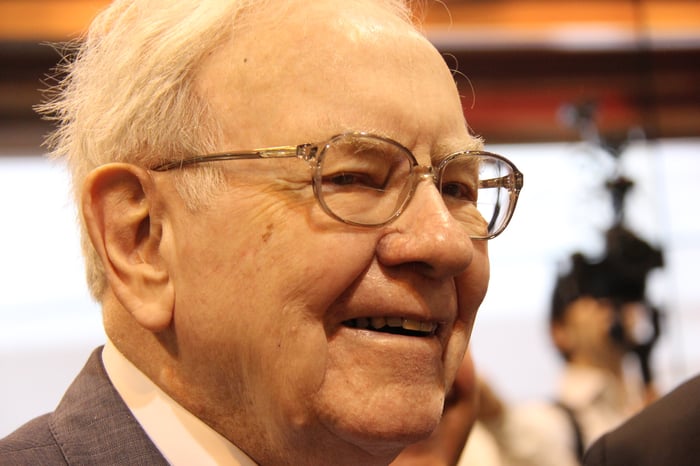
Image source: The Motley Fool.
Warren Buffett created a model that others want to follow
All insurance companies try to write policies profitably, so they collect more in premiums than they pay out in claims. The key metric to monitor on this front is the combined ratio. A number below 100% means a company is making a profit. Big events can push that number above 100% temporarily, so you really want to see it below 100% most of the time, not all of the time.
That said, the main reason insurance companies are powerful compounders is that they can invest the premiums they collect while they wait for claims to come in. This money is known as the float. Warren Buffett, the former CEO of Berkshire Hathaway, often spoke about this. It was one of the keys to his company's long-term success.
Buffett was particularly aggressive with the float, investing it in stocks and even buying whole companies. Eventually, Berkshire Hathaway turned into a giant conglomerate. Buffett's successor, Greg Abel, for example, recently bought homebuilder Taylor Morrison. His plan is to eventually integrate this business with other housing-related businesses Berkshire Hathaway owns. Some of the stocks in which Berkshire Hathaway is invested include iconic companies like Coca-Cola (NYSE: KO) and American Express (NYSE: AXP).
Other companies have tried to use the same approach Buffett has, including Market Group (NYSE: MKL) and, more recently, Brookfield Corporation (NYSE: BN) and Howard Hughes (NYSE: HHH). All three could be defined as investment-led insurance companies.
Cincinnati Financial has a similar approach, but isn't as aggressive. The company releases its full portfolio of holdings every quarter. At the end of the first quarter of 2026, equities accounted for approximately 39% of the company's investment portfolio. However, Cincinnati Financial doesn't buy entire companies. For less aggressive investors, it could be a better option than companies that follow the more aggressive Berkshire Hathaway model.
A more traditional approach
Most insurance companies are much less aggressive. For example, Progressive's equity investments were around 4.5% of its total portfolio at the end of the first quarter of 2026. Chubb's equity exposure was higher at around 16.5%, including private equity investments. Both are well below the 50% that Cincinnati Financial approaches.
Most of Progressive and Chubb's investments are in bonds. The goal is simply to generate a reliable income stream from the float to support earnings. Meanwhile, the bonds remain available for sale should a large event push claims higher. Investing more in stocks increases the risk that a large claim event could come during a bear market, forcing equity to be sold at a loss. That said, while bonds tend to be less volatile, they don't provide the capital gains opportunity of stocks. There's a balance, and most insurance companies tend to err on the side of caution.
That doesn't mean that investors should avoid companies like Progressive and Chubb. It simply suggests that they don't provide the upside potential of Berkshire Hathaway. A lower risk profile, however, may be more appropriate for some long-term investors. With greater equity exposure comes greater risk during a bear market, when the value of an equity portfolio generally falls. It is also worth noting that many companies that follow the Berkshire model don't pay dividends, whereas Progressive and Chubb do.
The middle ground?
Cincinnati Financial is probably a good middle ground for investors who want to benefit from the compounding power of owning stocks, but don't want the risk of buying entire companies. This insurer is a Dividend King, with over 50 years of annual dividend increases. Still, the float is the secret sauce that turns a boring business like writing insurance into a powerful compounding tool for shareholders. But don't just buy an insurance company, dig in and make sure you understand how it uses the float.
Should you buy stock in Berkshire Hathaway right now?
Before you buy stock in Berkshire Hathaway, consider this:
The Motley Fool Stock Advisor analyst team just identified what they believe are the 10 best stocks for investors to buy now… and Berkshire Hathaway wasn’t one of them. The 10 stocks that made the cut could produce monster returns in the coming years.
Consider when Netflix made this list on December 17, 2004... if you invested $1,000 at the time of our recommendation, you’d have $377,990!* Or when Nvidia made this list on April 15, 2005... if you invested $1,000 at the time of our recommendation, you’d have $1,269,518!*
Now, it’s worth noting Stock Advisor’s total average return is 896% — a market-crushing outperformance compared to 206% for the S&P 500. Don't miss the latest top 10 list, available with Stock Advisor, and join an investing community built by individual investors for individual investors.
See the 10 stocks »
*Stock Advisor returns as of July 27, 2026.
American Express is an advertising partner of Motley Fool Money. Reuben Gregg Brewer has no position in any of the stocks mentioned. The Motley Fool has positions in and recommends American Express, Berkshire Hathaway, Brookfield Corporation, Howard Hughes, and Markel Group. The Motley Fool recommends Progressive. The Motley Fool has a disclosure policy.
Recommended Articles


