

Taiwan Semiconductor Manufacturing Just Gave a Warning to Nvidia Investors

Source The Motley Fool

Key Points

  • TSMC is experiencing robust demand, and it anticipates that continuing.

  • However, the market is worried about being at the top of a cycle.

  • Nvidia stock hasn't gained meaningful traction despite fantastic growth.

  • 10 stocks we like better than Nvidia ›

Taiwan Semiconductor Manufacturing (NYSE: TSM) (TSMC) just reported blockbuster earnings, and yet the stock fell after the report. The chip fabricator is fielding explosive demand, and it's investing in the build-out to meet it. However, the market is becoming more wary about high levels of spending on artificial intelligence (AI), which impacts Taiwan Semi from two sides -- its own deep spending and that of its clients.

Shares of the chip foundry fell 5% after the earnings report, and it sent chip stocks down across all markets. Here's why it's a warning for Nvidia (NASDAQ: NVDA) shareholders.

Where to invest $1,000 right now? Our analyst team just revealed what they believe are the 10 best stocks to buy right now, when you join Stock Advisor. See the stocks »

The market has seen this play out before

There are always cycles in the economy and the markets, although some are more extreme than others. Often, how a company rolls through a cycle determines whether or not it's a great stock to own.

Consider how companies built out to meet soaring demand early in the pandemic. Companies like Zoom Communications and Fiverr soared, since investors viewed them as critical components of the remote workforce. They peaked in 2020 and 2021, respectively, and are now 84% and 97% off their highs, respectively.
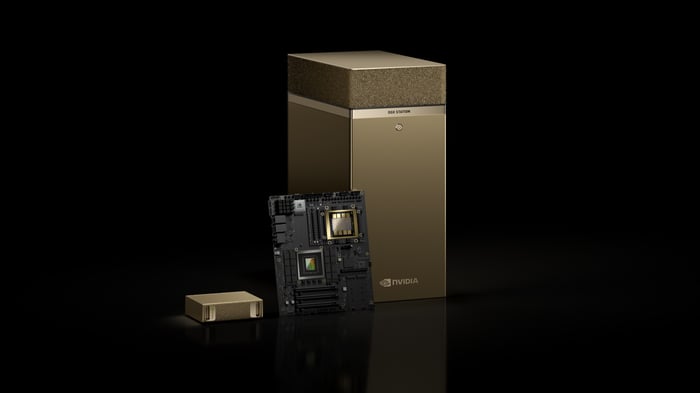
Nvidia workstations.

Nvidia workstations. Image source: Nvidia.

Companies like Amazon and Shopify also built too much, and their stocks fell. But they were able to roll back their spending, and both stocks recently reached new highs.

At the end of this cycle, whenever it is, the same pattern is likely to emerge; some companies are enjoying the current AI wave, but when it ends, so will growth, while others will rebound with new growth drivers.

Why the market is worried about TSMC

For all intents and purposes, TSMC had a blowout second quarter. Revenue increased 34% year over year, and gross margin expanded 9.1 percentage points to 67.7%. Operating margin expanded 10.7 percentage points to 60.3%.

CEO C.C. Wei said, "Our conviction in the multi-year AI megatrend remains very high." Management raised its outlook for capital expenditures to between $60 billion and $64 billion, and CFO Wendell Huang explained that the company always plans well in advance, and doesn't foresee any bottlenecks in expanding capacity and meeting demand. That's great news.

The company also said that it's going to invest another $100 billion in its Arizona facilities, bringing the total to $265 billion.

However, the market seems to have big concerns about how this is all going to convert over the next few years.

How it impacts Nvidia

Wall Street has set a high bar for Nvidia's next earnings report, which is scheduled for the end of August. Nvidia typically clears Wall Street's bars with extra room, and it's likely to do that in the next report, too.

However, what has been emerging lately is that it's not enough. Nvidia stock has struggled to gain meaningful traction recently, and there's a good chance the market will not reward a robust report under almost any circumstances.

The good news is that both Nvidia and TSMC are more similar to Amazon and Shopify than Zoom in Fiverr in how they perform in market cycles. They have proven themselves over decades, adapting to new technology and trends.

The likelihood is that they'll manage through this cycle, whenever it ends. However, be prepared for dips along the way.

Should you buy stock in Nvidia right now?

Before you buy stock in Nvidia, consider this:

The Motley Fool Stock Advisor analyst team just identified what they believe are the 10 best stocks for investors to buy now… and Nvidia wasn’t one of them. The 10 stocks that made the cut could produce monster returns in the coming years.

Consider when Netflix made this list on December 17, 2004... if you invested $1,000 at the time of our recommendation, you’d have $364,562!* Or when Nvidia made this list on April 15, 2005... if you invested $1,000 at the time of our recommendation, you’d have $1,247,668!*

Now, it’s worth noting Stock Advisor’s total average return is 894% — a market-crushing outperformance compared to 207% for the S&P 500. Don't miss the latest top 10 list, available with Stock Advisor, and join an investing community built by individual investors for individual investors.

See the 10 stocks »

*Stock Advisor returns as of July 22, 2026.

Jennifer Saibil has positions in Taiwan Semiconductor Manufacturing. The Motley Fool has positions in and recommends Amazon, Fiverr International, Nvidia, Shopify, Taiwan Semiconductor Manufacturing, and Zoom Communications. The Motley Fool has a disclosure policy.

Disclaimer: For information purposes only. Past performance is not indicative of future results.
placeholder
Pinduoduo Earnings Incoming: Morgan Stanley Sees Long-Term Profit Potential​Insights – On November 21, Chinese e-commerce giant Pinduoduo (PDD) will release its Q3 2024 earnings.
Author  Mitrade
Nov 20, 2024
​Insights – On November 21, Chinese e-commerce giant Pinduoduo (PDD) will release its Q3 2024 earnings.
placeholder
Elon Musk’s xAI and Neuralink Launch New Funding Rounds​Billionaire Elon Musk recently raised funds for his two high-profile tech companies, xAI and Neuralink.
Author  Insights
Jun 03, 2025
​Billionaire Elon Musk recently raised funds for his two high-profile tech companies, xAI and Neuralink.
placeholder
Bitcoin briefly loses 2025 gains as crypto plunges over the weekend.Bitcoin experienced a sharp decline this weekend, briefly erasing its 2025 gains and dipping below its year-opening value of $93,507. The cryptocurrency fell to a low of $93,029 on Sunday, representing a 25% drop from its all-time high in October. Although it has rebounded slightly to around $94,209, the pressures on the market remain significant. The downturn occurred despite the reopening of the U.S. government on Thursday, which many had hoped would provide essential support for crypto markets. This year initially appeared promising for cryptocurrencies, particularly after the inauguration of President Donald Trump, who has established the most pro-crypto administration thus far. However, ongoing political tensions—including Trump's tariff strategies and the recent government shutdown, lasting a historic 43 days—have contributed to several rapid price pullbacks for Bitcoin throughout the year. Market dynamics are also being influenced by Bitcoin whales—investors holding large amounts of Bitcoin—who have been offloading portions of their assets, consequently stalling price rallies even as positive regulatory developments emerge. Despite these sell-offs, analysts from Glassnode argue that this behavior aligns with typical patterns seen among long-term investors during the concluding stages of bull markets, suggesting it is not indicative of a mass exodus. Notably, Bitcoin is not alone in its struggles, as Ethereum and Solana have also recorded declines of 7.95% and 28.3%, respectively, since the start of the year, while numerous altcoins have faced even steeper losses. Looking ahead, questions linger regarding the viability of the four-year cycle thesis, particularly given the increasing institutional support and regulatory frameworks now in place in the crypto landscape. Matt Hougan, chief investment officer at Bitwise, remains optimistic, suggesting a potential Bitcoin resurgence in 2026 driven by the “debasement trade” thesis and a broader trend toward increased adoption of stablecoins, tokenization, and decentralized finance. Hougan emphasized the soundness of the underlying fundamentals, pointing to a positive outlook for the sector in the longer term.
Author  Mitrade
Nov 17, 2025
Bitcoin experienced a sharp decline this weekend, briefly erasing its 2025 gains and dipping below its year-opening value of $93,507. The cryptocurrency fell to a low of $93,029 on Sunday, representing a 25% drop from its all-time high in October. Although it has rebounded slightly to around $94,209, the pressures on the market remain significant. The downturn occurred despite the reopening of the U.S. government on Thursday, which many had hoped would provide essential support for crypto markets. This year initially appeared promising for cryptocurrencies, particularly after the inauguration of President Donald Trump, who has established the most pro-crypto administration thus far. However, ongoing political tensions—including Trump's tariff strategies and the recent government shutdown, lasting a historic 43 days—have contributed to several rapid price pullbacks for Bitcoin throughout the year. Market dynamics are also being influenced by Bitcoin whales—investors holding large amounts of Bitcoin—who have been offloading portions of their assets, consequently stalling price rallies even as positive regulatory developments emerge. Despite these sell-offs, analysts from Glassnode argue that this behavior aligns with typical patterns seen among long-term investors during the concluding stages of bull markets, suggesting it is not indicative of a mass exodus. Notably, Bitcoin is not alone in its struggles, as Ethereum and Solana have also recorded declines of 7.95% and 28.3%, respectively, since the start of the year, while numerous altcoins have faced even steeper losses. Looking ahead, questions linger regarding the viability of the four-year cycle thesis, particularly given the increasing institutional support and regulatory frameworks now in place in the crypto landscape. Matt Hougan, chief investment officer at Bitwise, remains optimistic, suggesting a potential Bitcoin resurgence in 2026 driven by the “debasement trade” thesis and a broader trend toward increased adoption of stablecoins, tokenization, and decentralized finance. Hougan emphasized the soundness of the underlying fundamentals, pointing to a positive outlook for the sector in the longer term.
placeholder
Gold Price Trend Forecast: Expectations of Easing US-Iran Tensions Boost Gold Prices, $4,070 Becomes Key Level for Bulls and BearsAs of the Asian session on July 21, gold prices ( XAUUSD) staged a rapid intraday rebound, rising 1.56% on the day to touch a high of $4,084.28. From a technical perspective, gold prices
Author  TradingKey
Yesterday 10: 32
As of the Asian session on July 21, gold prices ( XAUUSD) staged a rapid intraday rebound, rising 1.56% on the day to touch a high of $4,084.28. From a technical perspective, gold prices
placeholder
Japanese Yen bears turn cautious near four-decade low amid looming intervention risksThe USD/JPY enters a bullish consolidation phase during the Asian session on Wednesday and holds steady above the 163.00 mark, near its highest level since 1986 set the previous day.
Author  FXStreet
13 hours ago
The USD/JPY enters a bullish consolidation phase during the Asian session on Wednesday and holds steady above the 163.00 mark, near its highest level since 1986 set the previous day.
goTop
quote