


US June Retail Sales Rose 0.2% Meeting Expectations, Consumption Remains Resilient Excluding Gas Stations
TradingKey - On July 16, Eastern Time, data released by the U.S. Department of Commerce on Thursday showed that retail and food services sales in June grew by 0.2% month-on-month, in line with market expectations, marking the fifth consecutive month of positive growth. The May figure was revised upward to 1% from an initial reading of 0.9%.
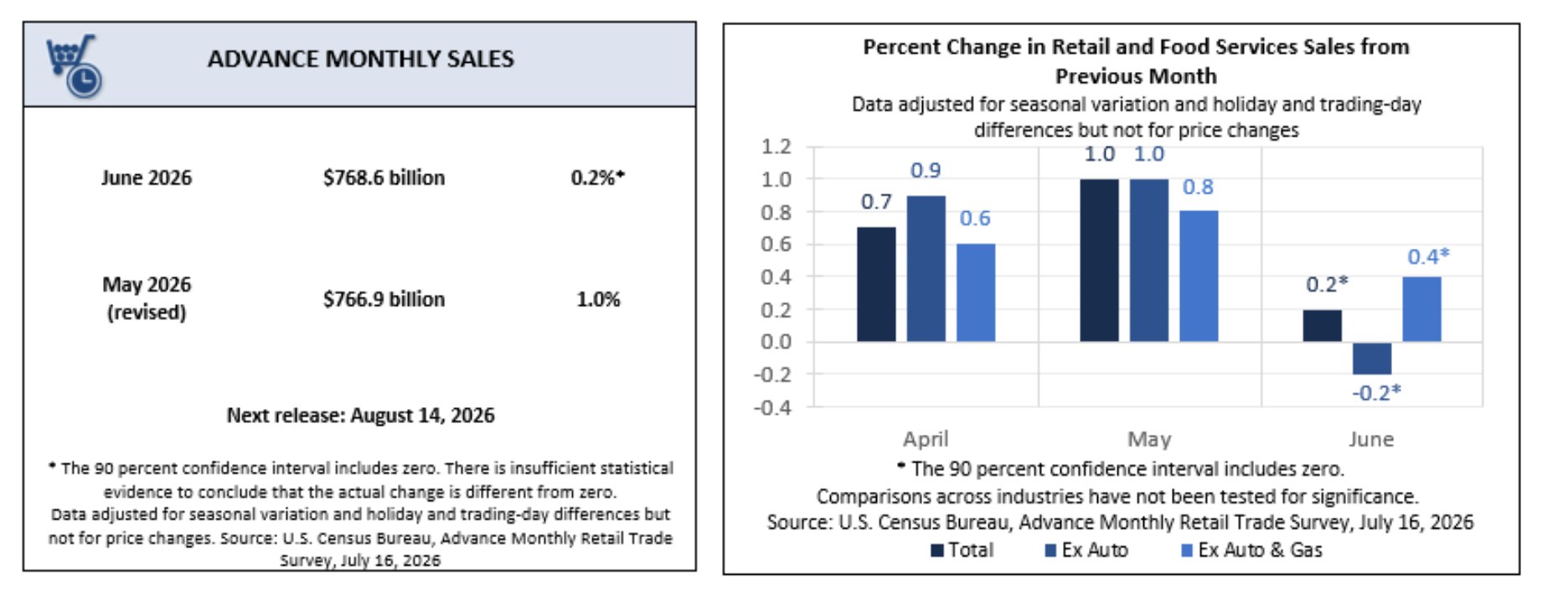
[Source: U.S. Census Bureau]
The biggest drag during the month came from gas stations. Impacted by a drop of approximately 50 cents per gallon in gasoline prices, sales at gas stations fell 5.3% month-on-month, marking the largest single-month decline since December 2022. However, excluding gas stations, retail sales grew by 0.7% month-on-month, indicating that endogenous consumer momentum remains solid. Excluding autos and gasoline, retail sales increased by 0.4% month-on-month, in line with expectations.
By category, 7 out of 13 retail categories recorded growth. Non-store retailers' sales jumped 1.9% month-on-month, significantly boosted by Amazon's Prime Day promotional event; discretionary consumer categories such as sporting goods and electronics rose in tandem. Spending at food services and drinking places continued to grow.
Data released on July 13 by the National Retail Federation (NRF) provided another angle of observation. According to the organization's own statistical methodology, retail sales in June, excluding auto dealers and gas stations, rose 0.33% month-on-month, with an unadjusted year-on-year increase of 9.4%, marking the ninth consecutive month of growth. Core retail sales grew 0.36% month-on-month and rose 10.08% year-on-year.
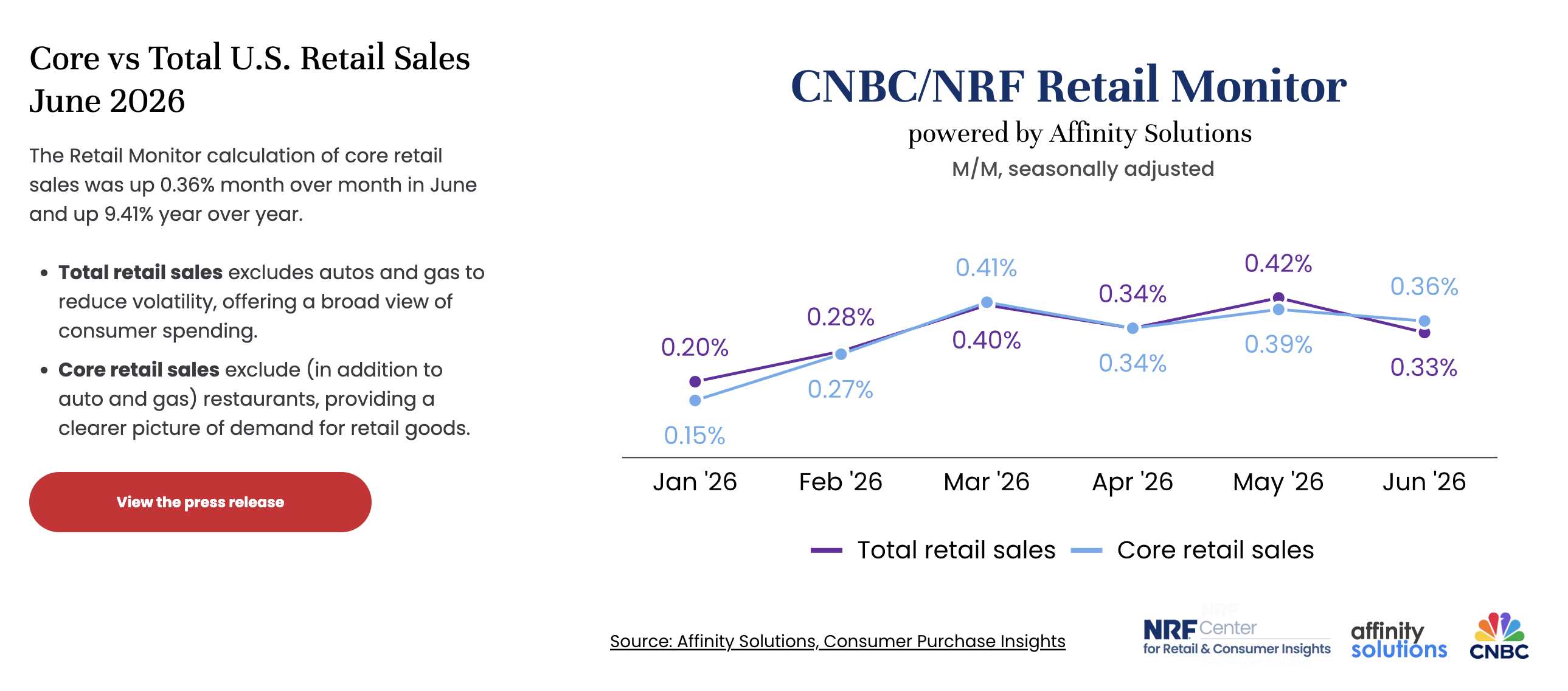
[Source: NRF Official Website]
In terms of categories, sporting goods, electronics, and apparel led the year-on-year gains, with monthly sales in only two of the nine core categories seeing a slight pullback.
Matthew Shay, NRF President and CEO, stated in a release that the summer shopping season kicked off to a strong start, with consumers seizing promotional opportunities and back-to-school shopping starting early. However, market observers also noted that this year's Amazon Prime Day was moved up from July to June, which may have pulled some online spending forward from July into June, causing some distortion to the readings.
The June CPI, released on July 14, saw its year-on-year growth rate cool to 3.5%, lower than the market expectation of 3.8%. The marginal easing of inflationary pressure provided support for real consumer spending. The moderate expansion of consumption data confirms that U.S. household spending remains resilient, but the month-on-month growth rate slowed significantly compared to May, indicating a weakening of consumption momentum. Market focus on the Federal Reserve's subsequent monetary policy path is heating up.
Following the release of the June retail sales data, the US Dollar Index showed limited volatility. While consumption data remained robust, consumer confidence surveys remained low, further deepening the divergence between surveyed sentiment and actual behavior.
Recommended Articles


