


Warren Buffett Has Said the Same Thing About Stock Market Corrections for Nearly 50 Years. History Shows He's Never Been Wrong.
Key Points
Warren Buffett built Berkshire Hathaway into one of the largest conglomerates in the world.
Berkshire has always run a large equities portfolio, investing in companies across sectors.
Long-term investors would do well to heed Buffett's advice.
- 10 stocks we like better than Berkshire Hathaway ›
Warren Buffett is no longer the CEO of Berkshire Hathaway, the company he spent six decades building into one of the world's largest conglomerates. But the lessons he taught investors and people along the way will live on forever.
One of those, in particular, concerns how to invest when the market gets tough and pulls back significantly. In fact, Buffett has been giving advice about this topic for five decades, and history shows he's never been wrong.
Where to invest $1,000 right now? Our analyst team just revealed what they believe are the 10 best stocks to buy right now, when you join Stock Advisor. See the stocks »
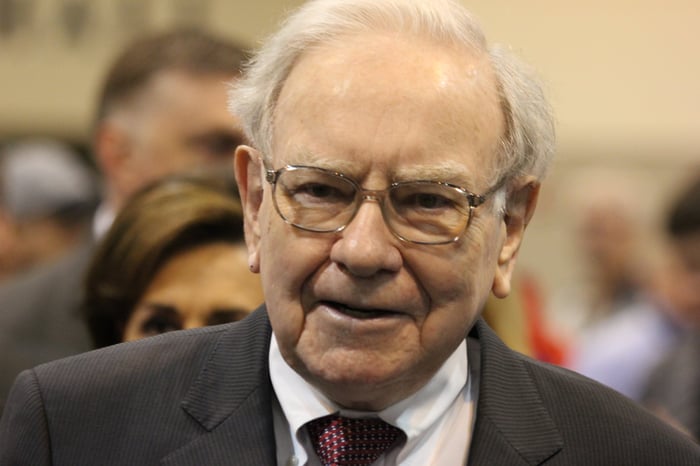
Image source: The Motley Fool.
Be fearful when others are greedy
Buffett has time and again zigged when the rest of the market has zagged, making a fortune for himself and Berkshire investors along the way. In 1974, the market was hit hard by incredibly high inflation and an oil crisis. The Dow Jones Industrial Average fell below 600, yet Buffett didn't bat an eye. Toward the end of 1974, Buffett told Forbes, "This is the time to start investing."
Buffett turned out to be right, and it wouldn't be the first time.
Buffett also put money to work during the Great Recession of 2008, as some of the country's largest banks were on the brink of failure. In 2008, Buffett penned a New York Times op-ed titled "Buy American. I am." Buffett told investors to "be fearful when others are greedy, and be greedy when others are fearful."
That same year, Berkshire injected $5 billion into Goldman Sachs in return for perpetual preferred shares and warrants to eventually purchase common stock. The company would set up a similar agreement with Bank of America in 2011. Both investments would pay out big for Buffett and Berkshire down the line.
As recently as this year, Buffett demonstrated similar sentiment during an interview with CNBC. "Well, the most likely time to buy things is when nobody else will answer their phones," he said.
Retail investors actually have more in common with Buffett than institutional investors, as most institutional investors typically invest on 12- to 18-month time horizons. They need to beat the market to prove they are worth the high fees that many hedge funds charge.
But retail investors can hold stocks for 10, 20, or 30 years and have the gift of time, which Buffett has repeatedly credited for part of his success. So, when the market goes down, if you have a long runway ahead, grit through the pain and buy stocks.
You can't time the market, but you can prepare
Now, trying to time when the market will enter a correction or bear market is downright impossible because the typical cause of a market meltdown is something no one sees coming.
However, investors can prepare, especially in an environment like this, when conditions look very frothy. Investors need to carefully assess their portfolios and where they are in their investing journeys. If you do have 10 to 30 years ahead, you likely don't need to do anything to your portfolio if you feel confident.
But investors also shouldn't be complacent. The broader S&P 500 index is much more concentrated than it used to be, and many high-performing individual stocks, particularly those in artificial intelligence, trade at extremely high valuations.
So, if your time horizon isn't at least over five years, you may even want to consider diversifying away from the S&P 500. If you own individual stocks trading at 70, 80, or even over 100 times forward earnings, try to understand the assumptions going into that valuation.
How heroic is too heroic? Do you need to have a significant percentage of your portfolio in one of these names, or are you trying to get rich too fast and not paying enough attention to fundamentals?
Buffett is correct that the best time to buy for long-term investors is always when the market experiences a big pullback or crash, but investors who prepare for this moment will also be better positioned to pull the trigger.
Should you buy stock in Berkshire Hathaway right now?
Before you buy stock in Berkshire Hathaway, consider this:
The Motley Fool Stock Advisor analyst team just identified what they believe are the 10 best stocks for investors to buy now… and Berkshire Hathaway wasn’t one of them. The 10 stocks that made the cut could produce monster returns in the coming years.
Consider when Netflix made this list on December 17, 2004... if you invested $1,000 at the time of our recommendation, you’d have $395,679!* Or when Nvidia made this list on April 15, 2005... if you invested $1,000 at the time of our recommendation, you’d have $1,294,805!*
Now, it’s worth noting Stock Advisor’s total average return is 929% — a market-crushing outperformance compared to 211% for the S&P 500. Don't miss the latest top 10 list, available with Stock Advisor, and join an investing community built by individual investors for individual investors.
See the 10 stocks »
*Stock Advisor returns as of July 14, 2026.
Bank of America is an advertising partner of Motley Fool Money. Bram Berkowitz has no position in any of the stocks mentioned. The Motley Fool has positions in and recommends Berkshire Hathaway and Goldman Sachs Group. The Motley Fool has a disclosure policy.
Recommended Articles


