

Rocket Lab Just Unveiled a Game-Changing New Technology Worth Watching

Source The Motley Fool

Key Points

  • Rocket Lab's "Hungry Hippo" fairing is one of the most innovative ideas in reusable rockets because it keeps the nose cone attached to the booster.

  • It could potentially eliminate the cost and hassle of recovering or replacing a major piece of hardware after every launch.

  • The concept is promising, but investors shouldn't get ahead of themselves.

  • These 10 stocks could mint the next wave of millionaires ›

Reusable rockets are no longer a novelty, but there is still one piece of almost every launch that gets thrown away: the payload fairing, or the protective nose cone that shields the cargo on the way up. Rocket Lab (NASDAQ: RKLB) thinks it has solved that problem, and the solution has an unforgettable name.
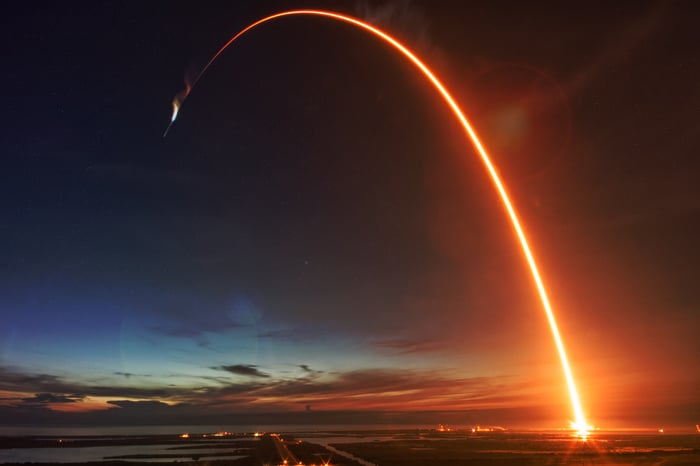
A rocket flies into space at night.

Image source: Getty Images.

Missed Nvidia in 2009? This Rare Signal Is Flashing Again. In 2009, a "Double Down" signal flashed for a little-known chipmaker called Nvidia. For the first time in years, that same "Total Conviction" signal is flashing for a company 1/100th the size of Nvidia. Continue »

How the "Hungry Hippo" fairing works

On most rockets, the fairing splits into two halves and falls away during ascent, tumbling toward the ocean. Even the companies that recover fairings have to fish them out of the water and refurbish them.

Rocket Lab's approach, built for its upcoming medium-lift Neutron rocket, is different. The two fairing halves are hinged to the top of the first stage and never detach. Once the rocket climbs high enough, the halves swing open like a set of jaws -- the reason engineers nicknamed it the Hungry Hippo -- release the second stage and payload, then snap shut again in about 1.5 seconds.

Because the fairing stays attached, it rides back down to Earth with the first stage instead of being discarded. Rocket Lab qualified the design in testing and has been conducting final checks ahead of Neutron's debut.

Why this technology matters

The appeal is economic. The fairing and the top of the rocket are among the most expensive structures on the vehicle, so recovering them in one piece with the booster removes a cost that rivals either eating or working hard to reclaim. It also simplifies the whole recovery process, which is the key to launching often and at low cost.

There is a second, subtler benefit. Because the second stage is tucked inside the fairing and shielded from wind and heat during ascent, it can be built lighter. A lighter upper stage can carry more payload to orbit, so the captive fairing improves both performance and reuse. Neutron is designed to lift 13,000 kilograms into low Earth orbit, powered by nine of Rocket Lab's own methane-fueled Archimedes engines.

The catch is that none of this has flown yet. Neutron's first launch has slipped several times and is now targeted for late 2026. A first-stage tank ruptured during a pressure test earlier this year, prompting a manufacturing change. A clever fairing means little until the rocket reaches orbit and the stage returns intact. Rocket Lab also remains unprofitable while funding this work.

The Hungry Hippo is a genuinely original idea, and if it works, it could make Neutron cheaper to reuse than partially reusable rivals like Space Exploration Technologies. But "if it works" is doing the heavy lifting here. The technology is worth watching, and the moment to watch for is Neutron's first flight and recovery, the real test of whether this design changes the game or just the vocabulary.

Don’t miss this second chance at a potentially lucrative opportunity

Ever feel like you missed the boat in buying the most successful stocks? Then you’ll want to hear this.

On rare occasions, our expert team of analysts issues a “Double Down” stock recommendation for companies that they think are about to pop. If you’re worried you’ve already missed your chance to invest, now is the best time to buy before it’s too late. And the numbers speak for themselves:

  • Nvidia: if you invested $1,000 when we doubled down in 2009, you’d have $526,597!*
  • Apple: if you invested $1,000 when we doubled down in 2008, you’d have $60,269!*
  • Netflix: if you invested $1,000 when we doubled down in 2004, you’d have $407,004!*

Right now, we’re issuing “Double Down” alerts for three incredible companies, available when you join Stock Advisor, and there may not be another chance like this anytime soon.

See the 3 stocks »

*Stock Advisor returns as of July 11, 2026.

Micah Zimmerman has no position in any of the stocks mentioned. The Motley Fool has positions in and recommends Rocket Lab. The Motley Fool has a disclosure policy.

Disclaimer: For information purposes only. Past performance is not indicative of future results.
placeholder
Bitcoin CME gaps at $35,000, $27,000 and $21,000, which one gets filled first?Prioritize filling the $27,000 gap and even try higher.
Author  FXStreet
Aug 22, 2023
Prioritize filling the $27,000 gap and even try higher.
placeholder
Crypto ETFs for XRP, SOL, and DOGE? The race heats upThe crypto Exchange-Traded Fund (ETF) race is heating up after the major success of Bitcoin spot ETF launch in the US. In a latest post, Nate Geraci, president of The ETF Store, suggested that the applications for Solana (SOL), Ripple’s XRP, HBAR, and even Cardano (ADA) or Avalanche (AVAX) ETFs are now in the mix
Author  Cryptopolitan
Nov 21, 2024
The crypto Exchange-Traded Fund (ETF) race is heating up after the major success of Bitcoin spot ETF launch in the US. In a latest post, Nate Geraci, president of The ETF Store, suggested that the applications for Solana (SOL), Ripple’s XRP, HBAR, and even Cardano (ADA) or Avalanche (AVAX) ETFs are now in the mix
placeholder
Bitcoin briefly loses 2025 gains as crypto plunges over the weekend.Bitcoin experienced a sharp decline this weekend, briefly erasing its 2025 gains and dipping below its year-opening value of $93,507. The cryptocurrency fell to a low of $93,029 on Sunday, representing a 25% drop from its all-time high in October. Although it has rebounded slightly to around $94,209, the pressures on the market remain significant. The downturn occurred despite the reopening of the U.S. government on Thursday, which many had hoped would provide essential support for crypto markets. This year initially appeared promising for cryptocurrencies, particularly after the inauguration of President Donald Trump, who has established the most pro-crypto administration thus far. However, ongoing political tensions—including Trump's tariff strategies and the recent government shutdown, lasting a historic 43 days—have contributed to several rapid price pullbacks for Bitcoin throughout the year. Market dynamics are also being influenced by Bitcoin whales—investors holding large amounts of Bitcoin—who have been offloading portions of their assets, consequently stalling price rallies even as positive regulatory developments emerge. Despite these sell-offs, analysts from Glassnode argue that this behavior aligns with typical patterns seen among long-term investors during the concluding stages of bull markets, suggesting it is not indicative of a mass exodus. Notably, Bitcoin is not alone in its struggles, as Ethereum and Solana have also recorded declines of 7.95% and 28.3%, respectively, since the start of the year, while numerous altcoins have faced even steeper losses. Looking ahead, questions linger regarding the viability of the four-year cycle thesis, particularly given the increasing institutional support and regulatory frameworks now in place in the crypto landscape. Matt Hougan, chief investment officer at Bitwise, remains optimistic, suggesting a potential Bitcoin resurgence in 2026 driven by the “debasement trade” thesis and a broader trend toward increased adoption of stablecoins, tokenization, and decentralized finance. Hougan emphasized the soundness of the underlying fundamentals, pointing to a positive outlook for the sector in the longer term.
Author  Mitrade
Nov 17, 2025
Bitcoin experienced a sharp decline this weekend, briefly erasing its 2025 gains and dipping below its year-opening value of $93,507. The cryptocurrency fell to a low of $93,029 on Sunday, representing a 25% drop from its all-time high in October. Although it has rebounded slightly to around $94,209, the pressures on the market remain significant. The downturn occurred despite the reopening of the U.S. government on Thursday, which many had hoped would provide essential support for crypto markets. This year initially appeared promising for cryptocurrencies, particularly after the inauguration of President Donald Trump, who has established the most pro-crypto administration thus far. However, ongoing political tensions—including Trump's tariff strategies and the recent government shutdown, lasting a historic 43 days—have contributed to several rapid price pullbacks for Bitcoin throughout the year. Market dynamics are also being influenced by Bitcoin whales—investors holding large amounts of Bitcoin—who have been offloading portions of their assets, consequently stalling price rallies even as positive regulatory developments emerge. Despite these sell-offs, analysts from Glassnode argue that this behavior aligns with typical patterns seen among long-term investors during the concluding stages of bull markets, suggesting it is not indicative of a mass exodus. Notably, Bitcoin is not alone in its struggles, as Ethereum and Solana have also recorded declines of 7.95% and 28.3%, respectively, since the start of the year, while numerous altcoins have faced even steeper losses. Looking ahead, questions linger regarding the viability of the four-year cycle thesis, particularly given the increasing institutional support and regulatory frameworks now in place in the crypto landscape. Matt Hougan, chief investment officer at Bitwise, remains optimistic, suggesting a potential Bitcoin resurgence in 2026 driven by the “debasement trade” thesis and a broader trend toward increased adoption of stablecoins, tokenization, and decentralized finance. Hougan emphasized the soundness of the underlying fundamentals, pointing to a positive outlook for the sector in the longer term.
placeholder
WTI consolidates below $72.00 as traders monitor geopolitical developmentsWest Texas Intermediate (WTI) – the benchmark US Crude Oil price – steadies during the Asian session on Friday, stalling the previous day's downfall amid mixed messaging from the US and Iran.
Author  FXStreet
Yesterday 01: 25
West Texas Intermediate (WTI) – the benchmark US Crude Oil price – steadies during the Asian session on Friday, stalling the previous day's downfall amid mixed messaging from the US and Iran.
placeholder
Gold recovers above $4,100 as traders assess US-Iran conflict Gold price (XAU/USD) rebounds to around $4,120 during the early Asian session on Friday. The precious metal edges higher as traders weigh a resumption of war in the Middle East.
Author  FXStreet
Yesterday 01: 28
Gold price (XAU/USD) rebounds to around $4,120 during the early Asian session on Friday. The precious metal edges higher as traders weigh a resumption of war in the Middle East.
goTop
quote