


Japan and South Korea Stocks Both Close Lower, SoftBank Tumbles 11%, Samsung Electronics and LG Electronics Both Fall
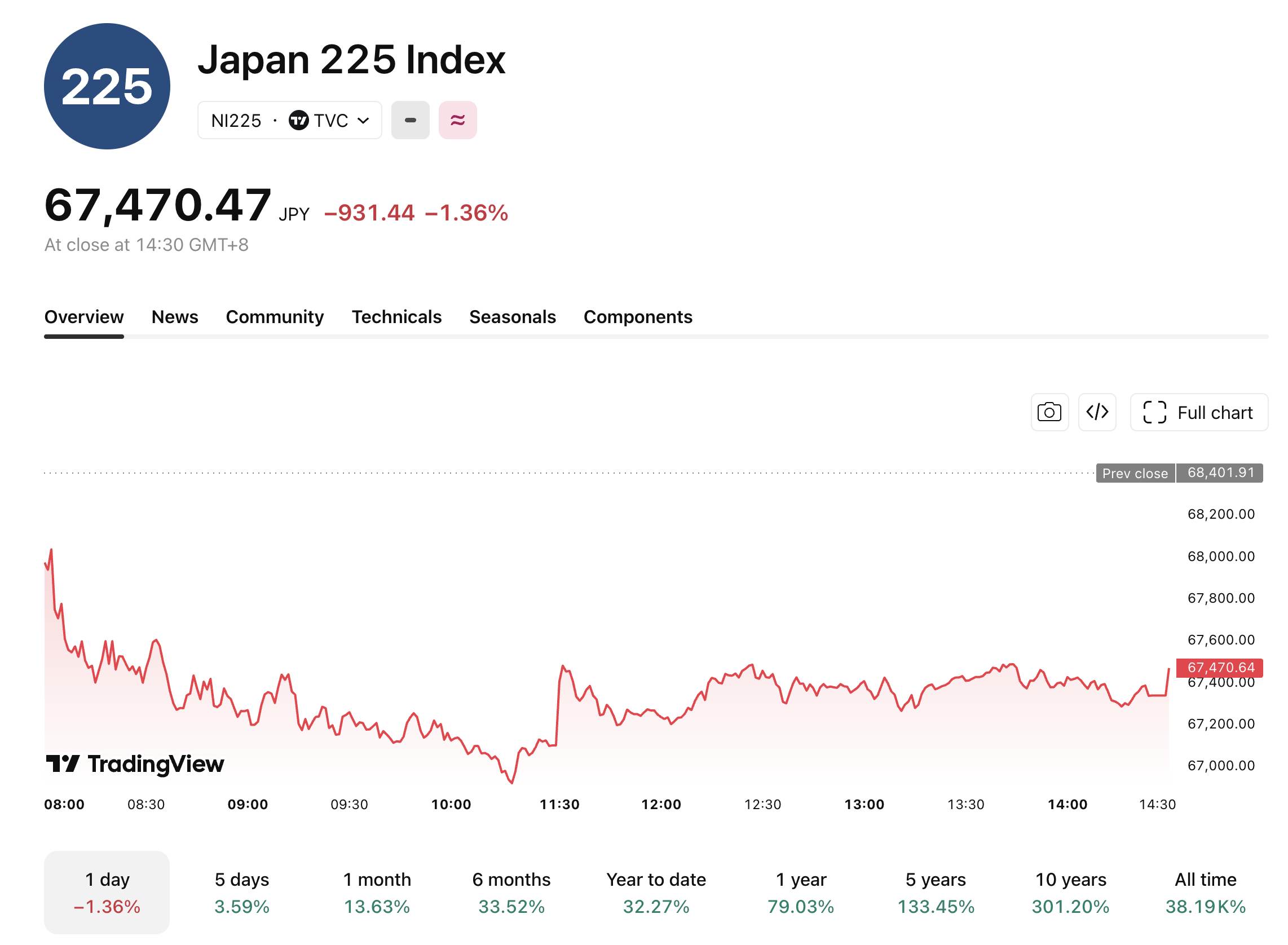
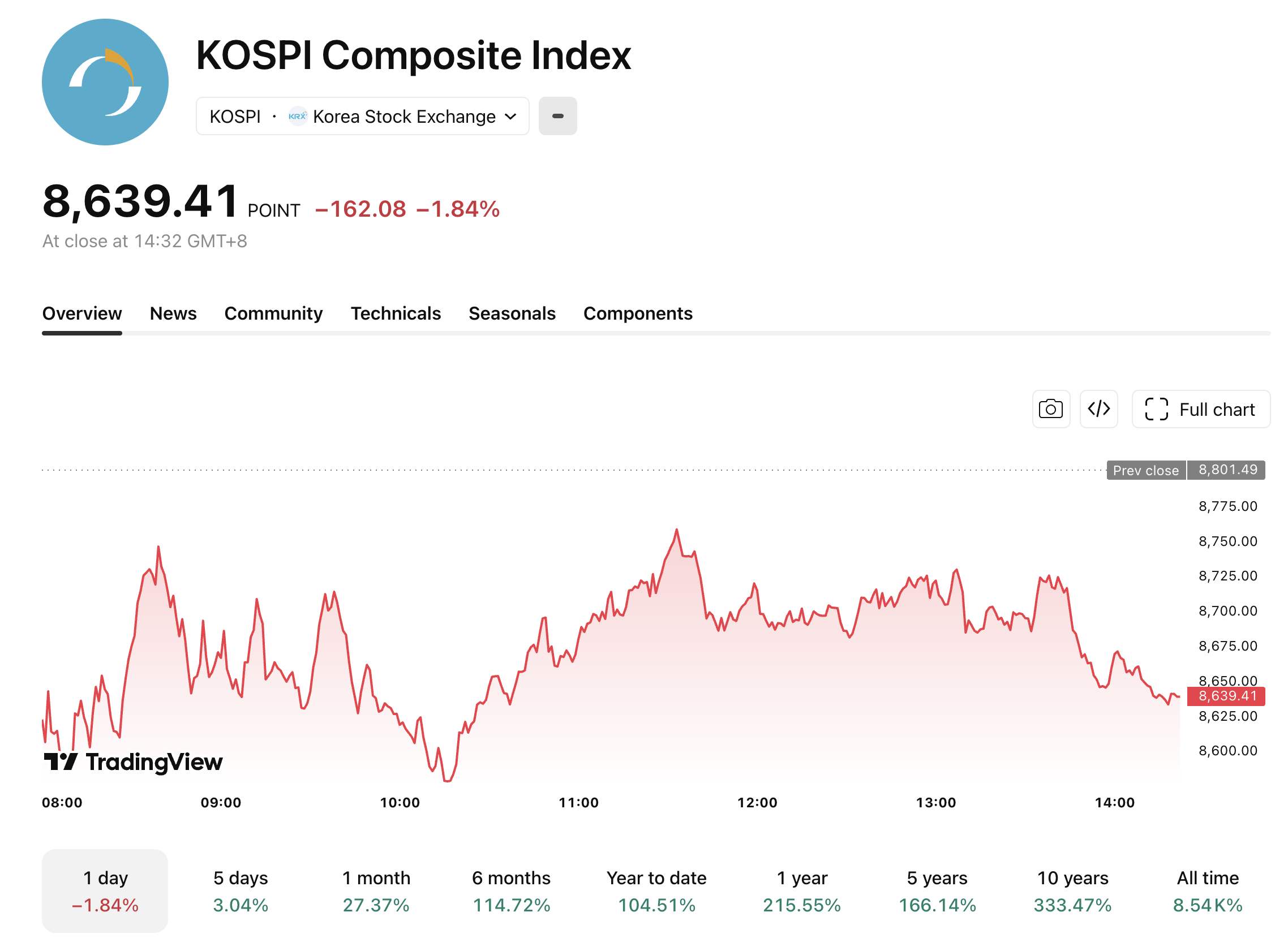
TradingKey - During the Asian trading session on June 4, Japanese and South Korean stock markets failed to sustain their previous strength, with both major indices trending lower across the board. The Nikkei 225 Index fell 1.36% to close at 67,470.47 points; furthermore, the South Korean KOSPI Index opened lower with a gap, seeing its intraday decline exceed 2% at one point before eventually closing down 1.84% at 8,639.41 points.
[Source: TradingView]
Japanese stocks had just hit a record closing high yesterday but encountered a pullback today. The Nikkei 225 Index dropped over 1,100 points intraday before the decline narrowed in late trading. Regarding individual stocks, SoftBank Group fell 11.28%, while Tokyo Electron rose 4.53%.
Meanwhile, new signals emerged from the foreign exchange market. On Thursday, the yen hovered around 159.9 against the dollar and broke past the 160 level intraday, completely erasing gains made after Japanese authorities utilized over $73 billion to intervene in the market last month.
On the policy front, Bank of Japan Governor Kazuo Ueda stated that the central bank should weigh the pros and cons of raising interest rates if upside risks to inflation begin to outweigh downside risks to economic growth. Furthermore, overnight indexed swaps indicate that the market sees an approximately 86% probability of a BOJ rate hike this month.
[Source: TradingView]
The Korea Composite Stock Price Index (KOSPI) hit a record closing high of 8,801.49 points on Tuesday. The market was closed on Wednesday for local elections, but it faced a catch-up decline upon Thursday's opening. By the close, the index fell 1.84%, with Samsung Electronics dropping 2.5% to 351,500 won, SK Hynix down 2.63% to 2,298,000 won, and LG Electronics plunging 16.43%.
The immediate catalyst for the collective weakness in Japanese and South Korean stocks was the renewed escalation of tensions in the Middle East. Negotiations for a US-Iran peace agreement reached an impasse, as Iran announced the suspension of indirect talks with the US; meanwhile, Israel's ground operations in Lebanon expanded, raising regional conflict risks.
Consequently, risk-off sentiment spread to major global markets. Overnight, US stocks closed lower across the board, with the Dow falling 1.21%, the S&P 500 losing 0.74%, and the Nasdaq dropping 0.89%. In addition, Brent crude futures approached $99 per barrel at one point, intensifying market concerns regarding sticky inflation.
Recommended Articles


