


The Fed Just Did Something It Hasn't Done Since 1992. Here's What It Means.
Key Points
Four members of the committee dissented on the Fed's decision.
The unusual split on the committee suggests a rate hike is possible this year.
- These 10 stocks could mint the next wave of millionaires ›
As expected, the Federal Reserve didn't change its policy rate at last week's meeting.
But something monumental did happen at the two-day meeting of the Federal Open Market Committee (FOMC), the Fed's interest rate-setting committee. And it has to be considered a negative development for the stock market.
Will AI create the world's first trillionaire? Our team just released a report on the one little-known company, called an "Indispensable Monopoly" providing the critical technology Nvidia and Intel both need. Continue »
Four members of the FOMC dissented from the Fed's monetary policy statement. The committee hasn't had four dissents on a statement in more than three decades. The last time it occurred was in 1992.
One member of the committee dissented in favor of cutting the Fed's policy rate, the federal funds rate, by a quarter percentage point. Three other members dissented because they objected to language in the meeting statement that indicates the FOMC has a bias toward easing, i.e., cutting rates, in the future.
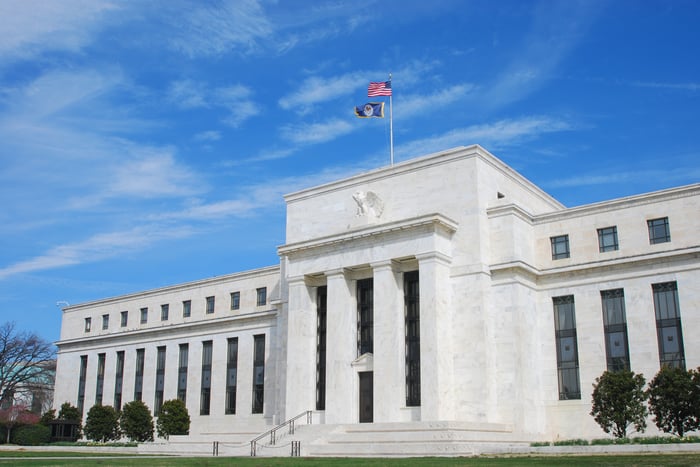
Image source: Getty Images.
Some Fed observers see the unusual level of dissent at this week's FOMC meeting as a clear signal to the next Fed chief that members won't be bullied into interest rate cuts they don't support. According to Bob Michele, chief investment officer at JPMorgan Asset Management, the dissents are a message to the incoming Fed chair that committee members are prepared to defy him going forward.
That incoming chair is very likely to be Kevin Warsh, President Donald Trump's nominee to succeed Jerome Powell. The Senate is set to confirm him by mid-May, when Powell's term as chair ends.
Trump has been pressuring the Fed to cut interest rates for months, to no avail. Because Trump selected Warsh as his nominee, analysts assume he will be more disposed to ease monetary policy going forward, through rate cuts.
The dissent means an interest rate cut this year is even less likely
The FOMC committee requires a majority vote from its 12 members to change interest rates or set monetary policy. And while the Fed chair is just one of those 12 votes and could, in principle, be outvoted, that has never happened in the history of the Federal Reserve.
This week's unusual split on the FOMC suggests that rate cuts in the coming months are even less likely, as Warsh would probably be wary of becoming the first Fed chair to lose a vote on monetary policy.
In addition, at his press conference following this week's meeting, Powell revealed that he intends to remain on the Board of Governors until a Justice Department (DOJ) investigation into him and the Fed is fully concluded. The DOJ had been investigating the renovation of the Fed's Washington headquarters, though most observers saw it as the White House's attempt to pressure Powell and the FOMC to cut interest rates.
The DOJ recently dropped the investigation, though it said it could be reopened if warranted, a level of uncertainty that Powell has found unacceptable.
Powell can remain on the Fed Board until his term as a governor expires in early 2028, and he will likely be a powerful voice for keeping the target rate where it is or, if inflation remains elevated or moves higher, for raising interest rates, which would be a headwind to the stock market moving higher.
Where to invest $1,000 right now
When our analyst team has a stock tip, it can pay to listen. After all, Stock Advisor’s total average return is 968%* — a market-crushing outperformance compared to 202% for the S&P 500.
They just revealed what they believe are the 10 best stocks for investors to buy right now, available when you join Stock Advisor.
See the stocks »
*Stock Advisor returns as of May 4, 2026.
The Motley Fool has a disclosure policy.
Recommended Articles


