


Former Nike Executive Heidi O’Neill Named Lululemon New CEO, Market Sells Off Stock to Cast ‘Vote of No Confidence’
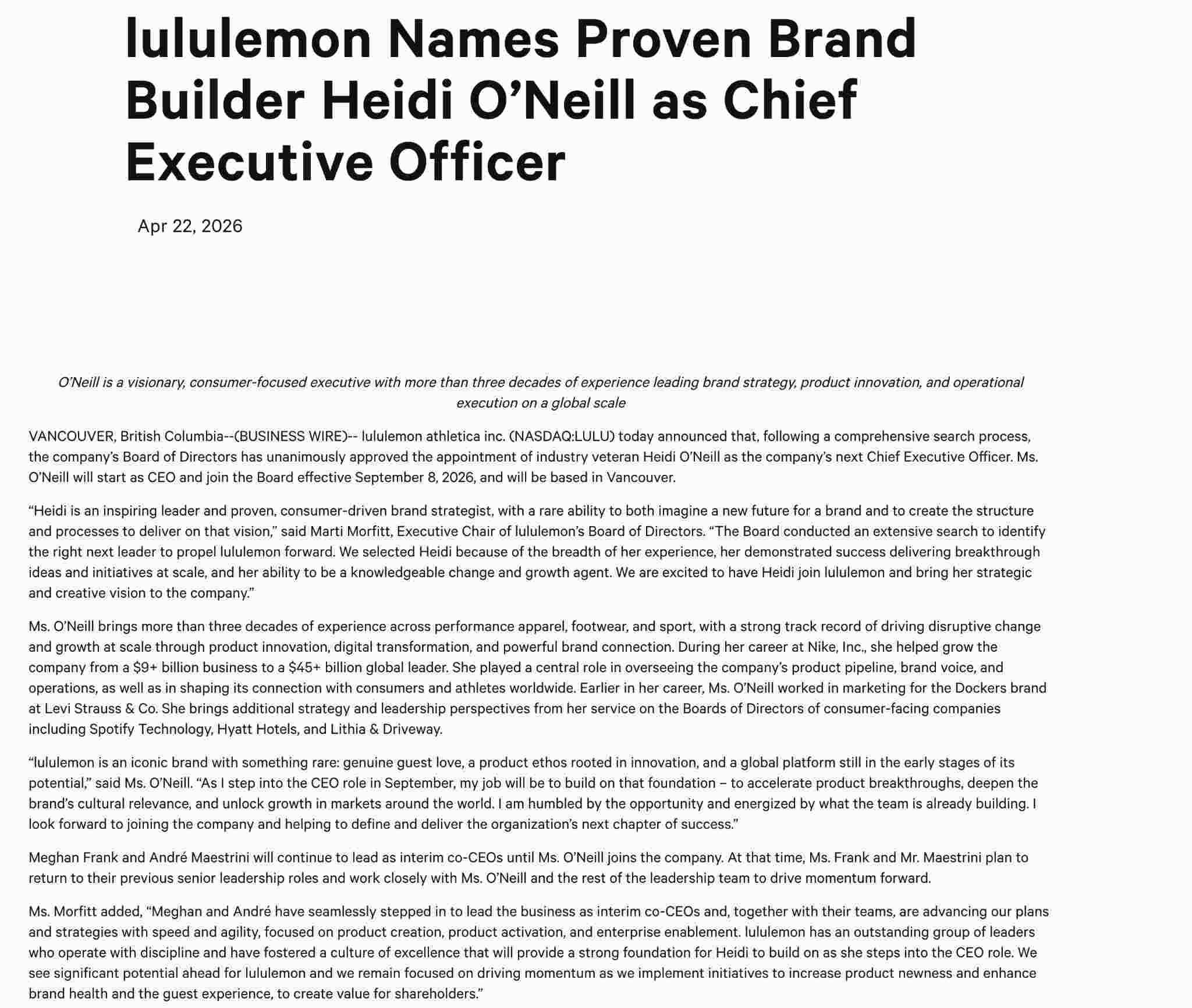
TradingKey - On April 22, Eastern Time, Lululemon (LULU) announced that the Board of Directors has unanimously approved the appointment of Heidi O’Neill as the new Chief Executive Officer, effective September 8, 2026.
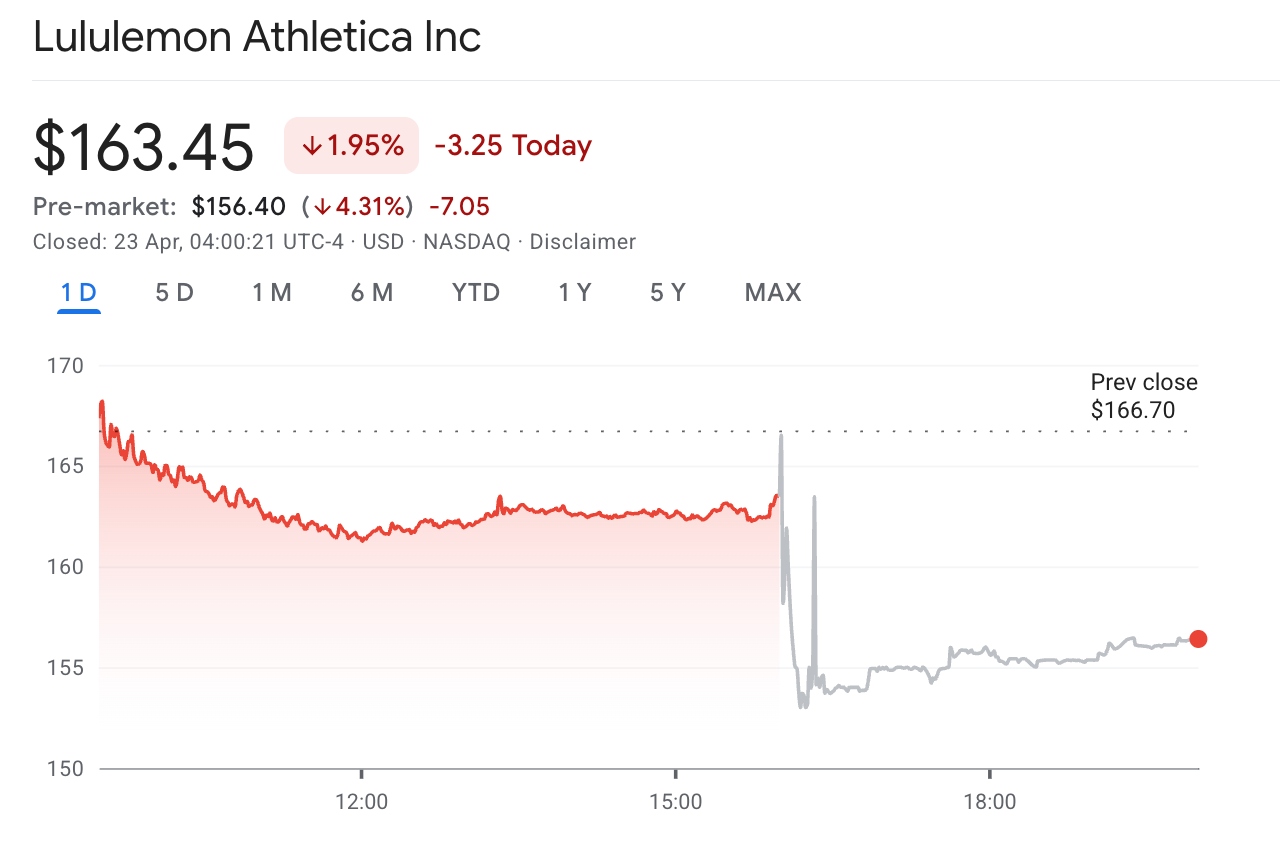
Following the announcement, Lululemon shares slumped more than 5% in after-hours trading to close at $155.95. The stock has fallen more than 21% year-to-date and plummeted approximately 39% over the past 12 months, with its market capitalization shrinking from a peak of $67 billion to about $18.8 billion.
Heidi O’Neill served at Nike for over 25 years, most recently as President of Consumer, Product, and Brand, overseeing the global consumer and product ecosystem. Previously, former CEO Calvin McDonald departed in January 2026 as the company faced a proxy battle initiated by founder Chip Wilson, leaving the CEO position vacant for nearly four months.
Can the Nike "Playbook" Be Applied to Lululemon?
Heidi O’Neill has spent over 25 years at Nike, starting in marketing and rising to President of Consumer, Product & Brand, where she oversaw global consumer and product operations and helped scale the business from over $9 billion to more than $45 billion. She reshaped the brand's foundations, shortened product development cycles to accelerate speed-to-market, and spearheaded the growth of core categories like global football and running. Furthermore, she serves as an independent director at Spotify and Hyatt, bringing cross-industry governance experience.
Despite this, market reaction suggests that investors are not optimistic about the new CEO.
Raymond James analyst Rick Patel noted that the core question facing the new CEO is: "Nike itself is also in transition mode; can O’Neill’s capabilities be fully replicated at Lululemon?"
Jefferies analyst Randal Konik was more conservative, suggesting it is too early to judge if O’Neill is the right choice, but warned that "without a core product reset, stricter inventory discipline, and a credible plan to stabilize the Americas business, fundamentals could deteriorate further before they improve."
Currently, Lululemon is experiencing a period of business softness, with North American revenue declining 4% year-over-year and growth in the Americas virtually stagnant since 2025; while international revenue grew 17%, it remains insufficient to offset the decline in its home market.
The competitive landscape is equally challenging. Alo Yoga is rapidly eroding Lululemon’s high-end customer base with its positioning as "athletic luxury," while emerging brands like Vuori and On Holding are simultaneously launching offensives in the running and training sectors.
Investor concerns center on whether a CEO leaving one transitioning company to lead another can generate synergies, rather than simply "carrying the problems over."
Heidi O’Neill Faces Complex Circumstances Upon Taking Office
Heidi O’Neill faces a far more complex situation upon taking office than when she left Nike. While former CEO McDonald grew annual revenue from $2.6 billion to over $100 billion during his six-year tenure, the North American market recorded its slowest sales growth since the company's IPO in the most recent quarter.
The proxy battle led by founder Chip Wilson has fully intensified. Wilson has publicly criticized the company for "losing its way," launched a dedicated website calling for board reforms, and is attempting to push for the removal of several directors at this year's annual shareholder meeting. Activist investor Elliott Investment Management also holds a stake exceeding $1 billion and is pushing for an external candidate to serve as CEO.
Furthermore, product quality has come under repeated scrutiny. Lululemon has faced consumer dissatisfaction over product issues, leading to the recall of certain items. Meanwhile, the Texas Attorney General is investigating whether its products contain PFAS "forever chemicals," a probe that poses a direct threat to the brand’s core "wellness" positioning.
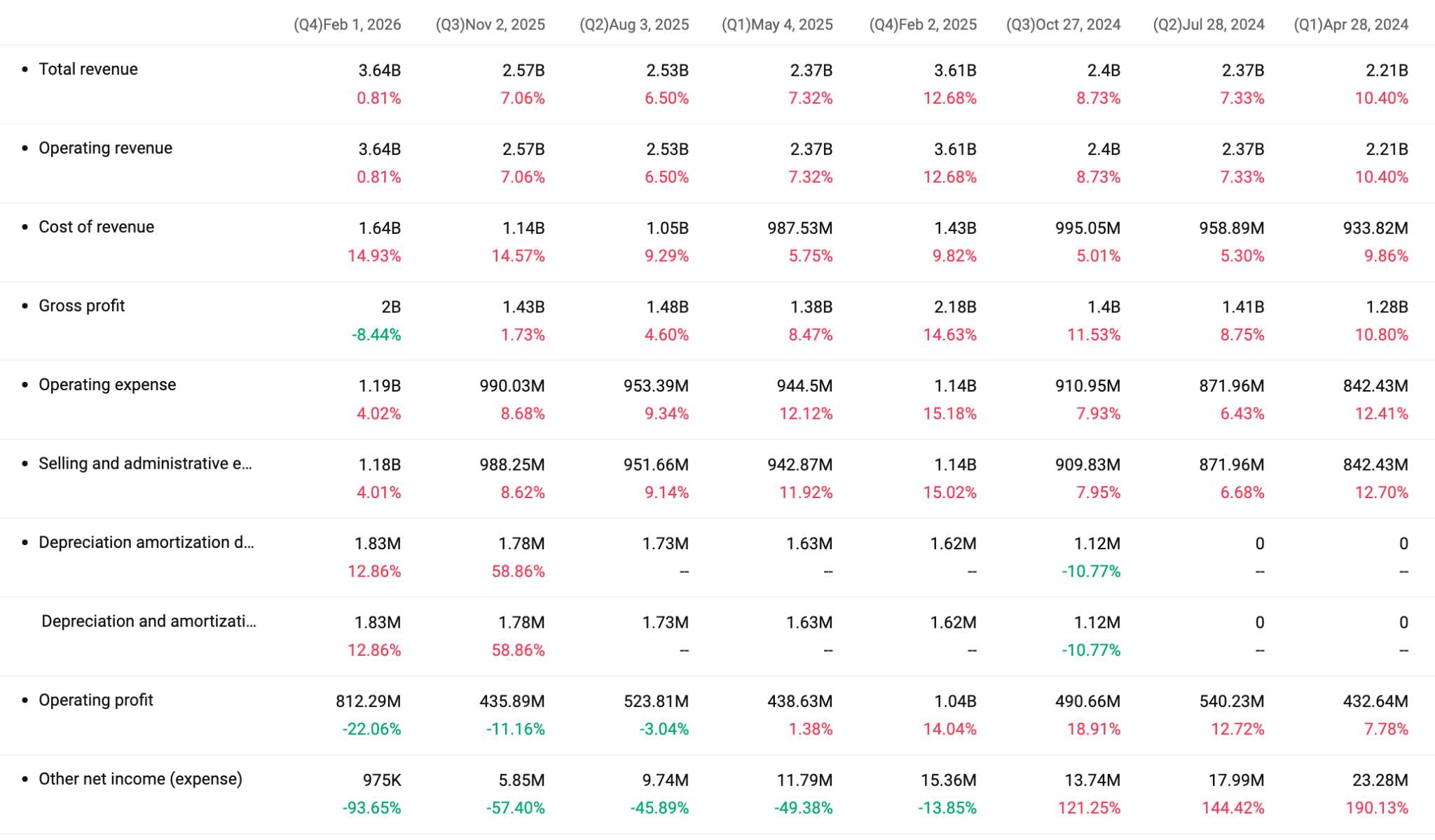
Trump tariffs are also inflicting significant cost pressures on Lululemon, with total tariff costs projected at $380 million for fiscal year 2026, up from $275 million in 2025, directly squeezing gross margins.
Notably, the performance of the Chinese market remains one of Lululemon's few current highlights. In the fourth quarter of fiscal 2025, net revenue from the Chinese mainland grew 24% year-over-year, with annual growth reaching 29%. Management expects to maintain a high growth rate of approximately 20% in its fiscal 2026 guidance.
However, the scale of the China business is not yet sufficient to fully offset the nearly 4% decline in the North American market. This implies that O’Neill’s top priority upon taking office is not overseas expansion, but rather how to stabilize the core business in a persistently weak domestic market.
Recommended Articles


