


What Polkadot Actually Does -- and Why That Matters for Its Long-Term Value
Key Points
Polkadot is a "chain of chains" that lets different blockchains communicate with each other.
The web3 vision promises user-owned data and portable social networks, and Polkadot was built to make that happen.
You might use a Polkadot-powered app someday without ever knowing it.
- 10 stocks we like better than Polkadot ›
You might see Polkadot (CRYPTO: DOT) as just another faceless cryptocurrency. Sometimes it's up, other times it's down, and the moves aren't always obviously connected to the stock market, oil prices, or moon phases.
However, Polkadot has a distinct purpose and several unique qualities. It's much more than an anonymous digital ledger. Let's take a closer look at Polkadot and what makes it tick.
Will AI create the world's first trillionaire? Our team just released a report on the one little-known company, called an "Indispensable Monopoly" providing the critical technology Nvidia and Intel both need. Continue »
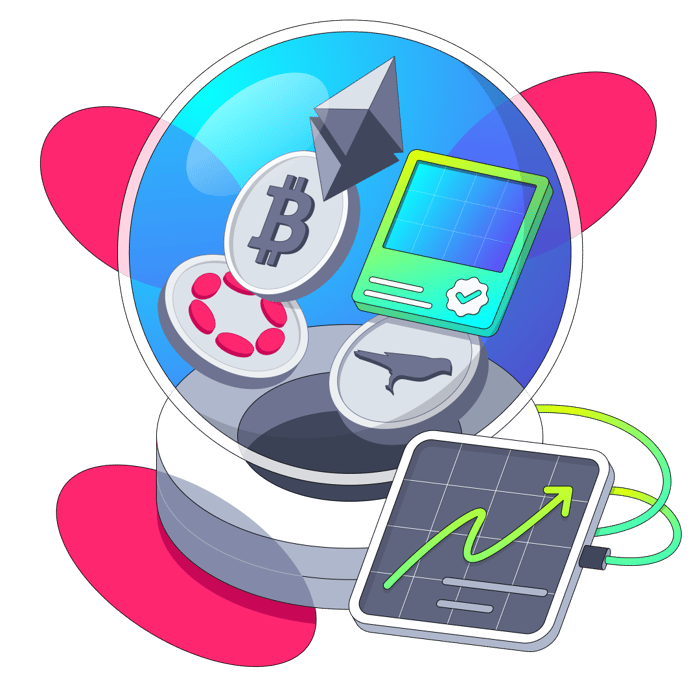
Image source: Polkadot.
How Polkadot connects the crypto dots
Polkadot isn't a single blockchain ledger. The central DOT token is the backbone of a more sophisticated system. A large number of so-called parachains are connected to this hub, which can transfer useful data and monetary value between the parachains.
It sounds overly complicated, but there's a point to this multilayer design. You see, Polkadot gives app developers a consistent platform that connects to other blockchains and cryptocurrencies.
Let's imagine building a decentralized finance (DeFi) app. With Polkadot's connections, you can combine Ethereum's smart contracts with Bitcoin's long-term value management, tapping into real-world weather data through Chainlink.
Sure, you can do all of that without Polkadot, too. The "chain of chains" simply makes it faster and easier to build this weather-based digital wallet. (No, I don't know how the rain forecast should affect your bank account -- just saying it can be done). And Polkadot wraps the bundled data exchanges in its own layers of encrypted security.
So entrepreneurial developers can build the apps of their dreams while large-scale enterprises connect their proprietary data to public blockchains. The app user will probably never know it was built on Polkadot, but the messages are still flowing across that network. Those transactions generate value over time.
Decentralized dreams
This system was designed to power the so-called web3 movement. The central idea is to replace today's social media networks with decentralized alternatives. Users, not large corporations, should own their data and their human networks.
If you're a content creator, your fans should follow you around various publishing platforms.
If you're more on the consumer side, you'll have automatic access to new stuff from your favorite makers, wherever it pops up.
And no giant platform manager will take a huge cut of the creator's income, whether it involves selling merch or showing ads.
Polkadot isn't the only network and token that can do it, but the DOT token was literally born for this role. If and when web3 gains traction (and I think it's time to replace low-value AI slop with smoother monetization of high-quality human content), Polkadot should rack up real-world value in a hurry.
Patiently waiting for web3's breakout moment
I'm still waiting for the first home run killer app in the web3 world. Early swings have included the privacy-oriented Brave web browser (more than 100 million users) and the Human Passport digital identification service (over 2 million users). The next big name could be a multiplayer game, or a personalized blogging platform, or perhaps a digital wallet with a weather report (no, I still don't know how that would be useful).
And I'm betting that Polkadot will play a game-changing part in some of these upcoming hits.
Should you buy stock in Polkadot right now?
Before you buy stock in Polkadot, consider this:
The Motley Fool Stock Advisor analyst team just identified what they believe are the 10 best stocks for investors to buy now… and Polkadot wasn’t one of them. The 10 stocks that made the cut could produce monster returns in the coming years.
Consider when Netflix made this list on December 17, 2004... if you invested $1,000 at the time of our recommendation, you’d have $536,003!* Or when Nvidia made this list on April 15, 2005... if you invested $1,000 at the time of our recommendation, you’d have $1,116,248!*
Now, it’s worth noting Stock Advisor’s total average return is 946% — a market-crushing outperformance compared to 190% for the S&P 500. Don't miss the latest top 10 list, available with Stock Advisor, and join an investing community built by individual investors for individual investors.
See the 10 stocks »
*Stock Advisor returns as of April 9, 2026.
Anders Bylund has positions in Bitcoin, Chainlink, Ethereum, and Polkadot. The Motley Fool has positions in and recommends Bitcoin, Chainlink, and Ethereum. The Motley Fool has a disclosure policy.
Recommended Articles


