




Did President Donald Trump Just Pour Cold Water on the Gold and Silver Trade With His Nomination of Kevin Warsh as Next Fed Chair?
Key Points
President Donald Trump's recent nomination of Kevin Warsh as the next Fed chair has bolstered the U.S. dollar's value.
At the same time, the nomination has led to a collapse in precious metal prices, which had been viewed as a hedge against U.S. dollar debasement.
While Warsh has been critical of the Fed, many believe he will still be able to retain the Fed's independence.
- 10 stocks we like better than iShares Silver Trust ›
After months of market speculation, President Donald Trump finally announced Kevin Warsh as his nominee to serve as the next chair of the Federal Reserve. Many market watchers, who were concerned that Trump's next pick to lead the Fed may be too prone to influence from the 47th President, view Warsh as a safer choice than other alternative candidates previously discussed.
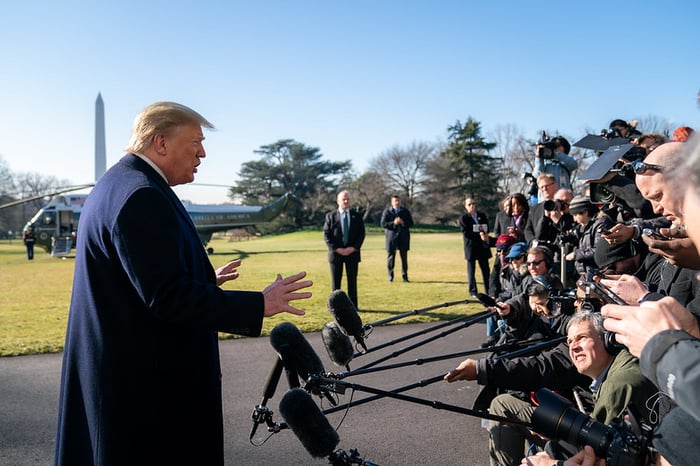
Official White House Photo by Tia Dufour.
Where to invest $1,000 right now? Our analyst team just revealed what they believe are the 10 best stocks to buy right now, when you join Stock Advisor. See the stocks »
Warsh became the youngest member ever to serve on the Fed's board of governors in 2006, serving until 2011. Warsh has also worked with legendary investor Stanley Druckenmiller, another reason the market is likely to have faith in his qualifications.
While many cheered the nomination, the naming of Warsh on Friday also buoyed the U.S. Dollar and sent the prices of precious metals like gold and silver plummeting. Did Trump just pour cold water on the precious metals trade with his nomination of Warsh?
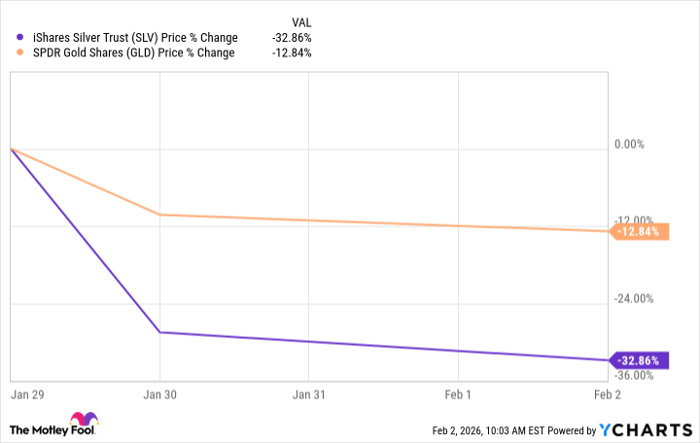
SLV data by YCharts
Fed's independence was a key part of the precious metals trade
Since Trump took office, he has expressed frustration that the Fed has not lowered interest rates as fast as he would like. The U.S. is currently in the midst of an affordability crisis, where inflation has surged, many younger adults cannot afford housing, and wage growth has seemingly not kept pace with the cost of living, making it difficult for people to adequately save for retirement.
The Trump administration has attempted to remove Fed Governor Lisa Cook from the board, accusing her of mortgage fraud. The administration also subpoenaed Fed Chair Jerome Powell.
Prior to Warsh's nomination, Kevin Hassett, the director of Trump's National Economic Council, also looked to be in the running for Fed chair. Hassett had publicly called for the Fed to lower interest rates quicker.
While lower rates could certainly help affordability, if they are done without the proper economic justification, they could reaccelerate inflation or even lead to stagflation, which, over time, would have adverse effects on affordability and could also lead the U.S. dollar to have a much lower value.
The subpoena of Powell concerned the market about the Fed's independence, and the hedge on this became precious metals, hard assets that act as safe havens amid geopolitical uncertainty or the threat of currency debasement.
But the subpoena of Powell also sparked tremendous controversy and prompted Powell to issue a public response, accusing the Trump administration of issuing the subpoenas because the Fed decided to set "interest rates based on our best assessment of what will serve the public, rather than following the preferences of the President."
This may have contributed to the Trump administration backing off somewhat and choosing to go with Warsh, which the market believes is the more likely candidate to help retain an independent Fed.
Where does this leave Silver and Gold, and other precious metals? As many analysts pointed out during the rally, I think it's clear that precious metals ran too far, too quickly. However, the threat of high inflation and currency debasement from mounting U.S. debt remains.
I still think investors can allocate some level of capital to precious metals within a multi-asset portfolio. However, it should be a basket of precious metals and be held with a long-term mindset, given current volatility.
Should you buy stock in iShares Silver Trust right now?
Before you buy stock in iShares Silver Trust, consider this:
The Motley Fool Stock Advisor analyst team just identified what they believe are the 10 best stocks for investors to buy now… and iShares Silver Trust wasn’t one of them. The 10 stocks that made the cut could produce monster returns in the coming years.
Consider when Netflix made this list on December 17, 2004... if you invested $1,000 at the time of our recommendation, you’d have $450,256!* Or when Nvidia made this list on April 15, 2005... if you invested $1,000 at the time of our recommendation, you’d have $1,171,666!*
Now, it’s worth noting Stock Advisor’s total average return is 942% — a market-crushing outperformance compared to 196% for the S&P 500. Don't miss the latest top 10 list, available with Stock Advisor, and join an investing community built by individual investors for individual investors.
See the 10 stocks »
*Stock Advisor returns as of February 2, 2026.
Bram Berkowitz has no position in any of the stocks mentioned. The Motley Fool has no position in any of the stocks mentioned. The Motley Fool has a disclosure policy.
Recommended Articles


