




Read Warren Buffett's Timeless Investment Advice For Navigating the Stock Market in 2026
Key Points
Warren Buffett has managed long-term returns that well exceed those of the S&P 500.
Buffett hasn't beaten the index every year, but he understands that that's part of the package.
His advice applies to everyone, stock pickers and index investors, new and experienced.
- 10 stocks we like better than S&P 500 Index ›
Warren Buffett's investment track record is nothing short of incredible. In his 60-plus years in charge of Berkshire Hathaway (NYSE: BRK.A) (NYSE: BRK.B), he grew the company's value at a compound annual growth rate of nearly 20%. That's almost twice the annual total return rate of the S&P 500 (SNPINDEX: ^GSPC), which, when compounded over 60 years, can produce some eye-popping difference.
Buffett produced even better returns for his investment partnership (what's called a hedge fund today). Buffett Limited Partners generated annualized returns of over 30% from 1957 through 1968 before he shut it down to focus on Berkshire.
Where to invest $1,000 right now? Our analyst team just revealed what they believe are the 10 best stocks to buy right now, when you join Stock Advisor. See the stocks »
Buffett's been writing to investors for nearly 70 years, and the wisdom he shares in his letters is often timeless. The ideas he wrote about over six decades ago are just as relevant in 2026 as they were back then. Here's his advice for navigating the stock market today.
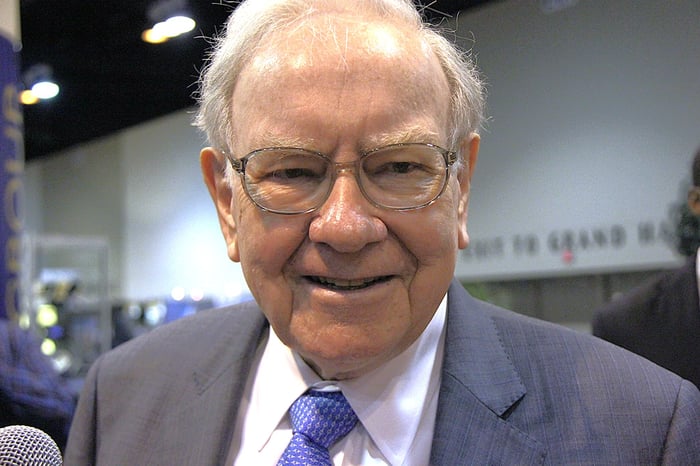
Image source: The Motley Fool.
The optimum portfolio won't outperform every year
Buffett is willing to accept much more volatility from his portfolio if he thinks it will lead to greater long-term results. As he wrote in his 1966 letter to partners:
I am willing to concentrate quite heavily in what I believe to be the best investment opportunities recognizing very well that this may cause an occasional very sour year-one somewhat more sour, probably, than if I had diversified more. While this means our results will bounce around more, I think it also means that our long-term margin of superiority should be greater.
Indeed, Berkshire Hathaway didn't outperform the S&P 500 every year Buffett was in charge. The annual returns varied widely from its benchmark. Nonetheless, Buffett produced long-term returns that made him and many other investors incredibly wealthy. That's because he was only willing to invest in his very best ideas that added value to Berkshire Hathaway's portfolio over the long run.
As we start 2026, you may find your portfolio has become quite concentrated as well. You need to assess whether each of your holdings is adding value to your portfolio in one of two possible ways: The expected returns are better than the expected returns of your other investment options, or holding the stock will reduce your portfolio's overall price volatility.
You may consider adjusting your allocations if a highly volatile stock has risen in price and no longer holds as much potential upside. Buffett notably trimmed Berkshire's positions in Apple and Bank of America over the last few years.
But finding great ideas to invest in isn't easy. "We have to work extremely hard to find just a very few attractive investment situations," Buffett wrote in 1966. The job hasn't gotten any easier in the last 60 years. Buffett noted in his February 2025 letter that "often, nothing looks compelling."
The current market environment may be one of the most challenging for investors seeking exceptional investment opportunities. Many stock valuations are stretched, increasing downside risk while limiting the potential upside for many investments. There's a reason that Berkshire Hathaway's cash allocation has soared to a record high over the last few years.
There are a couple of key takeaways for investors. First, finding great opportunities you can buy with high conviction is difficult work. Second, even if you have high confidence that those stocks will outperform over the long run, they will likely fall short from time to time. And when investments fall short of expectations, that can shake your confidence.
The real secret to Buffett's success and the biggest danger to average investors
There's no doubt that Buffett is an excellent stock picker. However, the real secret to his success was that he maintained conviction in his stock picks, even when they underperformed for an extended period. That's because he continuously evaluated the businesses underlying the stocks relative to their valuations to determine whether they remained great investment opportunities.
But Buffett noted, "Most investors, of course, have not made the study of business prospects a priority in their lives," in his 2013 letter to shareholders. While studying individual businesses and developing a portfolio can produce excellent returns for investors, someone who does so without a solid understanding of what they're buying and why they're buying it can easily be swayed by market forces to buy or sell at exactly the wrong times, leading to poor performance over the long run. That's why Buffett recommends the investors he describes above invest in an S&P 500 index fund.
But even index fund investors can be susceptible to the behavioral challenges of investing. "The main danger is that the timid or beginning investor will enter the market at a time of extreme exuberance and then become disillusioned when paper losses occur," Buffett wrote. "The antidote to that kind of mistiming is for an investor to accumulate shares over a long period and never to sell when the news is bad and stocks are well off their highs." In other words, make a plan to consistently invest some of your income at set intervals (say, every month or every paycheck), and don't sell when the market crashes if you don't have to.
Whether you're an index fund investor or a stock picker, Buffett's advice is clear: You must maintain conviction in your investments if you want to succeed. Without it, you're likely to fall prey to the many psychological pitfalls involved in investing. As long as your investment decisions are grounded in solid reasoning that you can back up with logic and analysis, you should be able to withstand the challenge.
Despite his nickname, "The Oracle of Omaha," Buffett never felt the need to accurately predict the future of every possible investment. Understanding just a handful of investments was good enough to outperform the market for 70 years. "Omniscience isn't necessary," he wrote in 2013. "You only need to understand the actions you undertake."
Should you buy stock in S&P 500 Index right now?
Before you buy stock in S&P 500 Index, consider this:
The Motley Fool Stock Advisor analyst team just identified what they believe are the 10 best stocks for investors to buy now… and S&P 500 Index wasn’t one of them. The 10 stocks that made the cut could produce monster returns in the coming years.
Consider when Netflix made this list on December 17, 2004... if you invested $1,000 at the time of our recommendation, you’d have $474,847!* Or when Nvidia made this list on April 15, 2005... if you invested $1,000 at the time of our recommendation, you’d have $1,146,655!*
Now, it’s worth noting Stock Advisor’s total average return is 958% — a market-crushing outperformance compared to 196% for the S&P 500. Don't miss the latest top 10 list, available with Stock Advisor, and join an investing community built by individual investors for individual investors.
See the 10 stocks »
*Stock Advisor returns as of January 16, 2026.
Bank of America is an advertising partner of Motley Fool Money. Adam Levy has positions in Apple. The Motley Fool has positions in and recommends Apple and Berkshire Hathaway. The Motley Fool has a disclosure policy.
Recommended Articles


