


After Upheaval in the World’s Largest Oil Reserve Holder, Who Will Emerge as the Biggest Winner in Venezuela’s Oil Market?

 Trending Articles
- Today’s Market Recap: US and Iran Signal Willingness to End Conflict, Three Major US Stock Indexes Surge, Dollar Ends Five-Day Winning Streak
- US-Iran Rift Persists, Will Gold Rise or Fall Next?
- Trump Withdrawal Intent Reshapes Liquidity, Bitcoin Breaks $68,000 Mark
- Gold rallies on hopes for US-Iran talks and falling US Treasury yields
- Gold Price Forecast: XAU/USD opens lower around $4,450 on fears of widening Iran conflicts
- USD/JPY Hits 160.00 Mark, Will Japanese Government Intervene? Will the Currency’s Rally Be Contained?
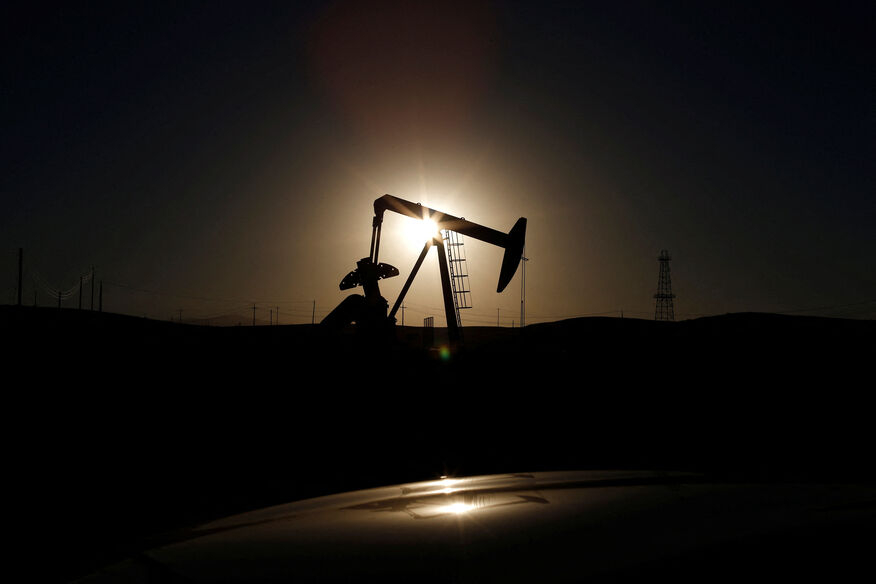
TradingKey - US President Donald Trump announced late Tuesday that the interim Venezuelan authorities would deliver 30 million to 50 million barrels of crude oil to the United States.
Trump posted on social media that the oil would be sold at market prices, stating, “and that money will be controlled by me, as President of the United States of America, to ensure it is used to benefit the people of Venezuela and the United States!”
Earlier, in the early hours of January 3, US forces unexpectedly intervened militarily in Caracas, the capital of Venezuela, successfully taking control of the country's president, Nicolás Maduro, and his wife and removing them from the country. Subsequently, US President Trump issued a statement announcing that the United States would “temporarily manage” Venezuelan affairs until a “safe and reliable” political transition was achieved.
With rapid shifts in the geopolitical landscape, the United States' energy footprint in Venezuela is undergoing profound changes.
Following the sudden US-led apprehension of Venezuelan President Maduro, the US government publicly expressed its readiness to re-establish energy ties with the country and plans to encourage a large-scale return of US companies to the nation boasting the world's largest oil reserves.
The United States is poised to restore its deep connection with Venezuela's oil industry, which could represent a “delayed windfall” for US refiners long established along the Gulf Coast and equipped to process complex heavy crude oil.
Why does Trump want Venezuela's oil?
Superficially, this military intervention concerns existing supply security, but fundamentally, it targets Venezuela's immense resource potential.
Over the past few decades, due to aging infrastructure, mismanagement, and US-European sanctions, several international oil companies were forced to withdraw, causing its daily output to plummet from a peak of over 3.7 million barrels in the 1970s to less than 1 million barrels currently.
This has led the US government—and particularly Trump himself—to more actively advocate for rebuilding the local energy system through capital and technology to reshape commercial interests.
Indeed, Trump has not concealed his intentions.
He publicly stated that the United States would guide major domestic oil companies to invest in Venezuela and rebuild infrastructure to achieve “value creation” for the US economy. He also noted at a press conference that the US was prepared to support these companies' participation in local projects through subsidies or revenue-sharing mechanisms.
French economist Lucas Chancel observed, “Trump understands very clearly: whoever controls energy controls the world.” He believes that this military intervention is not a break from convention but rather a strategic realignment amid the current tightening global resource landscape.
He particularly emphasized, “The true novelty of this event is not the intervention itself, but rather that cheap oil globally is gradually depleting, and the United States is no exception.” He views this as a form of protection, with state power supporting traditional American energy interests.
Currently, the United States has emerged as the world's largest oil producer, dominating the market since the full-scale shale revolution in the 2010s.
However, problems are emerging: as extraction difficulty increases, the average domestic crude oil production cost in the US is steadily climbing, currently around $70 per barrel, with predictions suggesting it could rise to $95 per barrel by the 2030s. This implies that many proposed new projects would have minimal profit margins.
In contrast, despite obsolete equipment and an underdeveloped workforce, Venezuela's vast mining regions hold immense potential. Its extraction and conversion methods are relatively mature technologically, offering strong appeal from a long-term financial return perspective. Consequently, the region has become a key candidate target for US companies seeking alternative supply sources.
US Refiners Poised to Be Major Beneficiaries in Venezuelan Oil Market
Venezuela is believed to possess the world's largest proven oil reserves, estimated at up to 303 billion barrels. However, most of these resources consist of heavy, high-sulfur crude oil, which is viscous and dense. Both its transportation and extraction present significant technical hurdles, and its processing costs and complexity are higher compared to light, sweet crude (such as WTI).
However, large US refineries along the Gulf Coast have been tailored for such feedstock for years. Even before the shale revolution, approximately 70% of the refining equipment in the region was designed to process heavy crude oils from sources like Western Canada and Venezuela.
Rebecca Babin, a senior energy trader at CIBC, noted, “Venezuelan crude is very heavy and requires more complex pumping and refining systems—all of which add to costs.”
However, she added, "Strategically, however, these barrels would be well suited for U.S. Gulf Coast refiners configured for heavy crude and could ease some reliance on Canadian supplies... That's an angle refiners are paying close attention to."
In fact, between 1990 and 2010, major US companies collectively deployed over $100 billion to support such complementary supplies.
Although these investments faced headwinds from the shale boom afterward, some projects that did not yield expected returns are now being revisited.
Debnil Chowdhury, Regional Head of S&P Global Energy, stated, “This finally gets some of the [return on investment] back.” He added, “We had a system that was kind of running de-optimised for the last 10 to 15 years. And this allows it to get a little bit closer to what it was designed for — which means slightly higher yields, higher margins."
Furthermore, precisely because these heavier, less desirable resources are priced lower, they offer a certain economic appeal.
Mark Malek, Chief Investment Officer at Siebert Financial, stated, “Heavy, high-sulfur crude almost always trades at a discount to light, sweet crude.” He further emphasized, “If you can process it efficiently, that price discount translates into profit.”
Independent energy consultant Norma Mozée pointed out that due to the complex processing chain, US companies are accustomed to establishing internal vertical collaborative management, making them better equipped to leverage the value of such resources. “Gulf Coast plants possess strong processing adaptability and will directly benefit from the reopened supply chain.”
At the same time, she conceded that Venezuela's internal operational situation is currently dire, with “five core production lines virtually paralyzed.” She cited industry research estimating that “restoring to 80% of normal capacity would require at least tens of billions of dollars.”
While the recovery of Venezuelan oil production for US companies may take time, Gulf Coast refiners are well-prepared to quickly procure crude once sanctions ease and import licenses become more plentiful. This is why the energy sector widely anticipates the US Gulf Coast region to be among the biggest beneficiaries in the initial phase of reopening.
“Near-term, Gulf Coast refiners could be among the biggest winners of shifts that could occur here,” said Dylan White, principal analyst for North American crude markets at consultancy Wood Mackenzie.
“The investment side of the coin in Venezuela is much more slow moving. It’s turning a very slow ship and it involves high-level decisions from a number of companies,” he said. “[But] sanctions policy changing in the US could change the economic benefits for US Gulf Coast refiners tomorrow.”
Read more
* The content presented above, whether from a third party or not, is considered as general advice only. This article should not be construed as containing investment advice, investment recommendations, an offer of or solicitation for any transactions in financial instruments.


