


ICP Bucks Trend to Surge 13% Past $3 to Four-Month High as BTC Drops Below 80,000
TradingKey - Bitcoin falls below the $80,000 mark, while ICP surges 13% against the trend to break through the $3 mark, hitting a new high since June.
On September 7, Bitcoin (BTC) prices fell below the $80,000 mark during the late Asian session, triggering a broad decline in the cryptocurrency market, while Internet Computer (ICP) staged an independent rally, surging over 13% intraday to break decisively above the $3 mark, hitting its highest level since June 4 of this year.
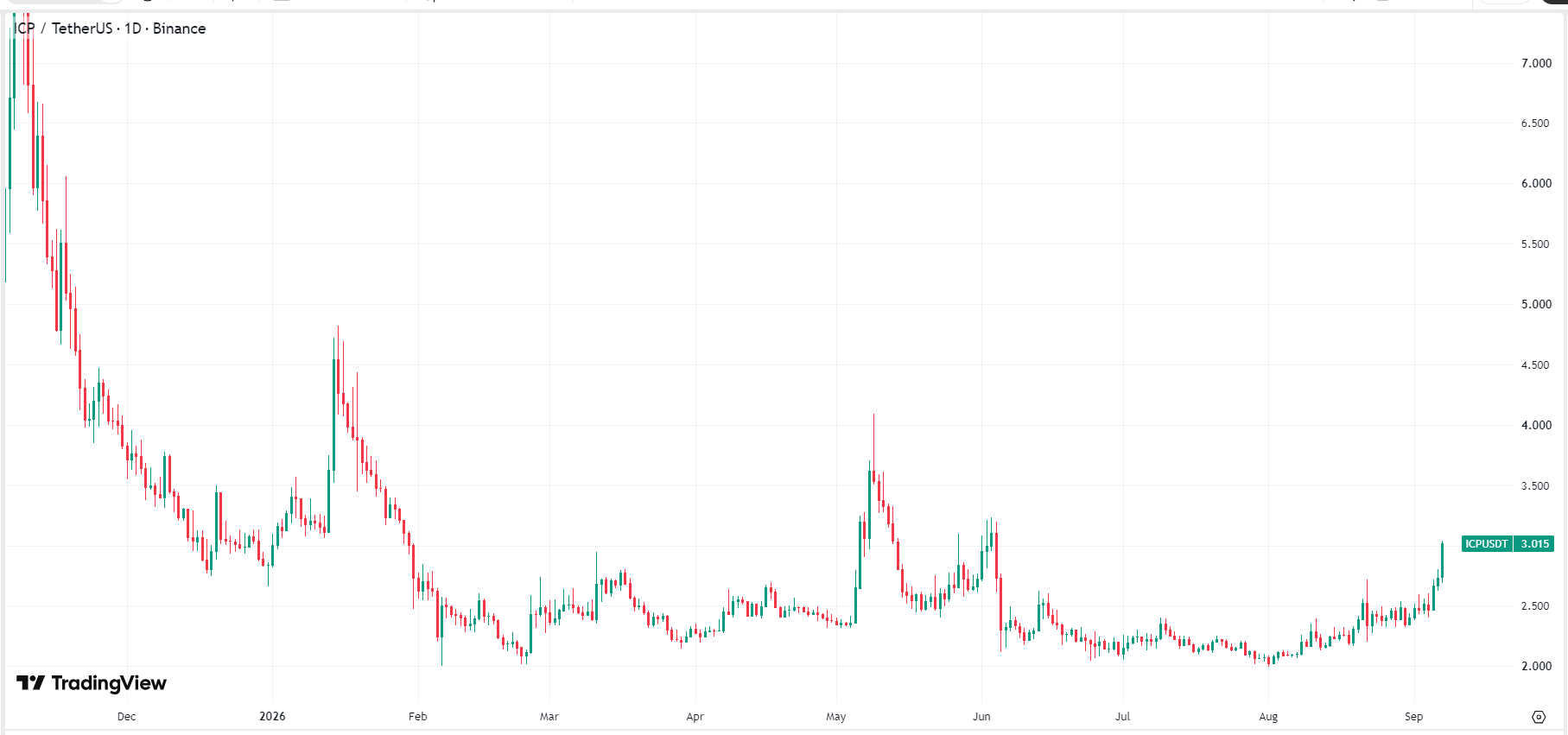 ICP price chart, Source: TradingView
Internet Computer (ICP) is a high-performance Layer-1 blockchain network developed by the DFINITY Foundation, a Swiss non-profit organization. Its core goal is to break the monopoly of traditional centralized cloud services such as Amazon and Google, transforming the internet itself into a distributed, decentralized computing platform.
Recently, the DFINITY ecosystem has continued to advance the integration of decentralized AI and the Bitcoin Layer-2 ecosystem. As on-chain computing consumption steadily increases, market concerns over token unlocks and inflation have been alleviated, providing fundamental support for the rally. In addition, after the non-farm payroll data was released, market expectations for Fed rate cuts rose, leading BTC back into high-level consolidation and driving a rotation of profit-taking capital from mainstream assets into ICP, an oversold target with room for a catch-up rally in the public chain ecosystem.
After breaking through the $3 level in the short term, ICP's outlook will depend on the interplay between the sustainability of catch-up capital and Bitcoin's price movement. From a technical analysis perspective, ICP's next resistance level is at $4, leaving a 33% upside from current levels. If ICP experiences a pullback, key attention should be paid to whether it can effectively retest and hold above $2.7, which served as the previous high-volume trading zone/breakout point. If this area holds, the short-term bullish structure remains intact; if $2.70 is lost, traders should guard against the risk of a false breakout pulling prices back down to the $2 consolidation bottom.
Recommended Articles


