




Polymarket Faces ‘Information Laundering’ Fears After Iran and Maduro Bets
Polymarket is facing fresh scrutiny after a cluster of high-risk geopolitical bets raised fears that prediction markets are being used to launder inside information into public narratives.
The controversy follows the now-infamous Maduro trade earlier this month.
Polymarket Insider Trader on Venezuela Exposed, Says Trump
Earlier this month, an anonymous wallet turned a $30,000 bet into more than $400,000 by wagering that Venezuela’s president would be removed from office just hours before US forces captured him.
US President Donald Trump later said a Venezuelan leaker connected to the operation was already in jail.
Blockchain analytics firm Lookonchain now shows that two of the three wallets tied to those Maduro profits have been inactive for 11 days, adding to speculation that law enforcement or exchanges may have intervened.
The third wallet, however, has re-emerged.
That same wallet placed a new wager two days ago. It predicts that Iran’s Supreme Leader Ayatollah Ali Khamenei would be out of power by January 31, a market that remains open as nationwide protests continue across Iran.
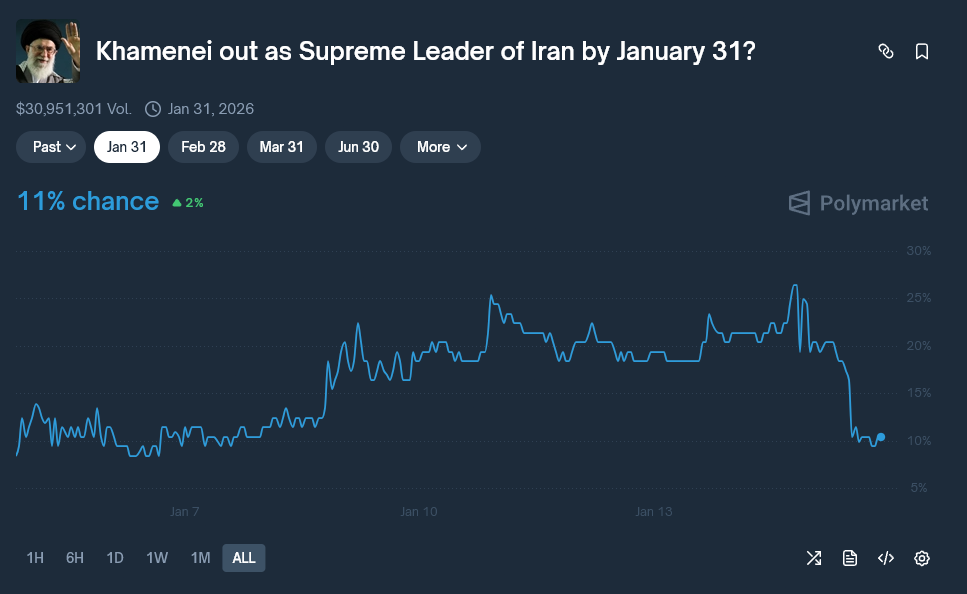 Polymarket Bets on Iran Protests
Meanwhile, Polymarket traders have already suffered major losses on Iran-related bets.
New Age of Information Laundering?
Earlier this week, one large wallet placed a heavy “Yes” position on whether the United States would strike Iran by January 14.
As protests escalated and Iran temporarily closed its airspace, Polymarket odds surged to 51%, with nearly $50 million in trading volume flowing into the market.
But the strike never happened.
Iran reopened its airspace after four hours. President Trump said he had been told that protester executions had stopped.
The market resolved “No,” wiping out 255,817 shares held by the trader and turning a potential $160,000 payout into a total loss of about $40,000.
That failed trade has not calmed concerns. Instead, analysts now argue that some traders may be using Polymarket to shape, not just predict, geopolitical narratives.
This tactic has become known as “information laundering.” It involves placing an early bet, allowing copy-traders and social media to amplify the trade, then reversing position once the market moves.
Because Polymarket odds are widely shared on X and Telegram as real-time signals of geopolitical risk, a single well-timed bet can generate headlines, trigger trading bots, and move sentiment before any public confirmation exists.
Lawmakers are already watching closely.
Policymakers Show Concerns
After the Maduro trade, Representative Ritchie Torres introduced the Public Integrity in Financial Prediction Markets Act of 2026, which would ban US officials from trading on markets tied to government actions when they hold nonpublic information.
The bill has dozens of House co-sponsors but has not yet moved to a vote and has no Senate companion.
So far, no evidence links the Iran trades to US insiders. But the pattern of sudden large bets, viral odds shifts, and rapid reversals is pushing prediction markets into a new and more dangerous spotlight.
The risk now is not just who is betting, but how those bets themselves may be shaping what the world believes is about to happen.
Recommended Articles


