

Ripple’s $1 Billion XRP Unlock Starts 2026, But Is It a Non-Event? | US Crypto News
Welcome to the US Crypto News Morning Briefing—your essential rundown of the most important developments in crypto for the day ahead.
Grab a coffee and settle in. January is already shaping up to test the patience of XRP traders. While headlines are buzzing about Ripple’s $1 billion escrow unlock, the real story may lie less in the numbers and more in what the market chooses to do with them.
Crypto News of the Day: Ripple Unlocks $1 Billion in XRP as 2026 Begins
Ripple is set to unlock 1 billion XRP from escrow on January 1, 2026, marking the first scheduled release of the new year.
At the current XRP price of $1.88, the headline figure represents roughly $1.9 billion, drawing attention from traders and analysts alike.
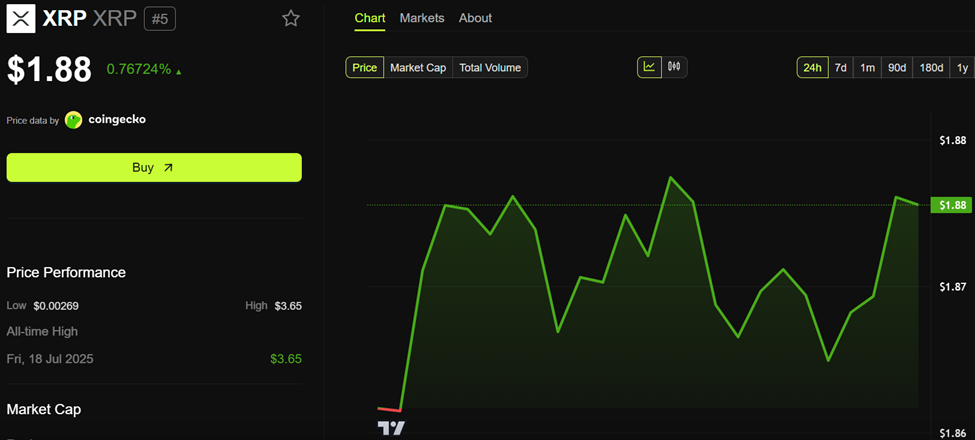 XRP Price Performance. Source: BeInCrypto
Yet, history suggests the market impact could be far smaller than the number implies. This is because Ripple’s monthly unlocks are part of a carefully managed supply mechanism rather than a surprise shock.
The escrow framework, established in 2017, is designed to enhance the transparency and predictability of XRP’s supply.
Under this schedule, Ripple releases 1 billion XRP each month but typically relocks between 60% and 80% of the tokens, retaining only a fraction for operational or liquidity needs.
In December 2025, for example, roughly 70% of unlocked XRP was returned to escrow, leaving less than 300–400 million XRP potentially liquid.
If January follows this pattern, traders may see a limited net supply increase despite the seemingly massive unlock.
Still, the market watches closely. XRP is facing ongoing sell pressure, with a looming risk of a 41% crash. Yet, structural demand appears steady, seen with flows into US spot XRP ETFs.
XRP ETF Inflows and Supply Dynamics Highlight Ripple Price’s 2026 Outlook
Data on SoSoValue shows XRP ETFs have recorded over 30 consecutive days of inflows, including $15.55 million on December 30 alone. This raises total ETF-held assets to $1.27 billion.
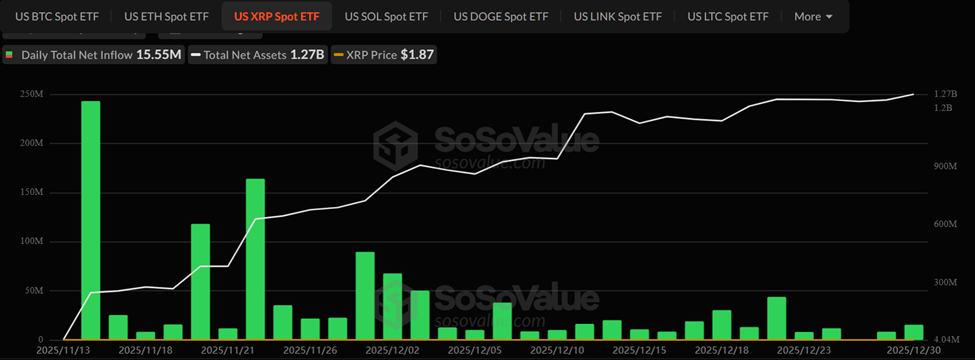 XRP ETF Flows Since Launch. Source: SoSoValue
These inflows highlight confidence in XRP’s long-term positioning among institutions, even amid short-term volatility.
Exchange balances add another layer to the supply story. Analysts note that XRP held on exchanges has declined from approximately 4 billion to under 1.5 billion over the past year, suggesting a tightening of the liquid supply.
“XRP held on exchanges has dropped from approximately 4 billion to under 1.5 billion in just 12 months. This is how real supply shocks start,” wrote one analyst.
In combination with escrow releases and ETF accumulation, this dynamic can help temper market volatility, even as headline figures draw attention.
The January unlock also coincides with regulatory developments. The CLARITY Act, confirmed for Senate markup in January 2026, establishes rules for how banks and financial institutions can engage with digital assets, including XRP.
Regulatory clarity may influence Ripple’s decisions on how much XRP to re-lock. This is because clear rules for how banks and institutions can interact with digital assets may reduce the need for conservative re-escrowing.
Conversely, uncertainty or stricter interpretations might lead Ripple to keep more tokens locked to avoid potential compliance issues.
At the same time, regulatory clarity could also shape broader market sentiment and institutional participation.
XRP’s Shift from Speculation to Financial Infrastructure
Beyond short-term price implications, 2025 marked a turning point for XRP’s narrative. Ripple moved beyond being a payments-focused company, stepping into institutional-grade financial infrastructure.
XRPL’s capabilities in stablecoins, custody, and settlement, coupled with the expanding adoption of ETFs and regulated products, have shifted the conversation from speculation to utility.
This transformation positions XRP unlocks less as potential shocks and more as signals of broader deployment and adoption.
The XRP unlock will occur, but how much XRP will enter circulation, and how will institutions respond? While headlines may suggest a dramatic supply surge, the reality is that history, on-chain data, and strategic positioning point to a controlled, largely predictable release.
Chart of the Day
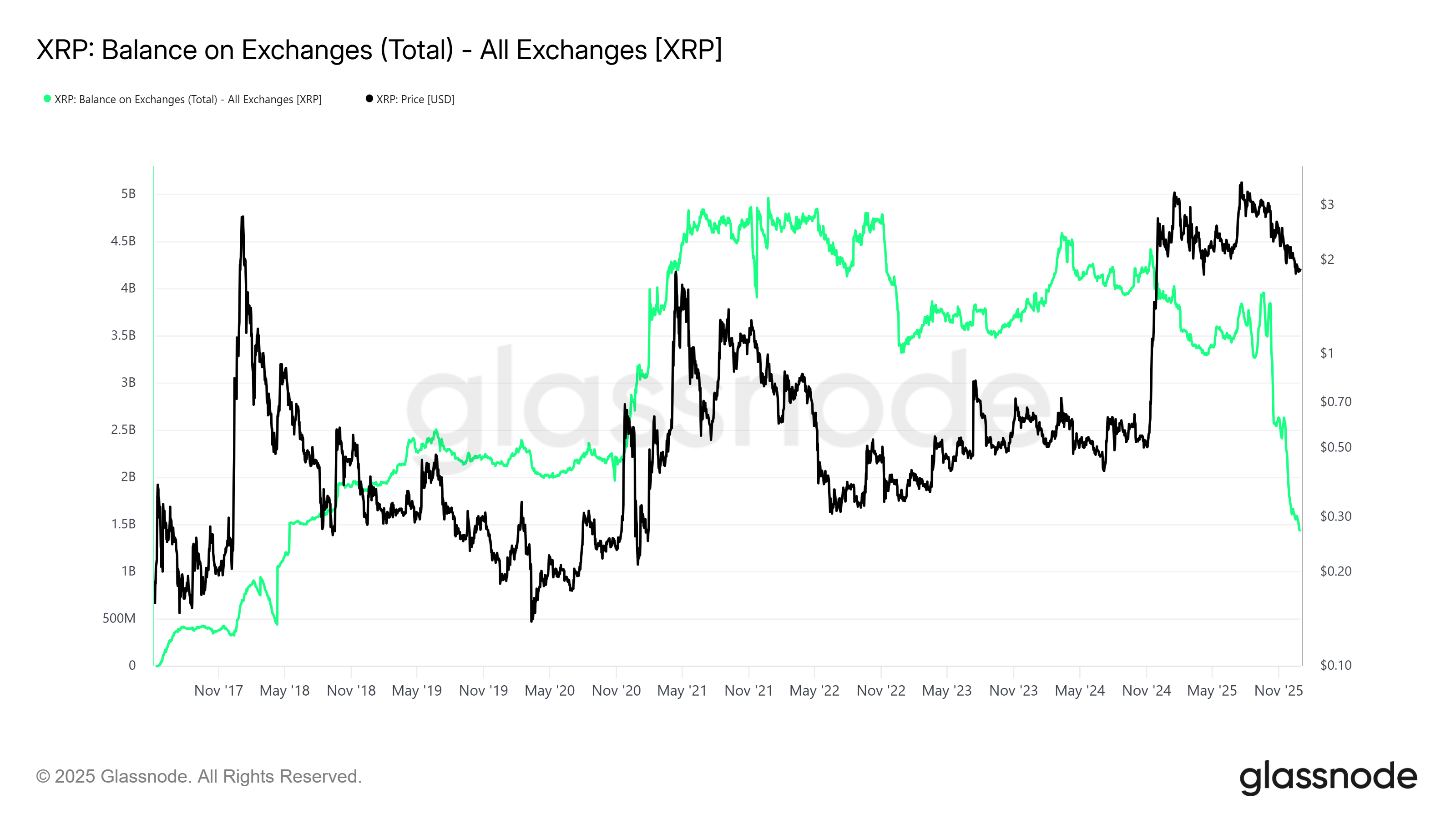 XRP Balance on Exchanges. Source: Glassnode
Byte-Sized Alpha
Here’s a summary of more US crypto news to follow today:
- Five Trump tariff moves that could make or break Bitcoin in 2026.
- An 80% wipeout hasn’t stopped Korean retail from chasing Tom Lee’s BitMine.
- Ethereum price prediction: What to expect from ETH in 2026.
- Fed injects $40 billion in December as global liquidity hits a record high.
- Pi Network halts payment requests after a scam drains 4.4 million Pi coins.
- Bitcoin price ends 2025 at a 5% loss, frustrated buyers are selling at a loss.
- Lighter valuation surpassesPump.fun and Jupiter: Can LIT overtake Hyperliquid?
Crypto Equities Pre-Market Overview
| Company | Close As of December 30 | Pre-Market Overview |
| Strategy (MSTR) | $155.60 | $156.59 (+0.64%) |
| Coinbase (COIN) | $231.60 | $232.08 (+0.21%) |
| Galaxy Digital Holdings (GLXY) | $22.78 | $22.82 (+0.18%) |
| MARA Holdings (MARA) | $9.33 | $9.34 (+0.11%) |
| Riot Platforms (RIOT) | $12.70 | $12.70 (0.00%) |
| Core Scientific (CORZ) | $14.61 | $14.58 (-0.21%) |
Recommended Articles


