


Silver Surges Then Flash Crashes. Safe-Haven Asset Or Speculative Bubble? What Is the Truth of Market Turmoil?

 Trending Articles
- Today’s Market Recap: US and Iran Signal Willingness to End Conflict, Three Major US Stock Indexes Surge, Dollar Ends Five-Day Winning Streak
- US-Iran Rift Persists, Will Gold Rise or Fall Next?
- Trump Withdrawal Intent Reshapes Liquidity, Bitcoin Breaks $68,000 Mark
- Gold rallies on hopes for US-Iran talks and falling US Treasury yields
- Gold Price Forecast: XAU/USD opens lower around $4,450 on fears of widening Iran conflicts
- USD/JPY Hits 160.00 Mark, Will Japanese Government Intervene? Will the Currency’s Rally Be Contained?
TradingKey - The global precious metals market experienced extreme volatility at the end of 2025, with silver prices plummeting nearly 9% on December 29, marking its largest single-day decline since 2021. As silver futures prices crashed, related precious metals ETFs and mining stocks also saw synchronous declines.
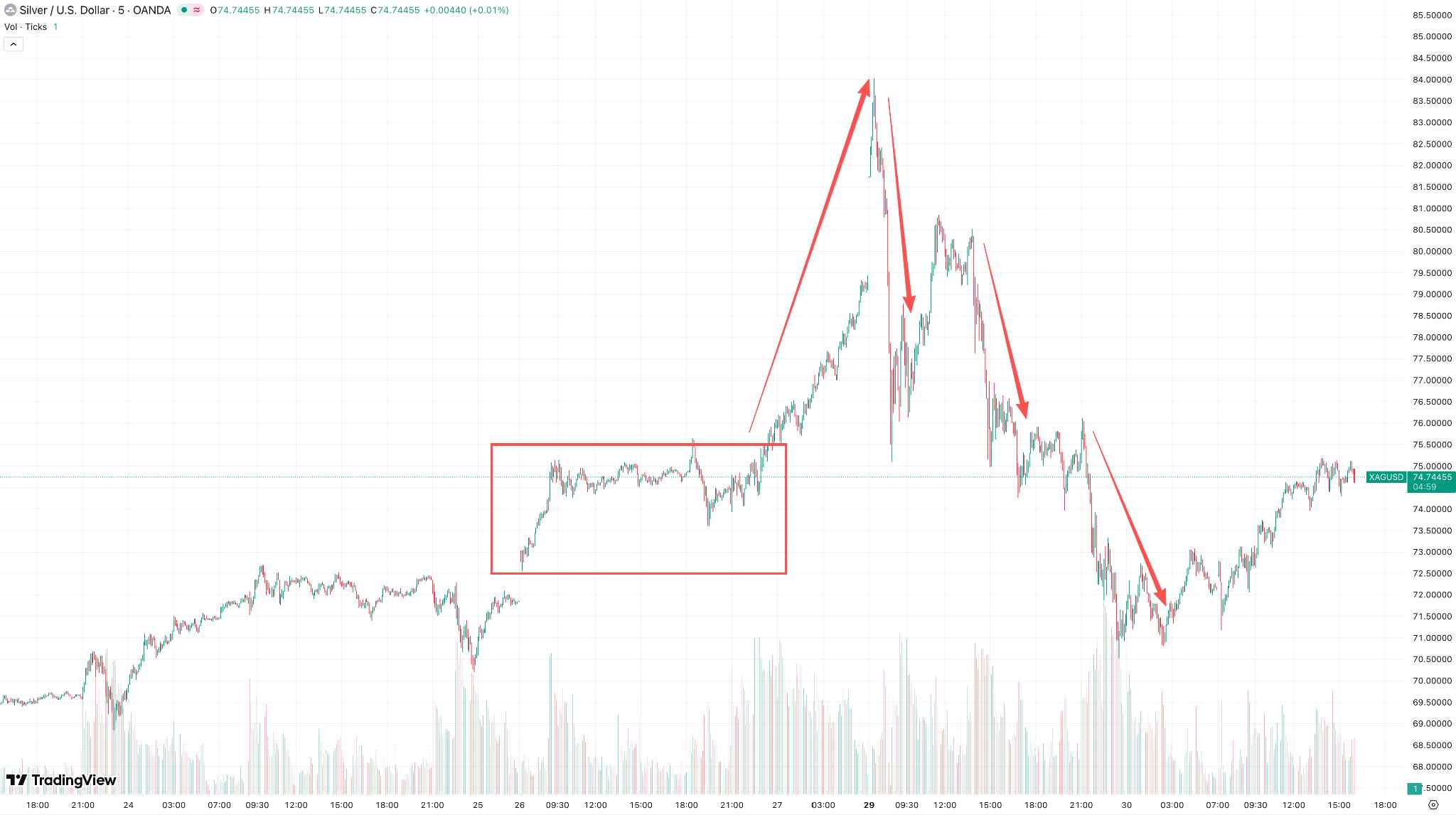
[Silver 5-minute Intraday Chart, Source: TradingView]
Silver's year-to-date cumulative gain once exceeded 180%, pushing its price to an all-time high above $80 per ounce. This sharp decline not only rattled the precious metals market but also dragged down sentiment in related mining stocks and derivatives markets, while amplifying the effect on year-end trading due to liquidity scarcity in the market.
The core reason for silver's extreme price swings lies in the superposition of market speculative sentiment and supply-demand dynamics effects.
On the one hand, the global macroeconomic environment in 2025 was persistently characterized by a weakening dollar and expectations of Federal Reserve interest rate cuts, making precious metals, particularly silver and gold a primary choice for safe-haven and asset diversification. On the other hand, as prices were driven to extreme highs, a significant inflow of speculative capital from market participants led to a disconnect between prices and fundamentals, thereby accumulating extremely high short-term risks.
One of the direct triggers for the December 29 crash was CME Group's increase in margin requirements for precious metals futures, forcing some shadow banks and highly leveraged trading entities to meet margin calls or liquidate positions. This action triggered a concentrated sell-off in precious metals like silver and gold during the year-end trading period characterized by lower market liquidity.
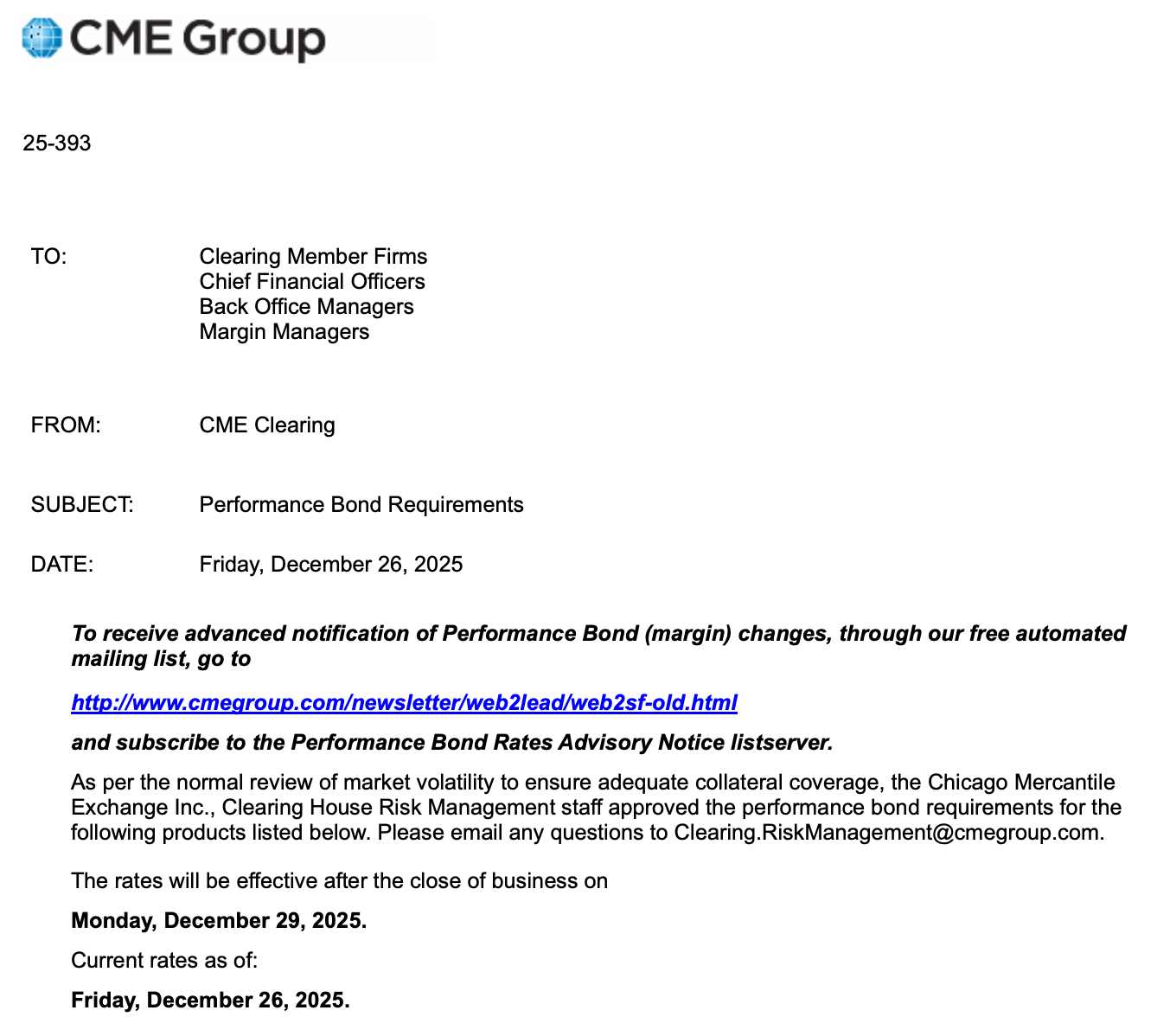
[Source: CME Group]
Silver's sharp decline was also linked to shifts in macroeconomic fundamentals. Market interpretations of this significant drop are divided into short-term technical adjustments and long-term trend corrections.
Market analysis suggests that this decline is attributable to year-end liquidity drainage and a technical correction, representing a natural adjustment after a rapid price increase. The market may still return to an upward trajectory, driven by fundamentals and macroeconomic policy expectations, especially considering that global central banks continue to purchase precious metals to hedge against inflation and exchange rate risks. The long-term allocation logic for precious metals has not fundamentally changed.
However, some analysts warn that when prices deviate too far from true demand and supply fundamentals and are inflated by substantial speculative capital, the correction could be deeper and more prolonged. This 'boom-bust' market pattern itself is a high-risk signal for investors.
For investors, silver's extreme price movements highlight two core takeaways: Precious metals inherently possess both the characteristics of a safe-haven asset and a speculative trading instrument. Therefore, during periods of intense market volatility, they are more prone to experiencing ' boom-bust' cycles .
The future trajectory of silver prices will continue to be influenced by shifts in the global macroeconomic environment, including those related to the United States and other major economies' monetary policy adjustments, U.S. dollar exchange rate fluctuations, and geopolitical risks among other factors.
If inflationary pressures persist and market concerns about an economic recession intensify in the future, the appeal of precious metals as safe-haven assets may rise again. However, if capital flows back to high-yield risk assets or if there's a fundamental shift in macroeconomic expectations, silver prices will likely continue their volatile correction.
Read more
* The content presented above, whether from a third party or not, is considered as general advice only. This article should not be construed as containing investment advice, investment recommendations, an offer of or solicitation for any transactions in financial instruments.


