


NZD/USD (NZDUSD) Surges on Jul 10: Was It the Dollar, Rates, or Data?
NZD/USD (NZDUSD) is up 0.54% at Jul 10 00:00(ET), now at $0.57826, with a 7-day up of 1.37%.
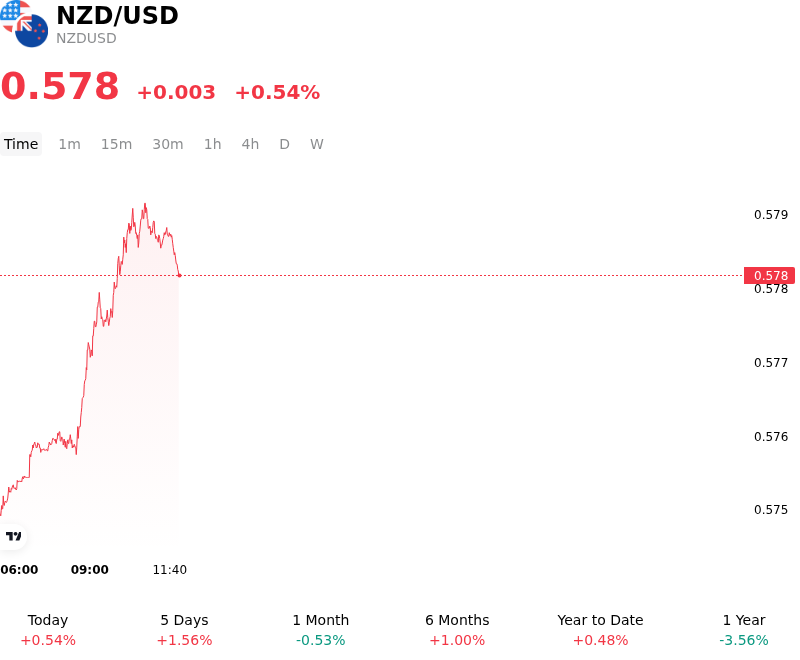
What is driving NZD/USD (NZDUSD)’s stock price up today?
The appreciation of NZDUSD is primarily driven by the convergence of a hawkish policy pivot from the Reserve Bank of New Zealand and a significant cooling in U.S. labor market expectations. This move represents an extension of the rally triggered earlier in the week when the RBNZ unexpectedly raised the Official Cash Rate by 25 basis points to 2.50%, marking its first rate hike in three years. Governor Anna Breman’s accompanying guidance signaled that the central bank is focused on removing stimulatory policy to combat nagging inflation, with markets now pricing in at least two additional hikes before the end of the year.
The New Zealand dollar's outperformance was further reinforced by domestic macroeconomic data showing that the manufacturing sector expanded at its fastest pace in nearly five years. This robust industrial activity has bolstered the narrative of economic resilience, providing the RBNZ with the fundamental justification to maintain its tightening bias. Investors have responded by reweighting capital toward the Kiwi, seeking to capture the widening yield advantage as New Zealand's short-term rates adjust toward a higher neutral level, currently estimated by analysts to be between 3.00% and 3.50%.
Conversely, the U.S. Dollar has faced broad selling pressure following a disappointing June non-farm payrolls report. The addition of only 57,000 jobs fell significantly short of consensus forecasts, and substantial downward revisions to previous months have fueled concerns regarding the sustainability of the U.S. economic expansion. Although the headline unemployment rate edged down to 4.2%, the underlying details were viewed as weak due to a sharp decline in the labor force participation rate. This "bad news is good news" dynamic for risk assets has led markets to price out potential hawkish moves from the Federal Reserve, weighing heavily on Treasury yields.
The resulting compression in interest-rate differentials has favored the NZD, as the policy trajectories of the two central banks appear to be diverging. While Fed Chair Kevin Warsh remains focused on price stability, the softening labor data suggests a more cautious approach to further tightening than previously anticipated. This contrast, combined with a supportive backdrop for commodity prices—specifically renewed strength in silver and copper—has allowed the NZD to maintain its momentum as a high-beta risk currency.
The technical breakout in NZDUSD above recent resistance levels suggests that the current move is supported by a fundamental shift in macro sentiment rather than temporary volatility. However, investors remain attentive to next week’s U.S. consumer price index release and potential geopolitical shifts in the Middle East, which could alter the global risk-on appetite that currently underpins the pair's strength.
Technical Analysis of NZD/USD (NZDUSD)
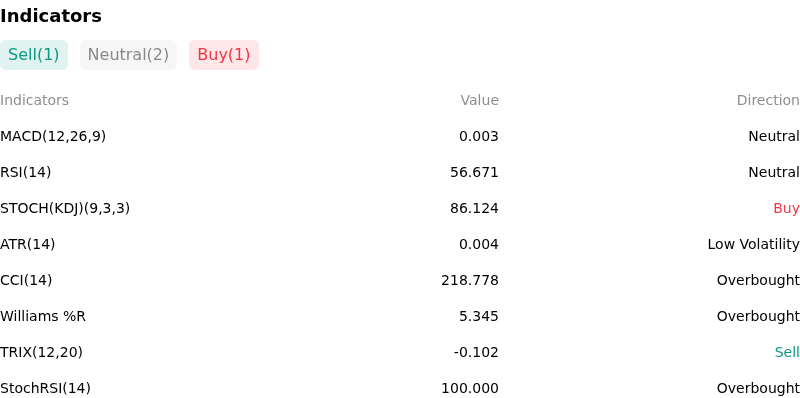
Technically, NZD/USD (NZDUSD) shows a MACD (12,26,9) value of 0.003, indicating a neutral signal. The RSI at 56.671 suggests neutral condition and the Williams %R at 5.345 suggests overbought condition. Please monitor closely.
More details about NZD/USD (NZDUSD)
Recent Events and Risks:
- RBNZ Dovish Pivot Risk: Markets are increasingly pricing in a potential dovish shift in the Reserve Bank of New Zealand’s upcoming policy guidance, as recent domestic data indicates a sharpening contraction in retail trade and weakening business sentiment.
- Chinese Economic Fragility: Underwhelming industrial production and retail sales data from China over the last 48 hours have dampened the outlook for New Zealand’s export-led economy, exerting downward pressure on the NZD as a liquid proxy for Chinese growth.
- US Yield Spread Pressure: Hawkish rhetoric from Federal Reserve officials in the last 24 hours regarding persistent services inflation has supported elevated US Treasury yields, narrowing the NZD-USD yield differential and incentivizing capital outflows from the Kiwi.
- Risk-Off Sentiment Shift: A recent uptick in geopolitical tensions and a cooling of global equity markets have triggered a retreat from high-beta, commodity-linked currencies, leading to intraday liquidation of NZDUSD long positions in favor of safe-haven assets.
Recommended Articles


