


Visa Inc Stock (V) Opened Up by 8.85% on Apr 29: Key Drivers Unveiled
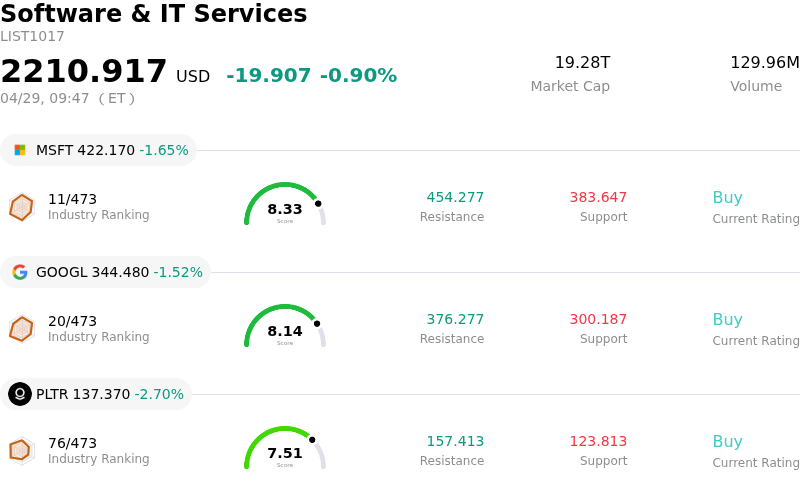
Visa Inc (V) opened up by 8.85%. The Software & IT Services sector is down by 0.90%. The company outperformed the industry. Top 3 stocks by turnover in the sector: Microsoft Corp (MSFT) down 1.65%; Alphabet Inc Class A (GOOGL) down 1.52%; Palantir Technologies Inc (PLTR) down 2.70%.
What is driving Visa Inc (V)’s stock price up today?
Visa (V) stock demonstrated significant positive movement today, primarily driven by a robust fiscal second quarter 2026 earnings report and optimistic forward-looking guidance. The company announced financial results that notably surpassed analyst expectations for both revenue and earnings per share. This strong performance was underpinned by resilient consumer spending and healthy growth across its core business drivers.
Key financial metrics indicated strong operational momentum, with significant increases in payments volume, cross-border volume, and processed transactions on a constant-dollar basis. The company's net revenue growth rate was highlighted as its strongest in several years, excluding the unique dynamics of the post-pandemic recovery and the Visa Europe acquisition. This broad-based strength in its payment processing network instilled confidence in the market.
Further bolstering investor sentiment, Visa raised its fiscal 2026 outlook, providing guidance for continued growth in net revenue and earnings per share for the full year. This positive revision to expectations, particularly in light of ongoing global economic uncertainties, was well-received by analysts, who noted that concerns about potential slowdowns in cross-border growth were alleviated.
In addition to strong financial results, the company announced substantial capital allocation initiatives. The board authorized a new multi-year share repurchase program totaling a significant sum, which, combined with existing authorizations, created a substantial capacity for future share buybacks. A quarterly cash dividend was also declared, signaling a continued commitment to returning value to shareholders.
Strategic advancements also played a role in the positive market reaction. Visa highlighted the expansion of its global Agentic Ready program, aimed at supporting the evolving landscape of agent-led commerce, and accelerated its stablecoin initiatives by integrating additional blockchains for settlement. These innovations, coupled with the introduction of new AI-powered tools to combat fraud, position Visa favorably in the rapidly evolving digital payments ecosystem. Analyst sentiment reflected these positive developments, with several firms reiterating favorable ratings and price targets for the stock.
Technical Analysis of Visa Inc (V)
Technically, Visa Inc (V) shows a MACD (12,26,9) value of [0.24], indicating a buy signal. The RSI at 49.49 suggests neutral condition and the Williams %R at -59.30 suggests oversold condition. Please monitor closely.
Media Coverage of Visa Inc (V)
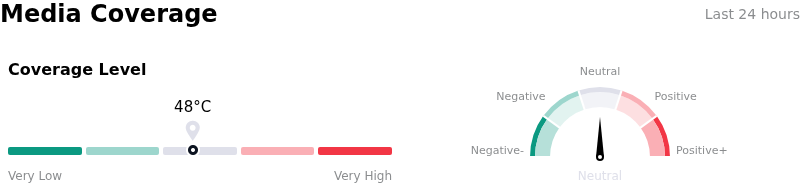
In terms of media coverage, Visa Inc (V) shows a coverage score of 48, indicating a moderate level of media attention. The overall market sentiment index is currently in neutral zone.
Fundamental Analysis of Visa Inc (V)
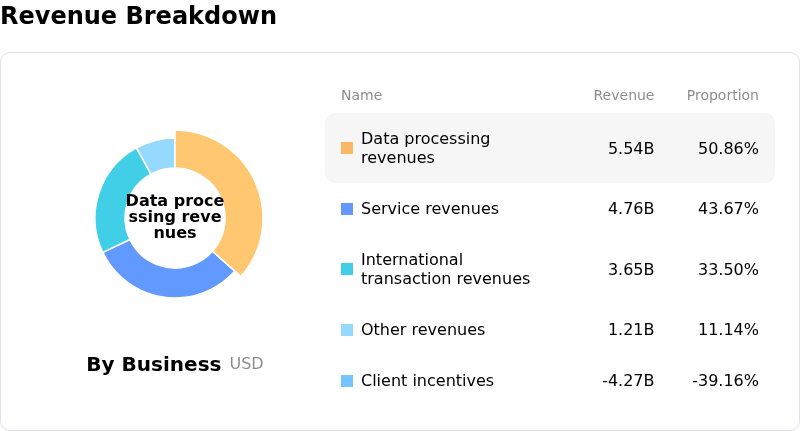
Visa Inc (V) is in the Software & IT Services industry. Its latest annual revenue is $40.00B, ranking 15 in the industry. The net profit is $19.85B, ranking 5 in the industry. Company Profile
Over the past month, multiple analysts have rated the company as Buy, with an average price target of $391.98, a high of $450.00, and a low of $326.34.
More details about Visa Inc (V)
note
Company Specific Risks:
- A $311 million litigation provision was recorded in the recently reported second-quarter earnings, reflecting ongoing financial exposure to various legal matters, including interchange multidistrict litigation.
- Visa's active exchange offer for Class B common stock, which includes a "Makewhole Agreement" potentially leading to "unlimited payment obligations" tied to future conversion rate adjustments, introduces a complex contingent liability with the offer expiring on May 8, 2026.
- Despite strong overall Q2 performance, the company observed a slight deceleration in cross-border payment volume growth, excluding intra-Europe transactions, which decreased from 13% in the prior year to 12% in the most recent quarter.
The search results for Visa (V) in the last 24-72 hours indicate overwhelmingly positive news regarding their Q2 earnings, with both earnings and revenue exceeding analyst expectations. The stock jumped almost 4% after the announcement on April 28, 2026.
However, the prompt asks for risks linked to intraday volatility, and the search results also contain some potential negative aspects or ongoing concerns, even if the immediate earnings news was positive. I need to sift through these for company-specific, concrete risks.
Here's what I found that could be considered risks, even if not explicitly stated as causing current intraday volatility (as the overall sentiment is positive):
- Litigation Provision: Visa reported a $311 million litigation provision related to the interchange multidistrict litigation case and other legal matters in its Q2 earnings. This is a concrete financial risk.
- Regulatory/Legal Scrutiny (Historical but ongoing concern):
- DOJ Antitrust Lawsuit (2024): The U.S. Justice Department filed an antitrust lawsuit against Visa in 2024, alleging it stifles competition in the debit card market. This is an ongoing legal threat that could lead to structural changes and impact revenue/profitability.
- Credit Card Competition Act (CCCA): Pending legislation that could require banks to offer a second network for routing transactions, potentially leading to a "race to the bottom" on fees. This is a significant regulatory risk.
- UK Tribunal Ruling on Interchange Fees (June 2025): A landmark decision against Visa and Mastercard concerning multilateral interchange fees (MIFs), challenging fee structures.
- Prior 8-K Filing (November 2025): A proposed settlement for U.S. merchants involving a 10 basis point reduction in interchange rates for five years and more payment acceptance options. While a settlement, it indicates pressure on interchange fees.
- Valuation Concerns/Analyst Downgrades (Older but still relevant commentary):
- Erste Group downgraded Visa from Buy to Hold in September 2025, citing limited growth opportunities in developed markets and a high P/E ratio, suggesting the stock may be fully valued. They also mentioned emerging competitive pressures from fintech companies.
- UBS trimmed its price target on Visa in April 2026, though it maintained a "Buy" rating.
- Seeking Alpha article from April 26, 2026, maintains a "hold" rating due to Visa's high absolute valuation.
- Slight Deceleration in Cross-Border Volume (Q2 results): While overall cross-border volume grew, the growth rate for cross-border volume excluding intra-Europe transactions increased 11%, down from 13% last year. This is a subtle point but could indicate a minor operational/market risk if it continues.
- Class B Stock Exchange Offer: Visa has an exchange offer for Class B-1 and B-2 common stock expiring May 8, 2026. This includes a "Makewhole Agreement" that "may create unlimited payment obligations tied to future downward adjustments to the Applicable Conversion Rate." This is a complex financial/operational risk due to potential future obligations.
I need to select 3 or 4 concrete risks from the last 24-72 hours or explicitly current and impactful for intraday volatility.
The earnings report was April 28, 2026, which is within the 24-72 hour window. So, the $311 million litigation provision from Q2 results is very current.
The Class B stock exchange offer is current and expires on May 8, 2026, which means it's a current event impacting the company. The "unlimited payment obligations" aspect is a clear risk.
The slight deceleration in cross-border volume growth is from the Q2 earnings report, making it current.
The analyst downgrades (Erste Group Sep 2025, UBS price target trim April 2026) are a bit older for a 24-72 hour focus but contribute to general sentiment. However, the prompt is about intraday volatility, and recent downgrades/concerns could still be factors. The Seeking Alpha "hold" rating due to valuation is also recent (April 26, 2026).
The DOJ antitrust lawsuit is from 2024, but its ongoing nature is a current vulnerability. The "critical discovery phase" mentioned in Feb 2026 (cite: 9) means it's still active.
Let's prioritize:
1. Litigation Provision (Financial/Operational): Directly from the most recent earnings. Concrete amount.
2. Class B Stock Exchange Offer (Financial/Operational): Very current, with a specific expiration date and "unlimited payment obligations" risk.
3. Slight Deceleration in Cross-Border Volume (Market/Operational): From the most recent earnings, indicating a potential softening in a key growth driver.
4. Ongoing Regulatory Scrutiny/Antitrust Litigation (Legal/Regulatory): The 2024 DOJ lawsuit, Credit Card Competition Act (CCCA), and UK tribunal rulings represent persistent legal and regulatory threats that could impact Visa's business model and profitability. Although the lawsuit was filed in 2024, its ongoing nature and potential structural changes make it a current risk.
I'll choose these four to provide a comprehensive view of recent and ongoing risks. I need to make sure the language is concrete and focuses only on risk.
I should make sure to cite correctly.
Company Specific Risks:
- A $311 million litigation provision was recorded in the recently reported second-quarter earnings, reflecting ongoing financial exposure to various legal matters, including interchange multidistrict litigation.
- Visa's active exchange offer for Class B common stock, which includes a "Makewhole Agreement" potentially leading to "unlimited payment obligations" tied to future conversion rate adjustments, introduces a complex contingent liability with the offer expiring on May 8, 2026.
- Despite strong overall Q2 performance, the company observed a slight deceleration in cross-border payment volume growth, excluding intra-Europe transactions, which increased 11% compared to 13% in the prior year.
- Ongoing regulatory scrutiny and antitrust litigation, particularly the U.S. Justice Department's 2024 lawsuit regarding debit card competition and potential legislation like the Credit Card Competition Act (CCCA), pose a persistent threat of structural changes and reduced pricing power.
Recommended Articles


