


China cuts benchmark lending rates by 25 basis points to boost economic recovery

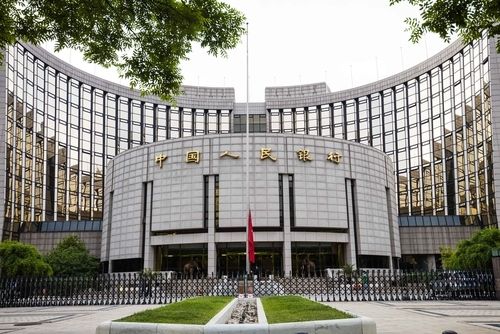
China’s strategic bid to boost economic growth has led to a cut on benchmark lending rates. The People’s Bank of China announced on Monday that it would lower the rates by 25 basis points. The Chinese Central Bank governor signaled the policy changes during a forum in Beijing on Friday.
The People’s Bank of China (PBOC), China’s central bank, has lowered the country’s benchmark lending rates by 25 basis points to boost economic recovery. The central bank announced that the five-year loan prime rate (LPR) has been cut from 3.85% to 3.6%, while the one-year loan prime rate has been lowered to 3.1% from 3.35%. The one-year LPR affects corporate loans and most household loans in China, while the five-year LPR is the benchmark for mortgage rates.
PBOC governor hints at more policies for economic growth
PBOC’s governor, Pan Gongsheng, had given hints on the policy change while speaking at the Annual Conference of Financial Street Forum 2024 held in Beijing on Friday. The governor had stated in the forum that the central bank would lower the benchmark lending rates by 20 to 25 basis points.
Shane Oliver, head of investment strategy and chief economist at AMP, said that the monetary stimulus of lowering loan prime rates is occurring on a significant basis in China. However, he mentioned that the policy alone is not enough to pull the country’s economy from the trenches and would require more fiscal stimulus.
Pan also made numerous pledges on economic policy changes aligning with the country’s overall plan to boost economic recovery and growth. The executive mentioned that the seven-day reverse purchase rates will be lowered by 20 basis points while the medium-term lending facility rate will be reduced by 30 basis points.
Pan also said the PBOC would lower the reserve requirement ratio for Chinese banking institutions, which is the amount of cash that banks need to have for liquidity provision, by 20 to 25 basis points. The policy change aims to save the ailing property sector and boost consumption in the country.
China’s PBOC lowers the reserve requirement ratio by 50 basis points
In September, the PBOC lowered the reserve requirement ratio by 50 basis points, among other policy changes that were inclined towards revamping the Chinese economy, which is currently the second largest economy worldwide. China also shaved its short and long-term rates in July.
China’s National Bureau of Statistics reported a 4.6% growth in the third-quarter GDP year-on-year. The growth slightly exceeded the expected figure of 4.5% by economists. Industrial production, retail sales, and other statistics released on Friday also beat experts’ expectations.
Recently, missed economic data expectations sparked concerns over China’s ability to grow by 5% this year. On October 12th, Finance Minister Lan Foan spoke during a news conference, promising significant government debt increases and support for property and consumer sectors. However, the press briefing left investors wanting, since the minister failed to mention any numerical details, despite being strong on determination.
* The content presented above, whether from a third party or not, is considered as general advice only. This article should not be construed as containing investment advice, investment recommendations, an offer of or solicitation for any transactions in financial instruments.


