
BoJ’s Ueda says US tariffs likely to exert downward pressure on Japan, global economies

Mitrade
Trending Articles
coverImg
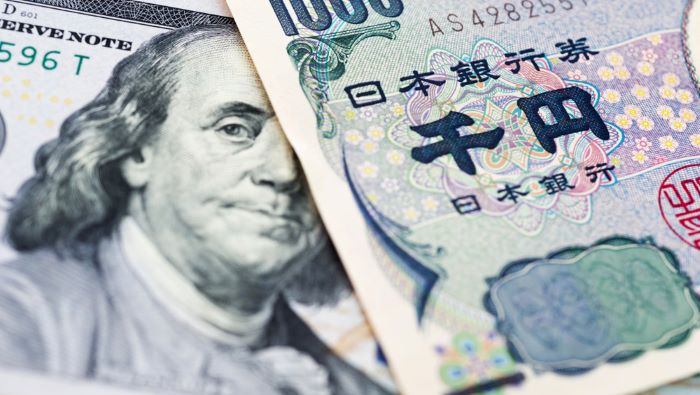
Source: DepositPhotos

Bank of Japan Governor Kazuo Ueda said early Friday that US tariffs are likely to exert downward pressure on Japan and the global economies.


Key quotes


US tariffs are likely to exert downward pressure on Japan, global economies.

Hard to say now how US tariffs will affect Japan’s price moves.

Will closely monitor US tariff impact on Japan, overseas economic and price developments in deciding monetary policy.

We will scrutinise data, including from hearings, available at the time of each policy meeting to gauge US tariff impact on Japan’s economy, prices.

We will guide monetary policy appropriately from the standpoint of sustainably achieving 2% inflation target.

When the external environment changes sharply, our growth and price forecasts will change, so will guide monetary policy accordingly in an appropriate manner.


Market reaction  


At the press time, the USD/JPY pair is up 0.17% on the day to trade at 146.33.


Bank of Japan FAQs


The Bank of Japan (BoJ) is the Japanese central bank, which sets monetary policy in the country. Its mandate is to issue banknotes and carry out currency and monetary control to ensure price stability, which means an inflation target of around 2%.


The Bank of Japan embarked in an ultra-loose monetary policy in 2013 in order to stimulate the economy and fuel inflation amid a low-inflationary environment. The bank’s policy is based on Quantitative and Qualitative Easing (QQE), or printing notes to buy assets such as government or corporate bonds to provide liquidity. In 2016, the bank doubled down on its strategy and further loosened policy by first introducing negative interest rates and then directly controlling the yield of its 10-year government bonds. In March 2024, the BoJ lifted interest rates, effectively retreating from the ultra-loose monetary policy stance.


The Bank’s massive stimulus  caused the Yen to depreciate against its main currency peers. This process exacerbated in 2022 and 2023 due to an increasing policy divergence between the Bank of Japan and other main central banks, which opted to increase interest rates sharply to fight decades-high levels of inflation. The BoJ’s policy led to a widening differential with other currencies, dragging down the value of the Yen. This trend partly reversed in 2024, when the BoJ decided to abandon its ultra-loose policy stance.


A weaker Yen and the spike in global energy prices led to an increase in Japanese inflation, which exceeded the BoJ’s 2% target. The prospect of rising salaries in the country – a key element fuelling inflation – also contributed to the move.

Read more

  • Gold jumps above $4,440 as geopolitical flare, Fed cut bets mount
  • Gold Price Hits New High: Has Bitcoin Fully Declined?
  • After Wall Street’s 2025 Crypto Surge, What’s Next for Demand in 2026?
  • US Q3 GDP Released, Will US Stocks See a "Santa Claus Rally"?【The week ahead】
  • Top 10 Krypto-Prognosen für 2026: Institutionelle Nachfrage und Großbanken könnten Bitcoin Rückenwind geben
  • * The content presented above, whether from a third party or not, is considered as general advice only.  This article should not be construed as containing investment advice, investment recommendations, an offer of or solicitation for any transactions in financial instruments.

    goTop
    quote
    Related Articles
    placeholder
    US Q3 GDP Released, Will US Stocks See a "Santa Claus Rally"?【The week ahead】Last week, concerns about an Oracle data center project weighed on technology stocks, but rising expectations of interest rate cuts boosted the broader market. The S&P 500 index rose slig
    Author  TradingKey
    Dec 22, Mon
    Last week, concerns about an Oracle data center project weighed on technology stocks, but rising expectations of interest rate cuts boosted the broader market. The S&P 500 index rose slig
    placeholder
    U.S. November CPI: How Will Inflation Fluctuations Transmit to US Stocks? Tariffs Are the Key!TradingKey - Inflation exerts a notable impact on the stock market. Since the Trump administration took office, it has imposed substantial tariff hikes, and the effects of this policy have gradually f
    Author  TradingKey
    Dec 18, Thu
    TradingKey - Inflation exerts a notable impact on the stock market. Since the Trump administration took office, it has imposed substantial tariff hikes, and the effects of this policy have gradually f
    placeholder
    U.S. November Nonfarm Payrolls: What Does the Rare "Weak Jobs, Strong Economy" Mix Mean for U.S. Equities?1. IntroductionAfter retreating from the late-October highs, U.S. equities embarked on a bottoming rebound in mid-to-late November, a trend driven by the interplay of multiple factors. That said, it i
    Author  TradingKey
    Dec 16, Tue
    1. IntroductionAfter retreating from the late-October highs, U.S. equities embarked on a bottoming rebound in mid-to-late November, a trend driven by the interplay of multiple factors. That said, it i
    placeholder
    The 2026 Fed Consensus Debate: Not Hassett, It’s About Whether Powell Stays or GoesKevin Hassett, White House National Economic Council Director, is poised to succeed Jerome Powell as the next Federal Reserve Chair. This development signals a potentially more dovish mon
    Author  TradingKey
    Dec 04, Thu
    Kevin Hassett, White House National Economic Council Director, is poised to succeed Jerome Powell as the next Federal Reserve Chair. This development signals a potentially more dovish mon
    placeholder
    Fed Chair Candidate: What Would a Hassett Nomination Mean for U.S. Stocks?1. IntroductionOver the past month, investors' expectations for a Federal Reserve interest rate cut in December first cooled and then reignited. These fluctuating expectations have directly triggered
    Author  TradingKey
    Dec 02, Tue
    1. IntroductionOver the past month, investors' expectations for a Federal Reserve interest rate cut in December first cooled and then reignited. These fluctuating expectations have directly triggered