


Yen Nears 160 Mark Again, Is Japan Intervention Imminent?

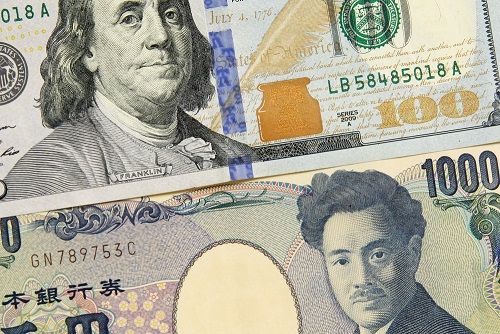
TradingKey - As the US dollar continues to strengthen, the yen is once again approaching a key psychological level. During the Friday Asian trading session, USD/JPY (USDJPY) rose to near the 160 level at one point, as the yen's continuous depreciation against the dollar sparked market speculation that Japanese authorities may take intervention measures.
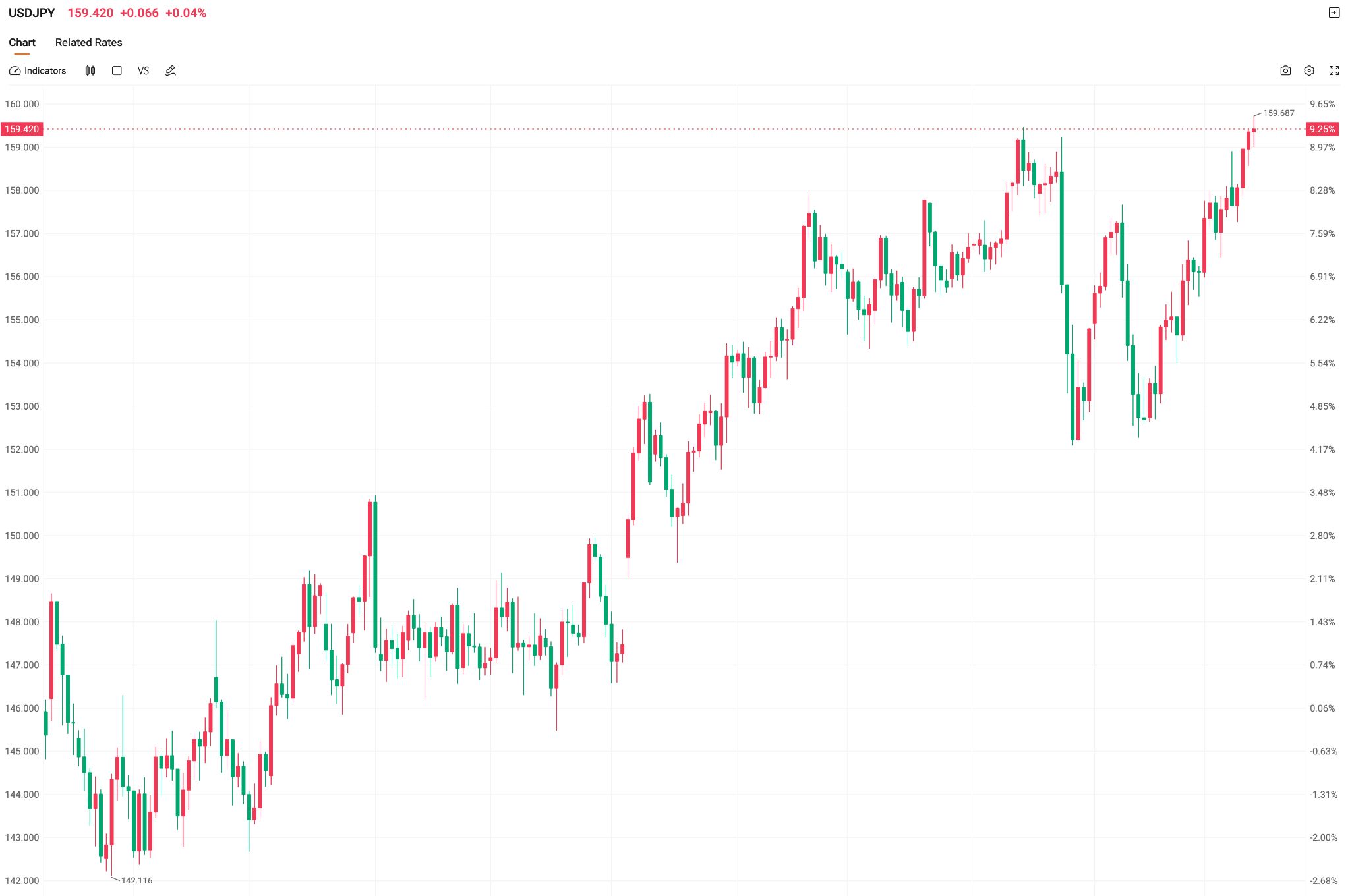
Market sentiment suggests the yen's current weakness is primarily driven by the widening US interest rate advantage and the global flow of funds back into dollar-denominated assets. The recent continuous rise in the US Dollar Index has maintained the dollar's strength in foreign exchange markets, while the significant interest rate differential between Japan and the US continues to weigh on the yen's performance.
At the same time, investors have begun to reassess the Bank of Japan's policy trajectory. Although the BoJ has been gradually exiting its ultra-loose monetary policy, overall interest rate levels remain far below those of other major economies. As the yen continues to weaken, the rising cost of imported energy and food has brought domestic inflationary pressures back into focus.
Market analysis suggests that if the yen breaks the 160 mark, the Japanese government and the central bank may face greater policy pressure. On one hand, the Ministry of Finance might intervene in the forex market to stabilize the exchange rate; on the other hand, the BoJ could be forced to further adjust its interest rate policy to mitigate inflationary risks stemming from the yen's depreciation.
However, some believe the Bank of Japan will remain cautious about raising interest rates. Given that Japan's economic recovery remains fragile, tightening monetary policy too quickly could impact the corporate financing environment and domestic demand.
Significant uncertainty remains regarding the yen's future trajectory. Markets will closely monitor whether Japanese authorities take actual intervention measures, as well as the BoJ's interest rate guidance in upcoming policy meetings. Currently, the Bank of Japan is likely to maintain interest rates at its March policy meeting, but a rate hike in April remains a possibility. Officials are closely monitoring the impact of geopolitical risks in the Middle East on energy prices, global markets, and the Japanese economy.
Read more
* The content presented above, whether from a third party or not, is considered as general advice only. This article should not be construed as containing investment advice, investment recommendations, an offer of or solicitation for any transactions in financial instruments.


