


Trump Says US-Iran Temporary Ceasefire Agreement Has Ended, WTI Crude Oil Rises Over 6%

 Trending Articles
- Gold Price Forecast: US Non-Farm Payrolls Miss Expectations, Gold Surges Over $100, Can the Bull Run Continue?
- Gold Price Forecast: XAU/USD struggles to extend recovery above 20-day EMA
- Gold gains momentum above $4,100 after weak US NFP data
- TradingKey Daily Market Briefing: OPEC+ Continues Output Boost, Oil Prices Under Pressure, Gold Rebounds, Bitcoin Stands Above $63,000
- Japanese Yen declines towards 162.00 vs USD as carry trades counter intervention risks
- WTI slips below $68.00 as supply concerns ease
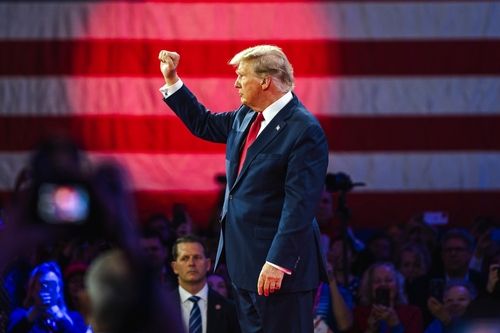
TradingKey - US President Trump stated at the NATO annual summit on July 8 that he believes the US-Iran memorandum of understanding is "over." This means the temporary ceasefire state between the two countries, which had just shown signs of easing, has officially come to an end.
Trump told the media in Ankara, "For me, it is over. In my opinion, this was just a waste of time."
This statement came a day after Washington took successive actions against Tehran. On July 7, local time, the U.S. Department of the Treasury's Office of Foreign Assets Control issued an announcement revoking the general license that previously authorized Iranian oil sales. Related wind-down transactions are restricted to be completed before 12:00 AM Eastern Time on July 17.
On the same day, the U.S. Central Command announced that it had launched a new round of strikes against Iran, hitting over 80 targets, including Iran's air defense systems, command and control networks, coastal radar sites, anti-ship missile capabilities, and more than 60 Islamic Revolutionary Guard Corps fast attack craft. The U.S. stated this was in response to Iran's recent attacks on three merchant vessels in the Strait of Hormuz. According to the U.S. statement, the three merchant vessels were the Marshall Islands-flagged tanker "Al Rekayat," the Saudi-flagged tanker "Wadiyan," and the Liberian-flagged tanker "Cyprus Prosperity."
Oil prices surge as market reprices "supply risks"
Following the news, international oil prices surged rapidly. WTI crude jumped over 6% to top $74 per barrel, with Brent crude posting similar gains. As of press time, WTI crude futures traded at $74.69 per barrel, while Brent crude futures stood at $78.75 per barrel.
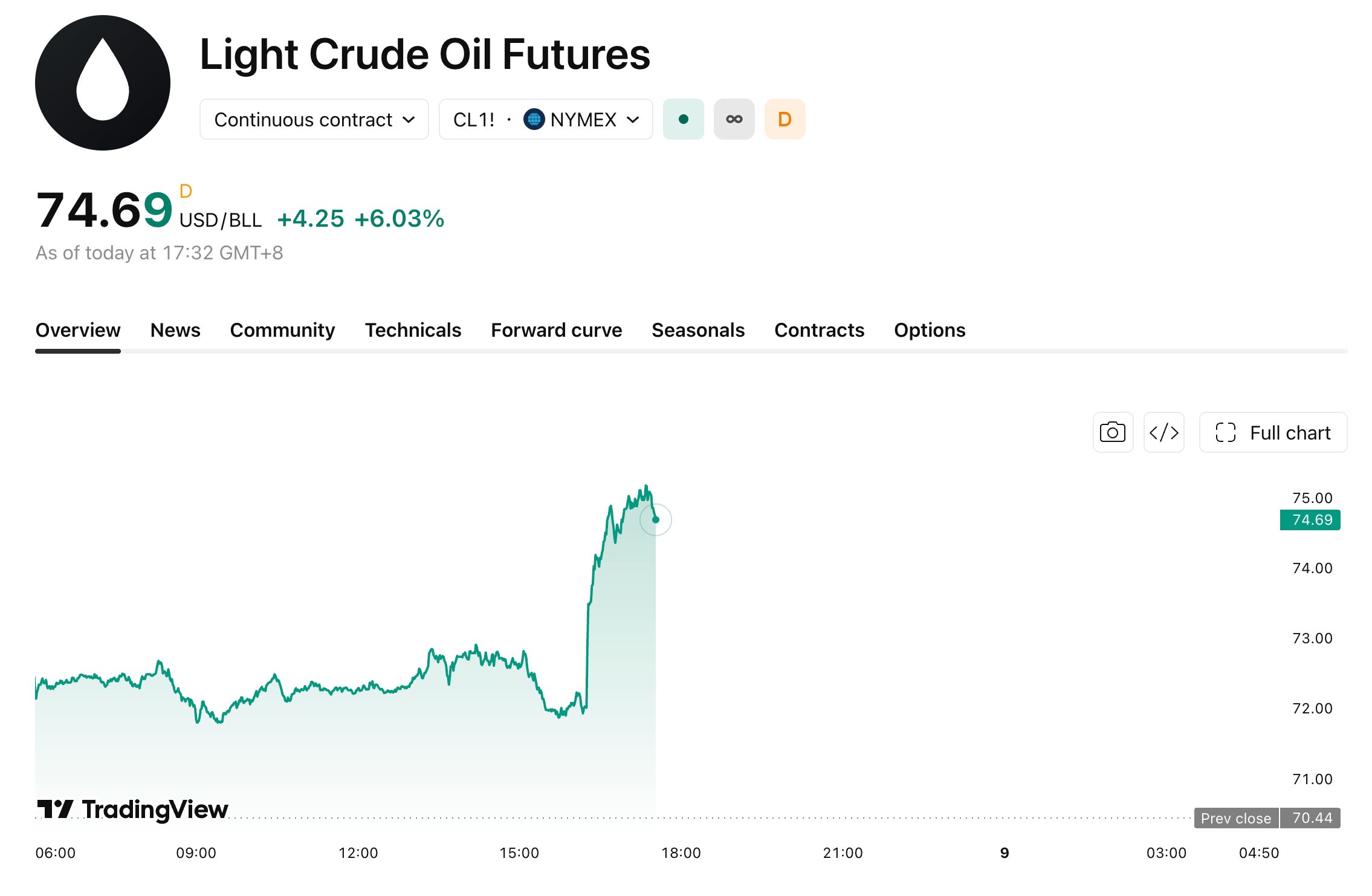
[Source: TradingView]
Over the previous month, as the U.S. and Iran signed a memorandum of understanding and the U.S. granted limited exemptions for Iranian oil exports, the market once believed that Iranian crude supply was expected to gradually return to the international market, causing the oil price risk premium to continuously fade. Now, in less than 20 days, this memorandum has been personally terminated by Trump.
At the summit, the U.S. President expressed "disappointment" with NATO's performance regarding U.S. military operations against Iran, and singled out the UK, France, Germany, and Italy, criticizing them for "not doing enough."
Iran retaliates: Where is the situation heading?
Iran responded swiftly. Iran's Ministry of Foreign Affairs issued a statement on the 8th, condemning the U.S. military strikes as a violation of the UN Charter and the Iraq-U.S. memorandum of understanding, and stating that the U.S. side must bear the consequences of the escalating situation.
Iran's armed forces also issued a stern warning, stating that all U.S. military bases in the Middle East would become "legitimate targets for attack." The Islamic Revolutionary Guard Corps (IRGC) subsequently released a statement claiming that the operation "destroyed" 85 key U.S. military facilities in the Middle East, including the U.S. Fifth Fleet in Bahrain and the Ali Al Salem Air Base in Kuwait.
This abrupt U-turn in U.S. policy marks a shift in the global crude oil market's trading logic, moving once again from the "return of Iranian supply" back to "whether Middle East supply is threatened once more."
The future direction of the market will depend heavily on when the gunfire in the Strait of Hormuz subsides, and whether the Trump administration will implement harsher blockade measures against Iranian oil exports.
Read more
* The content presented above, whether from a third party or not, is considered as general advice only. This article should not be construed as containing investment advice, investment recommendations, an offer of or solicitation for any transactions in financial instruments.


