





Gold extended its sell-off on Friday, moving closer to US$3,500 as a strong US dollar and expectations of further Federal Reserve tightening continued to weigh on bullion.
Spot gold traded around US$3,539.74 at 3:21 pm AEDT, down 2.3% during the session. At that point, prices were heading for a weekly decline of approximately 9%, potentially the largest since March, after reaching their lowest level since September 2025.
Meanwhile, US Treasury yields have eased towards 5%. This creates an important question for the gold price outlook: could falling yields help bullion stabilise, or will selling pressure continue to dominate?
A rebound is possible after such a sharp decline. However, the size of the fall alone does not establish that a durable recovery has begun.
Why Is Gold Falling While Treasury Yields Decline?
Fed tightening expectations remain a headwind
Gold’s latest decline has continued against a backdrop of a firm dollar and expectations of another US interest-rate increase in December. The dollar remained close to a 19-month high during Friday’s trading.
Higher interest rates increase the opportunity cost of holding gold, which does not generate interest income. Dollar strength can also make bullion more expensive for buyers using other currencies.
A modest decline in Treasury yields does not necessarily remove these pressures. Yields can fall from recent highs while remaining elevated enough to compete with non-interest-bearing assets.
Bond demand and gold demand can diverge
The US 10-year Treasury yield declined for a fourth consecutive session on Thursday, finishing around 5.05%, according to Tradeweb figures reported by The Wall Street Journal. The report linked the recent retreat partly to demand for perceived safety.
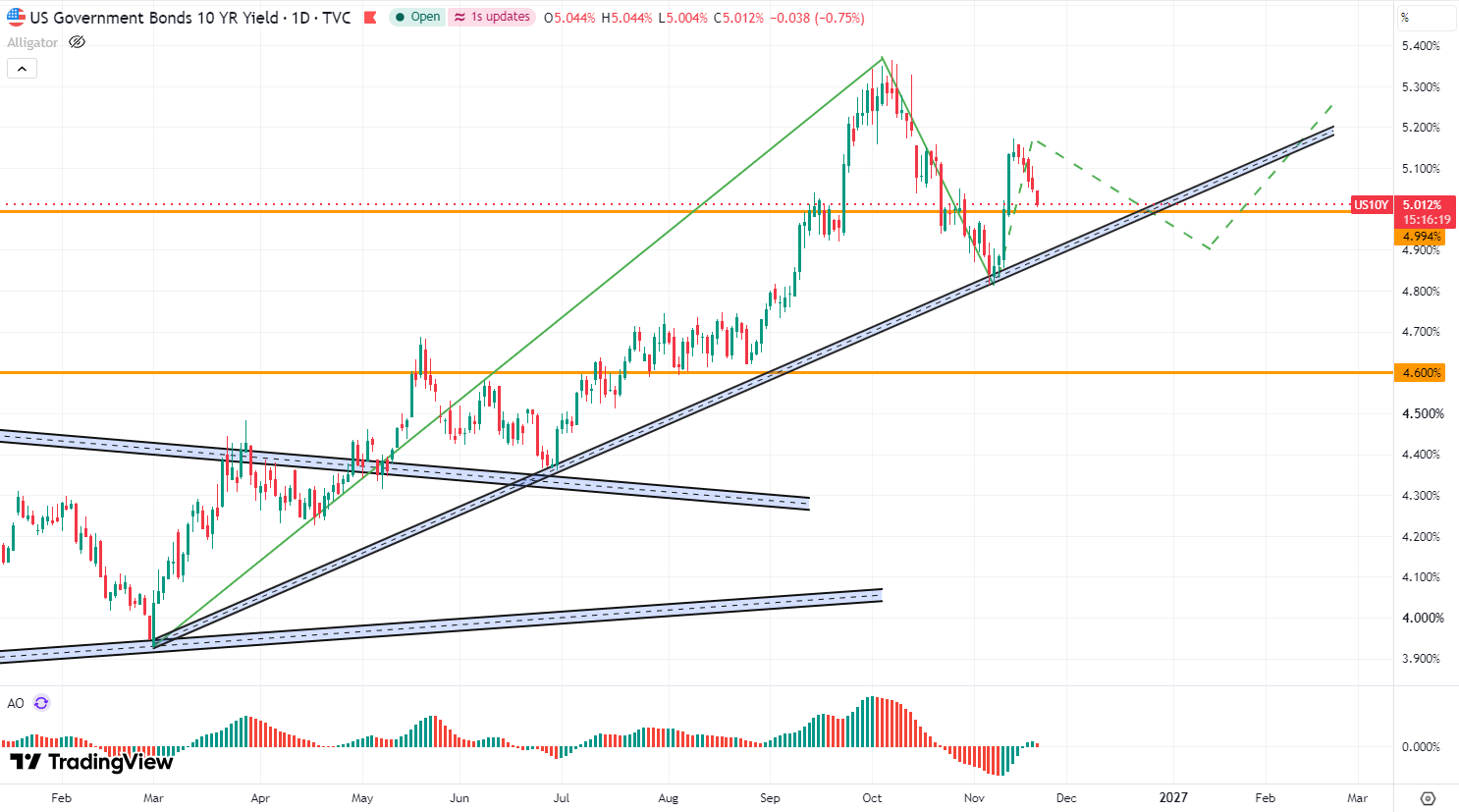
Source: Tradingview
Gold and government bonds do not always respond identically to market stress.
Investors may buy Treasuries while selling gold to raise cash, reduce leverage or offset losses elsewhere. Bloomberg reporting on Friday linked part of gold’s weakness to investors selling the metal to cover losses during the AI-related equity downturn.
The practical implication is that a lower Treasury yield can help gold without being sufficient to reverse its decline. Currency moves, positioning and liquidity demand also matter.
AI investment is complicating the inflation outlook
In his 19 November speech, Fed Vice Chair Philip Jefferson explained that AI investment is currently adding to demand and inflation. Potential productivity gains could ease inflation later, but the timing remains uncertain. His prepared remarks did not specify the next interest-rate decision.
Chicago Fed President Austan Goolsbee also warned that the scale of AI-related investment could strain economic capacity and contribute to overheating.
For gold, this creates competing possibilities. Continued demand pressure could support further tightening, while weaker investment, employment or financial conditions could eventually change the policy outlook.
Neither outcome is assured. Traders should distinguish between market expectations and decisions the Fed has actually announced
Could Gold Rebound Near US$3,500?
A sharp decline can create conditions for short covering or renewed buying interest. However, a convincing recovery requires evidence that selling pressure is fading.
Three developments would strengthen the case for stabilisation:
Price holds near US$3,500: Repeated tests stop producing sustained new lows.
Gold reclaims nearby recovery levels: A move above US$3,600 holds through a subsequent retest.
The macro backdrop improves: Dollar strength eases or expectations of further tightening moderate.
By contrast, a brief rebound followed by another lower low would suggest that the market remains vulnerable.
Describing gold as “oversold” would require a specified indicator and timeframe. A large price decline alone does not establish that a reversal is imminent.
Gold Technical Analysis: US$3,500 Becomes the Immediate Test
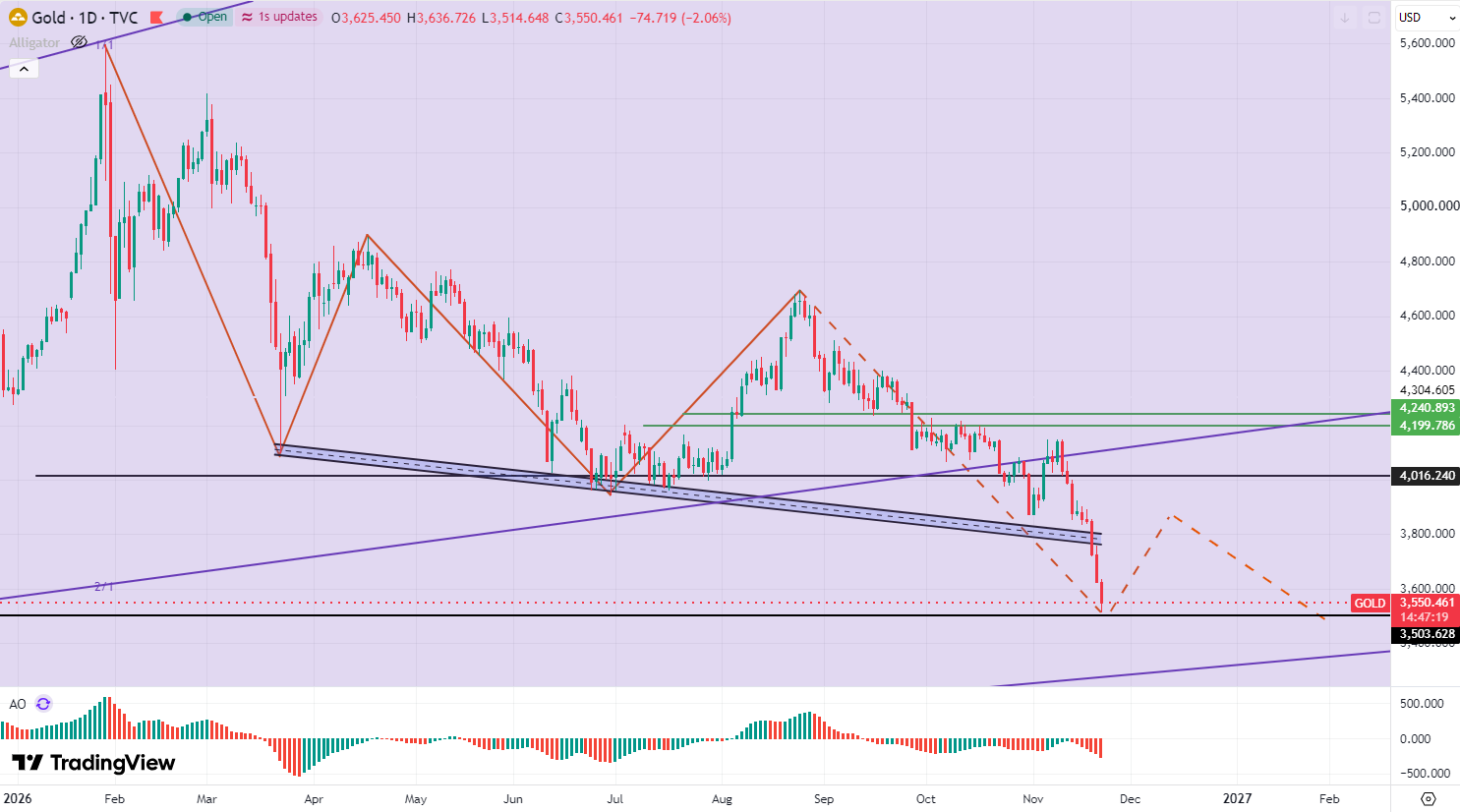
US$3,500: A psychological reference, not an established floor
US$3,500 is the nearest major round-number reference below the quoted market snapshot.
If gold approaches this level, traders can assess whether buyers absorb selling pressure and whether subsequent recovery attempts hold. An intraday bounce would offer less confirmation than sustained stabilisation across several sessions.
A decisive break below US$3,500, followed by a failed attempt to reclaim it, would weaken the recovery case.
US$3,600: The first recovery hurdle
A sustained return above US$3,600 would be an initial sign that immediate selling pressure is easing.
It would not, by itself, reverse the broader decline. The next test would be whether gold can hold above that level and extend towards US$3,670–US$3,680.
US$3,800–US$3,870: A more demanding recovery zone
The earlier breakdown through US$3,800 and US$3,870 makes this area relevant when assessing a larger rebound.
A sustained recovery through both levels would challenge the bearish outlook more meaningfully. Until then, rebounds could remain corrective.
US$4,000 remains a more distant psychological resistance reference.
When Is the Next Important Fed Decision?
The next scheduled FOMC meeting takes place on 8–9 December 2026 in the US. This places the decision in the Australian morning on 10 December, rather than an unspecified “mid-December” window.
For gold, the market reaction will depend on how the outcome compares with expectations.
An anticipated rate increase may already be reflected partly in prices. Guidance pointing to more tightening than expected could add pressure, while a less restrictive outlook could support a recovery.
The meeting date is a potential catalyst, not a forecast turning point.
What Should Australian Gold CFD Traders Watch Next?
1. Gold: Can XAU/USD Stabilise Near US$3,500?
Watch whether selling slows and recovery attempts hold. A round number alone does not guarantee support.
2. Treasury Yields: Will the Retreat Towards 5% Continue?
Further declines could improve gold’s backdrop, particularly if accompanied by a softer dollar and reduced tightening expectations.
3. Recovery Levels: Can Gold Reclaim US$3,600?
A sustained recovery would provide more evidence of stabilisation than a short-lived bounce. US$3,670–US$3,680 would be the next reference area.
4. Fed Expectations: What Could Change Before December?
Incoming economic data and policy communication could alter expectations for the scale and duration of further rate increases.
Explore Gold Markets with Mitrade
Mitrade offers eligible Australian clients access to gold CFDs and a demo account for exploring the platform. Review the current product specifications, margin requirements and trading costs before deciding whether live trading suits your circumstances.

Trade XAU/USD with Tight Spreads
Disclaimer: The content presented above, whether from a third party or not, is considered as general advice only. CFD trading involves significant risk of loss. Past performance does not guarantee future results. This article serves informational purposes only and does not constitute financial advice. Consider your risk tolerance before trading.


