




Best Trading Platform for Day Traders Australia (2026): Top 7 Platforms Compared

Day trading has become increasingly popular in Australia as more investors seek opportunities to profit from short-term market movements. Whether you're trading ASX shares, forex pairs, stock indices, gold, oil, or cryptocurrencies, choosing the right trading platform can significantly impact your performance.
Australian traders today have access to dozens of brokers and trading platforms, but not all are equally suited for active trading. Some platforms are designed for long-term investors, while others are built specifically for high-frequency traders who require speed, flexibility, and real-time market data.
In this guide, we'll compare the 7 best trading platforms for day traders in Australia in 2026, evaluating each provider based on:
Trading fees and spreads
Execution speed
Available markets
Charting and technical analysis tools
Mobile trading experience
Risk management features
Beginner-friendliness
Overall value for active traders
Whether you're a beginner looking to place your first day trade or an experienced trader searching for a better platform, this comparison will help you find the broker that best matches your trading goals.
Quick Comparison: Best Day Trading Platforms in Australia
Before diving into detailed reviews, here's a quick overview of the best trading platforms for Australian day traders in 2026.
Best Trading Platforms for Day Traders Australia
1. Mitrade – Best Overall Trading Platform for Day Traders in Australia
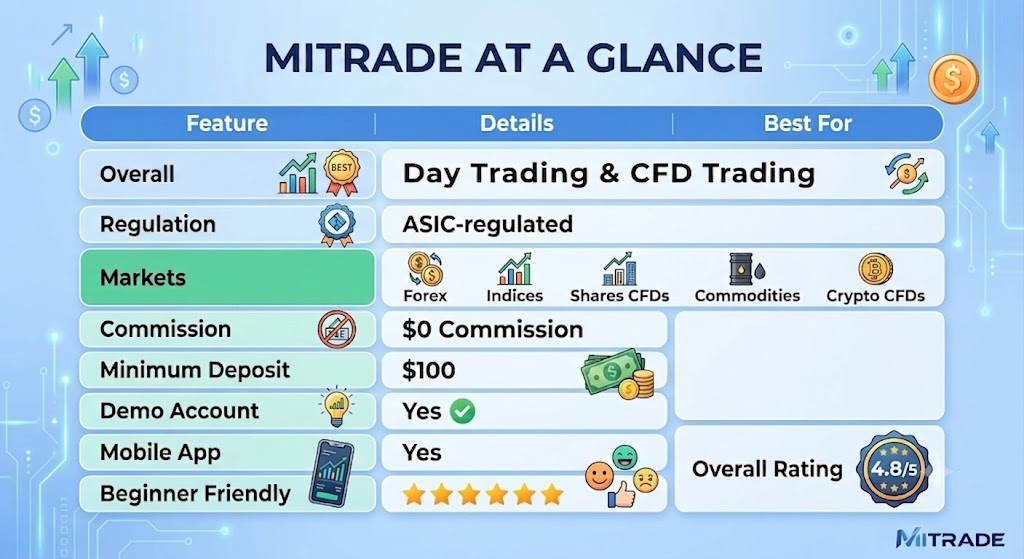
For most Australian day traders, Mitrade offers one of the best combinations of low trading costs, simplicity, and access to global CFD markets. Unlike some professional-grade platforms that can feel overwhelming for beginners, Mitrade focuses on providing a streamlined trading experience without sacrificing the tools active traders need.
The platform allows traders to speculate on short-term price movements across a wide range of markets, including forex, stock indices, commodities, shares, and cryptocurrencies through CFDs. This makes it particularly attractive for day traders who prefer to diversify opportunities throughout the trading day rather than focusing on a single asset class.
One of Mitrade's biggest advantages is its commission-free pricing model. Instead of charging a separate commission on trades, costs are incorporated into the spread, making it easier for traders to calculate potential profits and losses. For active traders placing multiple trades daily, avoiding commission charges can help reduce overall trading expenses.
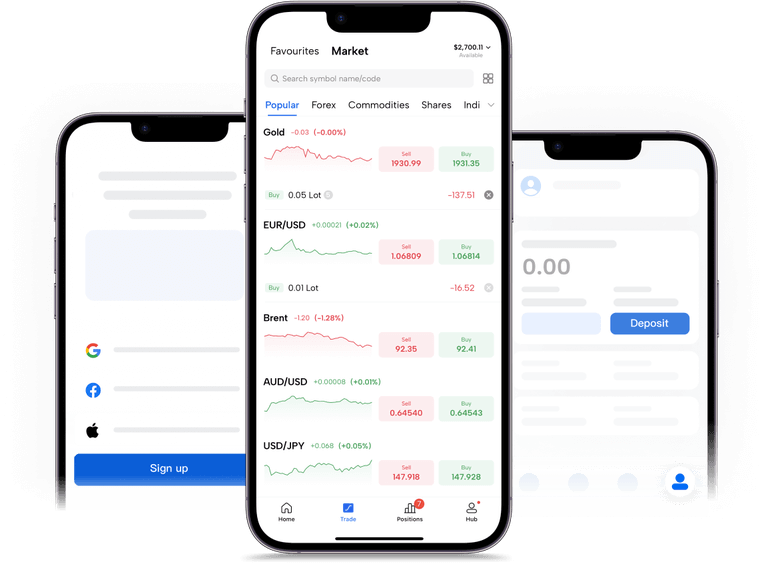
Another reason Mitrade ranks highly for day trading is its user-friendly interface. The web platform and mobile app are designed to provide quick access to charts, order execution, and risk management tools without requiring extensive technical knowledge. This makes it suitable for both beginners and experienced traders who value speed and simplicity.
Key Features
✅ Commission-free CFD trading
✅ Access to forex, indices, commodities, shares, and crypto CFDs
✅ Fast order execution
✅ Advanced charting and technical indicators
✅ Mobile and desktop trading platforms
✅ Built-in stop-loss and take-profit orders
✅ Free demo account with virtual funds
✅ Low minimum deposit requirement
Why Mitrade Is Ideal for Day Traders
Day trading requires quick decision-making and efficient execution. A platform that is too complicated can slow traders down and create unnecessary friction during volatile market conditions.
Mitrade is particularly well suited to:
Forex day traders
Index traders
Gold and oil traders
Beginner CFD traders
Mobile-first traders
Traders with smaller account balances
For example, a trader looking to capitalize on intraday moves in the ASX 200, S&P 500, Gold, EUR/USD, or Bitcoin can access all these markets from a single account without needing multiple platforms.
The ability to set stop-loss and take-profit orders directly within the trading interface also helps traders manage risk more effectively—an essential feature for anyone engaging in short-term trading strategies.

 Enjoy simple and fast trading Flexible leverage options available Follow real-time trading strategies Demo account with $50,000 virtual funds

2. Pepperstone – Best for Fast Execution and Scalping
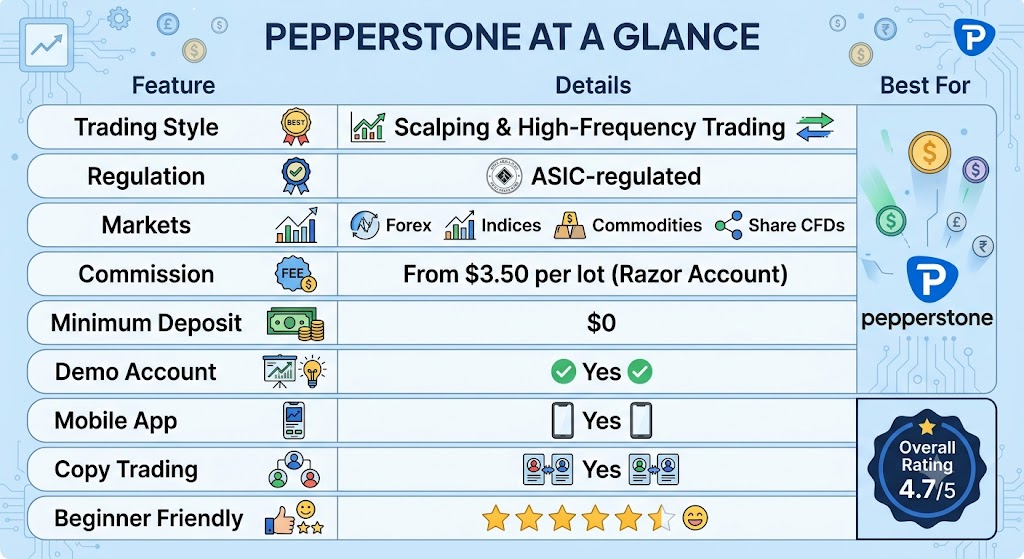
For traders who prioritize speed, low latency, and tight spreads, Pepperstone is one of the strongest choices in Australia. The broker has built its reputation around providing institutional-grade execution, making it particularly popular among scalpers, forex traders, and high-frequency day traders.
Pepperstone offers access to multiple trading platforms, including MetaTrader 4, MetaTrader 5, TradingView, and cTrader, giving traders flexibility in how they analyze markets and execute trades. Its infrastructure is designed to minimize delays and slippage, which can be critical for strategies that rely on entering and exiting positions within minutes or even seconds.
Key Features
✅ Ultra-fast order execution
✅ MT4, MT5, TradingView, and cTrader support
✅ Raw spread accounts available
✅ Forex, indices, commodities, and share CFDs
✅ VPS hosting for algorithmic trading
✅ ASIC-regulated broker
Pepperstone is arguably the best choice for Australian traders who rely on rapid execution and low spreads. If your strategy involves scalping major forex pairs or trading around economic news releases, Pepperstone deserves serious consideration.
3. IG Markets – Best for Advanced Trading Tools
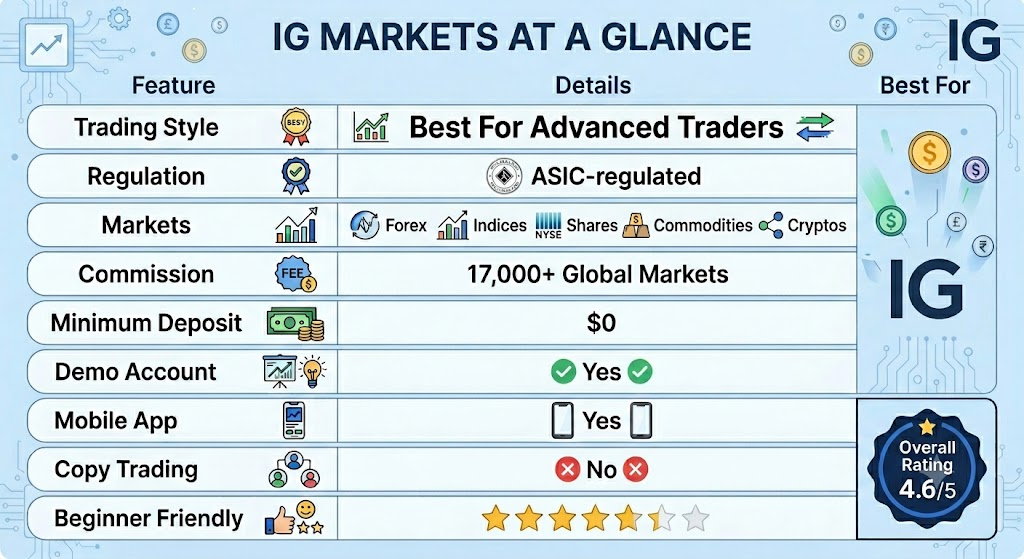
IG Markets is one of the most established brokers in Australia and globally, offering access to thousands of markets through a highly sophisticated trading platform. It is particularly suitable for experienced day traders who require advanced charting, extensive market coverage, and professional-grade trading tools.
The platform provides access to forex, indices, commodities, shares, options, and more, making it one of the most comprehensive offerings available to retail traders.
Key Features
✅ Access to 17,000+ markets
✅ Advanced charting and analysis tools
✅ Extensive educational resources
✅ Professional trading platform
✅ Real-time market news and insights
IG Markets is ideal for traders who want access to extensive research, professional tools, and a wide range of markets. Experienced traders will likely appreciate its advanced capabilities more than complete beginners.
4. CMC Markets – Best for Active Traders
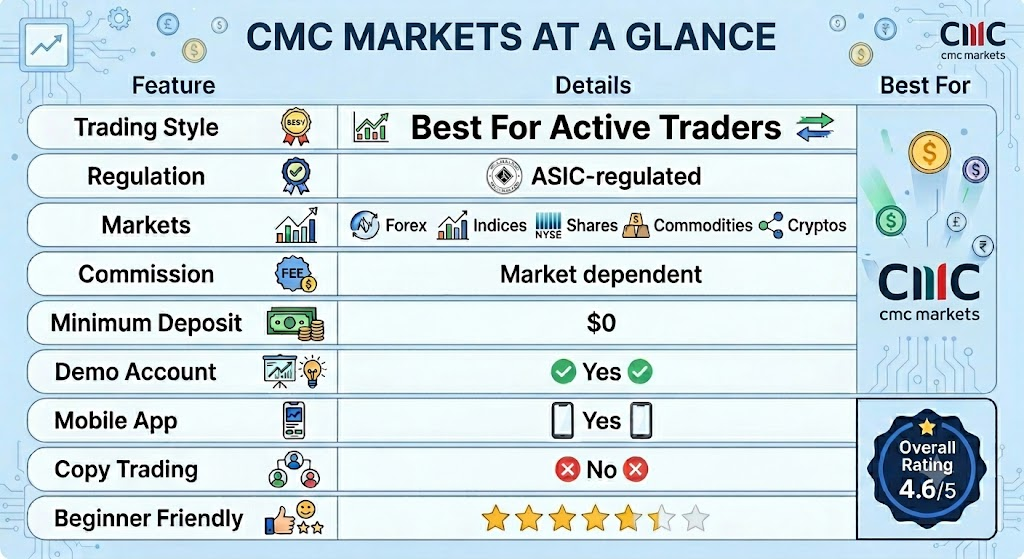
CMC Markets is widely known for its powerful Next Generation trading platform, which offers advanced charting, comprehensive market analysis, and competitive pricing. It is particularly attractive for active traders who execute multiple trades each day.
The platform features over 80 technical indicators, sophisticated order types, and extensive customization options, helping traders refine and automate parts of their trading process.
Key Features
✅ Powerful proprietary platform
✅ Advanced charting package
✅ Competitive spreads
✅ Premium research and analysis
✅ Large range of CFD markets
CMC Markets is an excellent option for active traders seeking a feature-rich platform with strong technical analysis capabilities and competitive trading costs.
5. Interactive Brokers – Best for Professional Traders
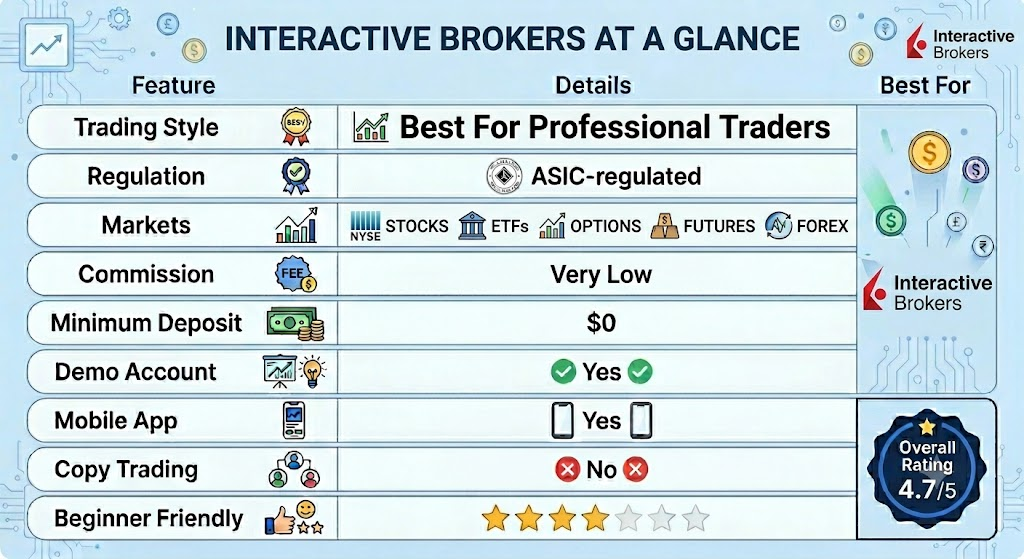
Interactive Brokers is often regarded as the gold standard for serious traders and investors. Unlike many CFD-focused brokers, IBKR offers direct market access to stocks, options, futures, bonds, ETFs, and global exchanges.
Its Trader Workstation (TWS) platform provides institutional-grade tools that appeal to professional traders who need advanced order routing, market depth, and sophisticated risk management features.
Key Features
✅ Access to 150+ global markets
✅ Direct market access
✅ Extremely low trading costs
✅ Advanced trading algorithms
✅ Professional-grade platform
Interactive Brokers is best suited to experienced traders who need access to global exchanges and institutional-level trading tools. Beginners may find other platforms easier to navigate.
6. Saxo – Best for Multi-Asset Trading
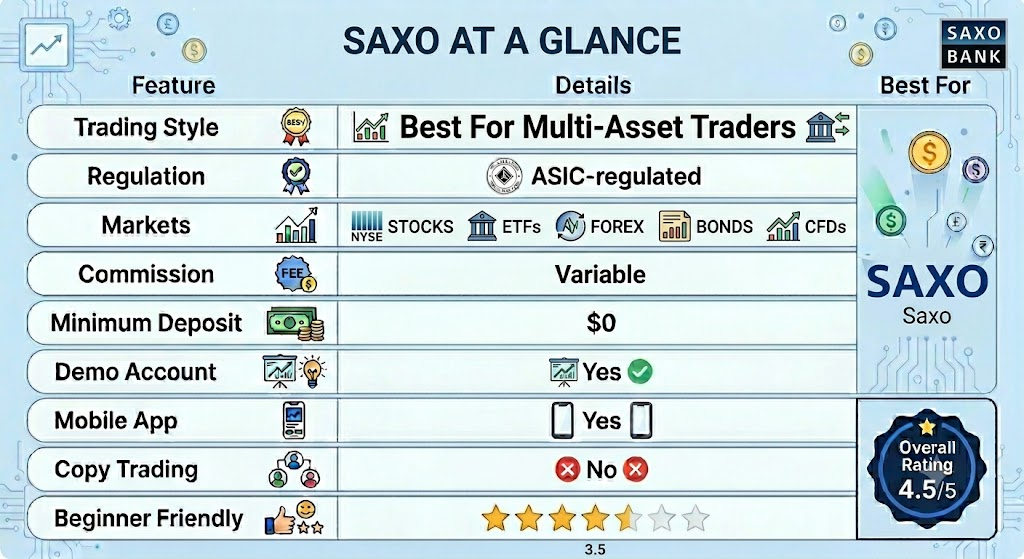
Saxo offers one of the broadest selections of financial instruments available to Australian traders. Through a single account, users can access stocks, ETFs, bonds, options, futures, forex, commodities, and CFDs.
The platform is particularly attractive to traders who want to diversify across multiple asset classes while maintaining access to professional trading tools.
Key Features
✅ 70,000+ instruments
✅ Professional trading platforms
✅ Premium research and analysis
✅ Advanced risk management tools
✅ Multi-asset trading account
Saxo is an excellent choice for traders who want to combine day trading with broader portfolio management and access a huge range of global markets.
7. eToro – Best for Beginners and Copy Trading
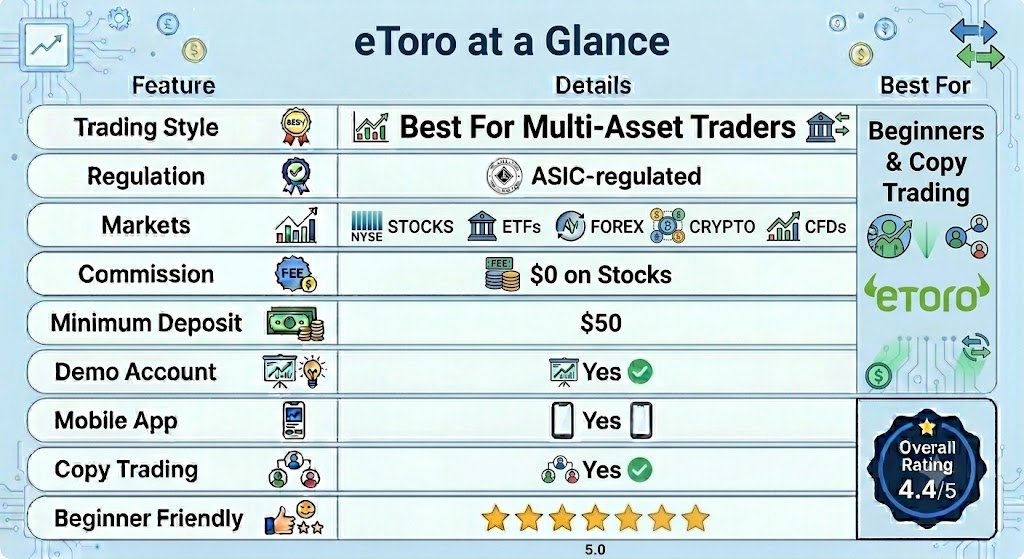
eToro has become one of the most recognizable trading platforms globally thanks to its social trading ecosystem. Its standout feature is CopyTrader, which allows users to automatically replicate the trades of experienced investors.
For beginner day traders, eToro's intuitive platform and social features make it easier to learn market dynamics and trading strategies.
Key Features
✅ CopyTrader social trading
✅ User-friendly platform
✅ Stocks, ETFs, crypto, and CFDs
✅ Large trading community
✅ Beginner-focused experience
eToro is one of the best trading platforms for beginners in Australia. While advanced day traders may prefer platforms with lower spreads and more sophisticated tools, newcomers will appreciate its ease of use and social trading capabilities.
Day Trading Fees Explained
When comparing the best trading platforms for day traders in Australia, many traders focus solely on spreads or commissions. However, the true cost of day trading is often made up of several different fees that can significantly impact profitability over time.
Because day traders may execute dozens or even hundreds of trades each month, even small differences in trading costs can add up quickly. Understanding these fees can help you choose a platform that maximizes your potential returns.
1. Spreads
The spread is the difference between the buy price (ask) and sell price (bid) of an asset. For most CFD brokers, the spread is the primary trading cost.
For example, if Gold is quoted at:
Buy: $4,350.20
Sell: $4,349.80
The spread is $0.40.
The tighter the spread, the less the market needs to move before your trade becomes profitable.
Best for low spreads: Mitrade, Pepperstone, CMC Markets
2. Commissions
Some brokers charge a separate commission on top of spreads, while others operate using a commission-free model.
For example:
A trader making 20 trades per day could save hundreds or even thousands of dollars annually by using a commission-free platform.
Examples:
Mitrade: No commission on CFD trades
Pepperstone Razor Account: Low spread plus commission
Interactive Brokers: Commission-based pricing on many products
3. Overnight Financing Fees
Day traders who close positions before the trading session ends may avoid overnight financing charges.
However, if a CFD position remains open after market close, brokers typically apply a financing fee (also known as a swap fee or rollover charge).
4. Currency Conversion Fees
Australian traders frequently trade US stocks, US indices, commodities, and forex markets.
If deposits or withdrawals involve currency conversion between AUD and another currency, conversion fees may apply.
Some brokers include these costs within their exchange rates, while others charge an explicit percentage fee.
6. Deposit and Withdrawal Fees
Many leading Australian brokers offer free deposits and withdrawals, but some payment methods may incur additional costs.
For day traders, trading costs are one of the few factors you can directly control. While strategy and market conditions will always influence results, choosing a platform with low spreads, transparent pricing, and minimal hidden fees can improve long-term performance.
For most Australian CFD traders, platform such as Mitrade offer a strong balance between competitive pricing and execution quality, making it a popular choice for active day trading strategies.
How to Start Day Trading in Australia
Follow these steps to begin your day trading journey.
Step 1: Choose a Reliable Trading Platform: For most Australian CFD traders, platform Mitrade provide an excellent balance of affordability, functionality, and market access.
Step 2: Open and Verify Your Account: Most brokers allow you to open an account online within minutes. Account verification is usually completed within one business day.
Step 3: Practice with a Demo Account: Before risking real money, spend time learning how the platform works using a demo account. Many successful traders spend several weeks or months on a demo account before trading live.
Step 4: Develop a Trading Plan: One of the biggest mistakes beginners make is entering trades without a clear strategy. Consistency is often more important than finding the "perfect" trading strategy.
Step 5: Start Small: Even if you feel confident, it's wise to begin with small position sizes. Many professional traders focus first on preserving capital before trying to maximize profits.
Step 6: Use Risk Management Tools: Risk management is arguably the most important aspect of day trading. Many experienced traders risk only 1–2% of their account balance on a single trade.
👉 Ready to Start Day Trading?
Choosing the right platform is one of the most important decisions you'll make as a trader. A reliable broker can help reduce trading costs, improve execution quality, and provide the tools needed to navigate fast-moving markets.
Whether you're looking to trade the ASX 200, Gold, EUR/USD, NASDAQ 100, or Bitcoin CFDs, Mitrade offers a simple and cost-effective way to get started.
Open a free demo account today and practice your trading strategies risk-free before moving to live markets.
1. What is the best trading platform for day traders in Australia?
The best platform depends on your trading style. For most CFD traders, Mitrade offers an excellent combination of low costs, ease of use, and market access. Pepperstone is popular among scalpers, while Interactive Brokers is often preferred by professional traders.
2. Can I day trade legally in Australia?
Yes. Day trading is legal in Australia, and traders can access shares, forex, commodities, indices, and CFD markets through ASIC-regulated brokers.
3. How much money do I need to start day trading?
The amount varies by broker and trading strategy. Many CFD brokers allow traders to start with as little as $50–$200, although a larger account generally provides greater flexibility and risk management options.
4. What markets are best for day trading?
Popular day trading markets include:
Forex
Gold
ASX 200
S&P 500
NASDAQ 100
Oil
Major share CFDs
Cryptocurrencies
These markets typically offer strong liquidity and intraday price movement.
5. Is CFD trading good for day trading?
Many traders consider CFDs ideal for day trading because they allow you to trade both rising and falling markets, access leverage, and trade multiple asset classes from a single account.
Disclaimer: The content presented above, whether from a third party or not, is considered as general advice only. CFD trading involves significant risk of loss. Past performance does not guarantee future results. This article serves informational purposes only and does not constitute financial advice. Consider your risk tolerance before trading.


