




Dell Tumbles Over 10% Pre-Market, HP Drops More Than 8% as Intel Sounds Alarm on PC Demand
TradingKey - On October 30, US PC and server hardware stocks fell across the board in pre-market trading. Dell Technologies (DELL) shares fell over 10%, HP (HPQ) dropped more than 8%, Hewlett Packard Enterprise (HPE) slid over 6%, and Super Micro Computer (SMCI) also dropped over 5%. Intel's (INTC) latest industry warning heightened market concerns over PC demand, inventory adjustments, and hardware companies' profit margins.
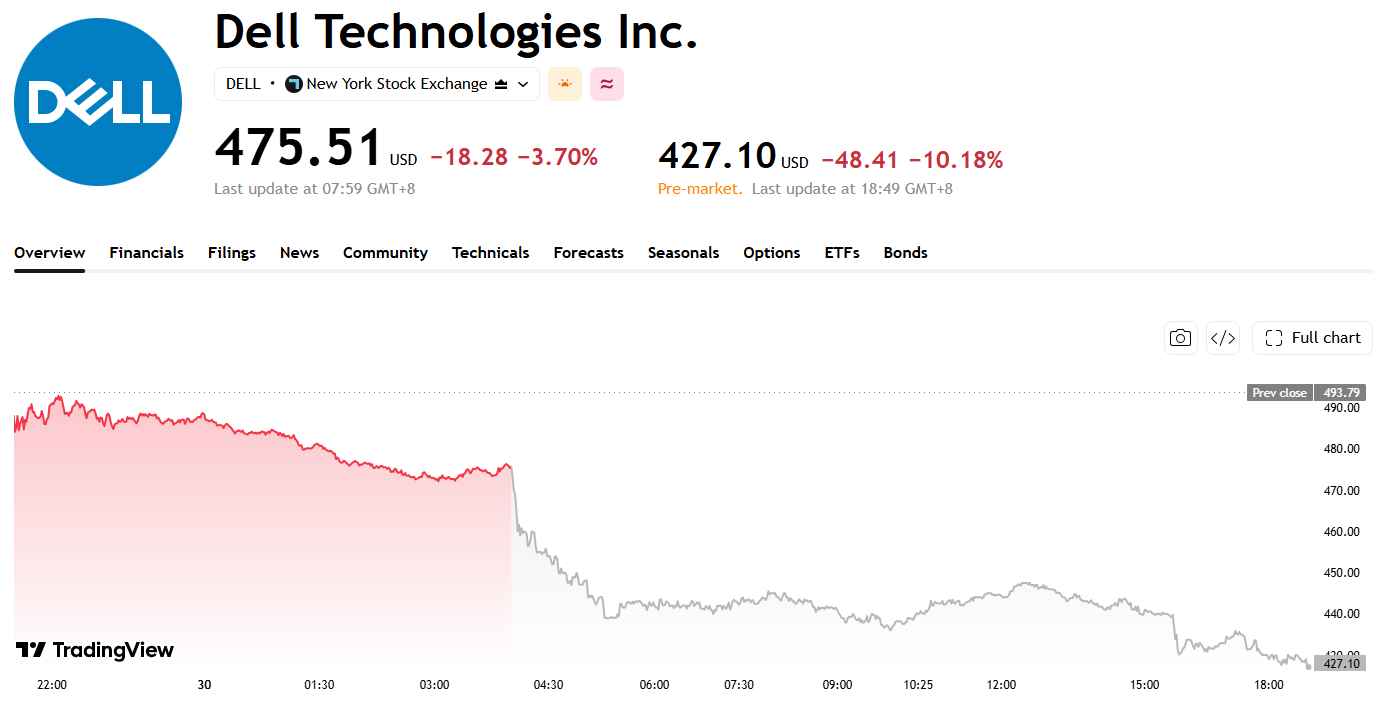
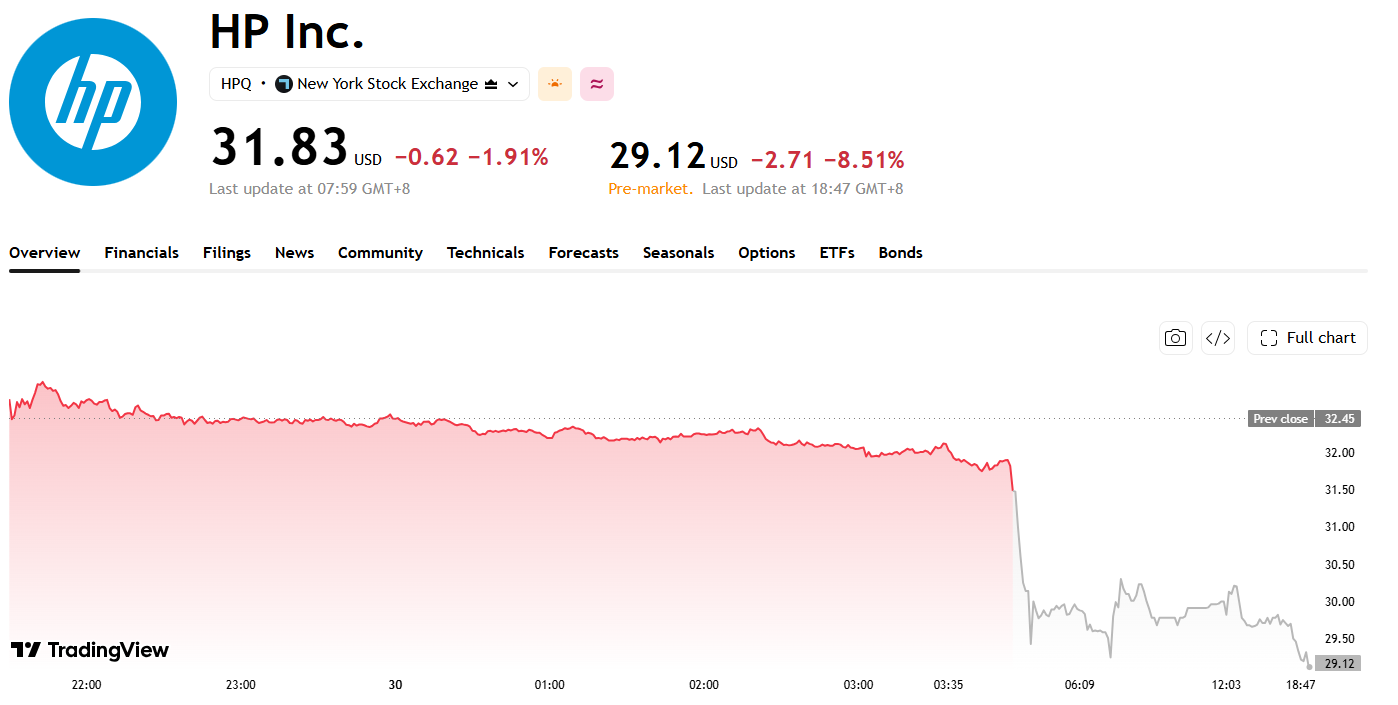
Source: TradingView
Intel expects total fourth-quarter revenue to be $15 billion to $16 billion, well below Wall Street's average forecast of about $17.07 billion. However, the projected quarter-over-quarter decline of over 20% applies not to Intel's overall revenue, but to its client computing business. The company stated that rapidly rising memory chip prices, tight component supplies, and constrained corporate IT budgets are driving up overall PC costs and forcing manufacturers to accelerate inventory reduction.
Intel management expects PC market weakness to persist at least through the first half of 2027, with global PC shipments potentially falling by about 12% in 2026 and contracting further by around 10% in 2027. As end demand cools, PC manufacturers may reduce purchases of processors, memory, and other components to manage inventory and cash flow risks.
This warning directly impacts PC manufacturers such as Dell and HP. Rising memory chip prices not only increase the production costs of laptops and desktops but may also force manufacturers to raise selling prices. With corporate and consumer spending already turning cautious, price hikes could further depress sales volumes; conversely, if companies choose to absorb the costs themselves, gross margins will come under pressure.
Despite the weak near-term environment, Intel still sees recovery opportunities for the PC industry in the future. This optimism is primarily based on factors such as aging device refresh cycles, corporate replacement cycles, and rising AI PC penetration. If memory supply gradually recovers and component prices fall back, procurement demand previously delayed by manufacturers could be re-released. However, until inventory adjustments conclude, these long-term drivers will remain unlikely to rapidly offset short-term pressures.
Recommended Articles


