




Tesla Q3 Results: Profit Fell 43% but the Stock Rallied. What Australian Traders Can Learn About Trading Earnings
Tesla Q3 results landed on October 21 with numbers that looked hard to love. Profit fell sharply, margins stayed thin, and the shares slid in after hours trading within minutes of the release.
One week later, the same stock was trading above $400 for the first time since July. Nothing in the quarter had changed, but the story around Tesla had.
That gap between the numbers and the share price is the most useful lesson of this earnings season. For Australians trading US tech shares through CFDs, it shows why the first reaction to earnings is often the wrong one to follow.
What Tesla's Q3 Results Actually Showed
An earnings report is a company's quarterly update on its revenue, profit and outlook, and Tesla's Q3 report showed flat sales, a sharp fall in profit and a big jump in spending on artificial intelligence.
Revenue came in at $28.05 billion, flat on a year earlier and in line with forecasts. GAAP net income fell 43% to $787 million, while operating income dropped 56%.
Vehicle deliveries slipped 2.1% to 486,532. Tesla said battery supply, not demand, was the main limit on how many cars it could build.
There were some genuine bright spots. Total gross margin rose to 19.6% from 18.0% a year ago, and the automotive margin excluding regulatory credits improved for a second straight quarter.
The problem sat further down the income statement. Operating expenses jumped 39%, driven by a 69% rise in research and development as Tesla poured money into AI, robotaxis and its Optimus robot.
That left an operating margin of just 2.6%, down from 5.8% a year earlier. Energy storage deployments of 13.7 GWh also fell short of the roughly 15.9 GWh analysts expected.
What the Market Liked in Tesla's Q3 Results
Not everything in the report was weak. Several numbers gave bulls something to build on once the initial selling passed.
Services and other revenue rose 33% to $4.61 billion, with a record $734 million in gross profit. That business includes charging, insurance and repairs, and it is becoming a steadier source of income.
Active Full Self Driving subscriptions climbed 67% to 1.74 million. Tesla's robotaxi fleet had also logged nearly 2 million unsupervised miles by the end of the quarter.
The balance sheet stayed strong too. Tesla ended the quarter with $45.4 billion in cash and investments, and inventory fell to just 11 days of supply from 15 days in the June quarter.
Those figures matter because they support the long term story investors are paying for. A stock priced on future growth can rally on progress like this, even when the current quarter disappoints.
Why Tesla Shares Fell on Results Night
The first market reaction was negative. Tesla shares fell about 3.3% after hours to around $373.62, reversing an early gain.
Adjusted earnings per share of $0.48 had actually beaten forecasts. Traders looked past that beat and focused on falling profit and a change in spending plans.
Tesla cut its 2026 capital spending forecast to around $20 billion, down from more than $25 billion. For a company whose valuation rests on AI and robotics, lower spending raised questions about the pace of those ambitions.
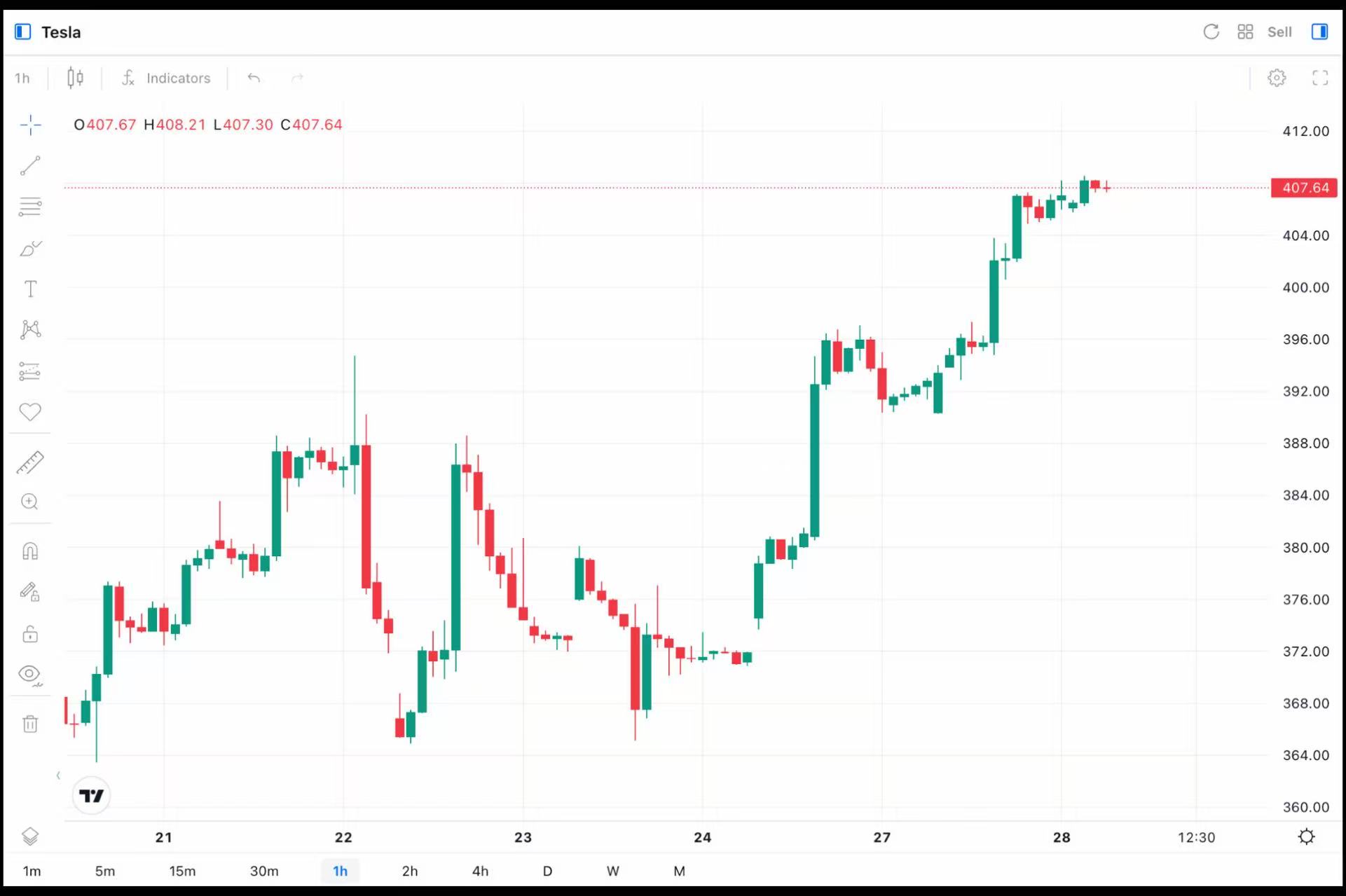
Image: Mitrade (TSLA Hourly Chart)
The hourly chart shows how quickly sentiment turned. Tesla climbed toward $388 in the days before the release, briefly spiked higher, then slid toward $366 as traders digested the numbers.
For anyone who traded the headline earnings beat, that move would have been painful. It is a reminder that the first number in an earnings report is rarely the one that decides the trade.
Why the Stock Rallied a Week Later
The rebound had little to do with the quarter itself. Three separate stories pulled Tesla higher in the days that followed.
The first was a possible merger with SpaceX. Boards at both companies formed special committees to review a combination, and Tesla shares jumped 5.21% to $391.62 on October 26 as traders priced in the possibility.
The second was a broker upgrade. Barclays lifted its outlook on the merger story, a move covered in detail in Mitrade's Tesla analysis of the double bottom pattern behind the rally.
The third was robotaxi progress. Tesla expanded its robotaxi service area in Houston on the same day, giving bulls another reason to focus on the future rather than the quarter.
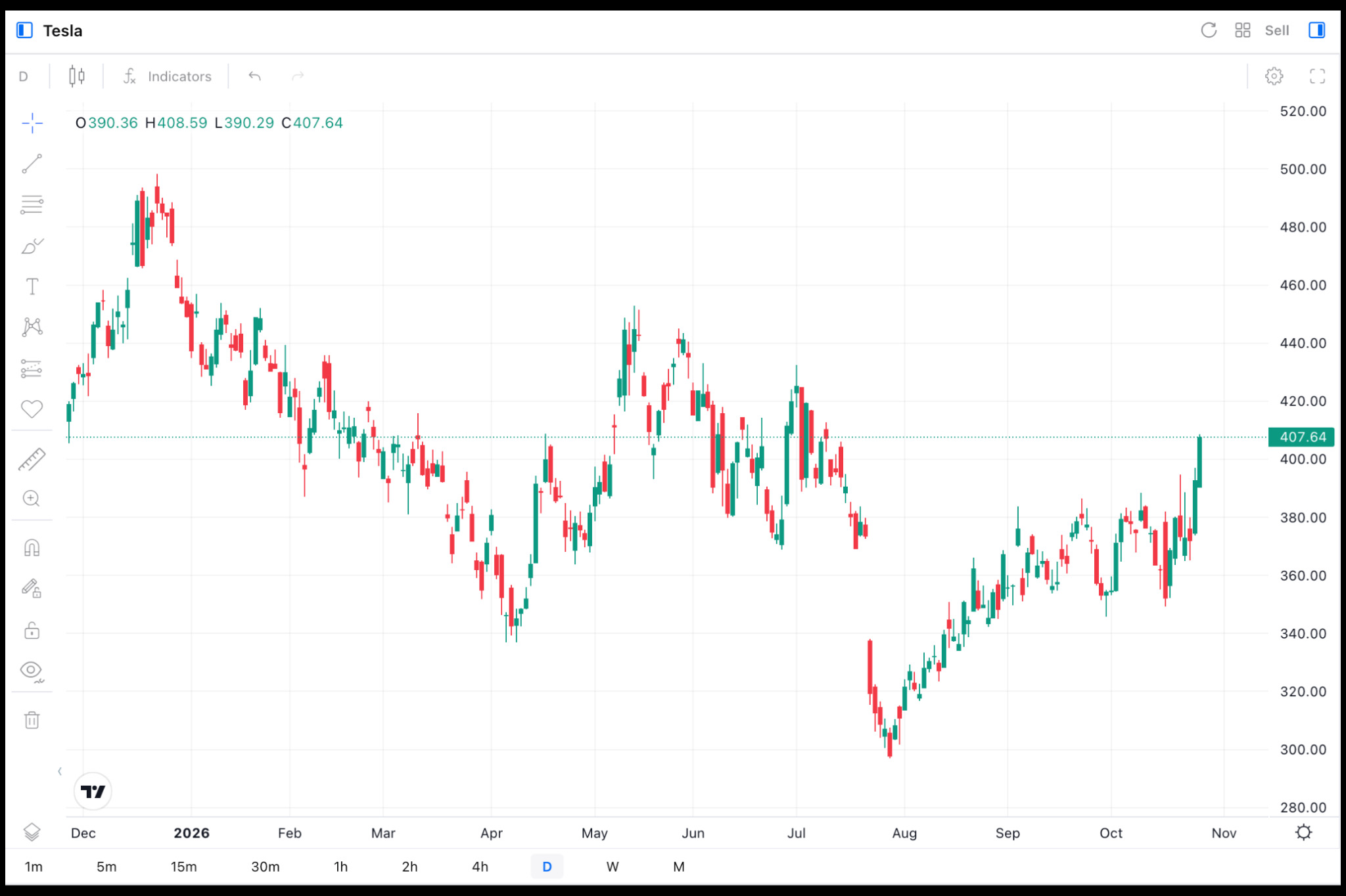
Image: Mitrade (TSLA Daily Chart)
The daily chart puts that rally in context. Tesla fell from near $500 in late 2025 to around $300 in early August, its lowest level of the year.
Since then, the stock has climbed in a series of higher lows, including a dip toward $350 in mid October. It closed near $407.64 on October 27, its highest level since mid July.
Tesla became the best performer among the Magnificent 7 in October. Even so, it remains down by double digits for 2026, which shows how much ground it lost earlier in the year.
“Trade Tesla Stock with an ASIC-regulated broker. Fast AUD funding via PayID. ”
What Could Derail the Tesla Rally
The rally rests on stories that have not yet turned into results. That makes it vulnerable if any of them falter.
No SpaceX deal has been announced, and Elon Musk has said he cannot take part in the talks because of his conflict of interest. If the review ends without a deal, the merger premium could disappear quickly.
Tesla has also reportedly pushed back its target for unsupervised Full Self Driving to the second quarter of 2027, limited to robotaxi zones. Any further delay would hit the autonomy story that underpins much of its valuation.
Valuation itself is a risk. At around $374 after results, the stock traded at roughly 195 times the quarter's annualised adjusted earnings, a level that leaves little room for disappointment.
Regulatory credits are fading as well. Tesla earned just $113 million from credits in the quarter, down 73% from a year earlier, removing a source of easy profit it once relied on.
The Bigger Question From Tesla's Q3 Results: Is AI Spending Paying Off?
Tesla's quarter captured the central tension in US tech right now. Companies are spending record sums on AI, but the profits from that spending have not arrived yet.
Tesla's capital spending more than doubled to $4.73 billion in the quarter. It also plans to lift its AI training compute from about 230 megawatts in September to 400 megawatts by December.
Investors are willing to fund that spending for now, as long as the story stays convincing. When the story weakens, the market quickly turns its attention back to thin margins and falling profit.
That same question hangs over the rest of big tech. Microsoft, Alphabet and Amazon together make up about 15% of the S&P 500 and report their results within two days of each other.
Each faces the test Tesla just faced. Traders want proof that AI investment is turning into revenue, not just higher costs.
Five Lessons for Trading US Tech Earnings
Tesla's results offer a practical playbook for anyone trading earnings season. These five lessons apply well beyond one stock.
1. The first move often reverses
Tesla rose after the release, fell within minutes, then rallied hard a week later. Traders who chased the first move were often caught on the wrong side.
2. Guidance matters more than the earnings beat
Tesla beat on adjusted earnings per share, yet the shares fell. The capital spending change mattered far more to the market than a few cents of profit.
3. Watch the story beyond the quarter
For growth stocks, merger talk, product launches and analyst upgrades can outweigh a weak quarter. Tesla's rally came from news that had nothing to do with its income statement.
4. Size positions for bigger swings
Earnings can move a stock several percent in minutes. Smaller positions and wider stops give a trade room to survive the volatility without forcing an early exit.
5. Remember the time zone
US companies usually report after the New York close, which falls in the Australian morning. The biggest moves can happen before most local traders have checked their screens, so stop losses matter.
What Tesla's Q3 Results Mean for the Nasdaq and ASX Tech
Tesla's rally came against a nervous backdrop for tech. In mid October, worries about AI spending and debt sent South Korea's Kospi down more than 7% in a single session.
The Nasdaq followed with a fall of more than 2% the next day. The selling hit chip stocks and AI names hardest, as investors questioned how long the spending boom could last.
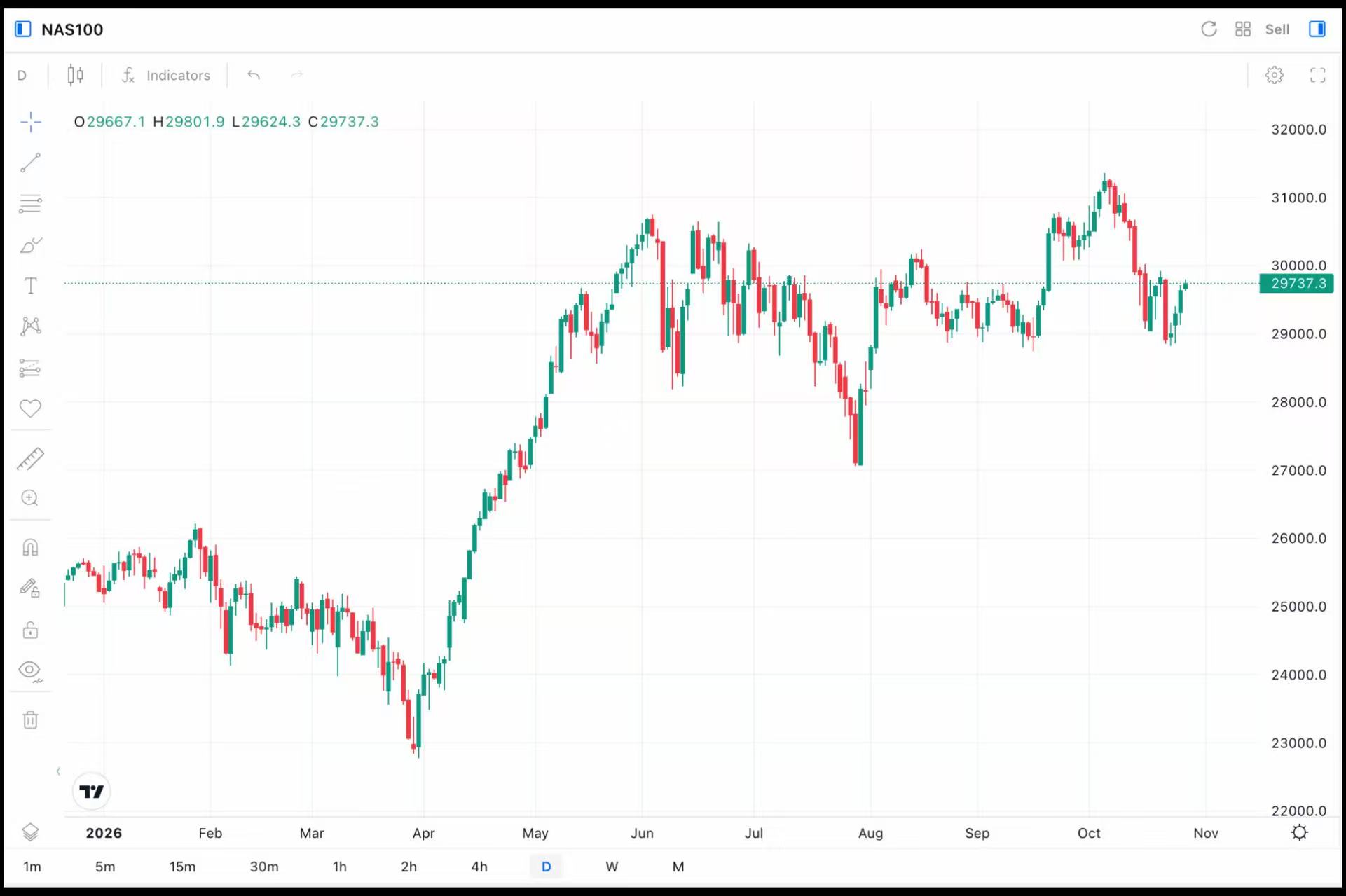
Image: Mitrade (NAS100 Daily Chart)
The chart shows the Nasdaq 100 peaking near 31,300 in early October before sliding toward 28,850 during the sell off. By October 27 it had recovered to around 29,700, though it still sat below its October high.
Australian tech shares felt the same swings. The ASX tech sector rebounded 4.5% on October 16 after falling 3.4% a day earlier, showing how closely local names track the US mood.
For Australian traders, US tech results now matter for more than just US stocks. A strong week for big tech can lift sentiment across the ASX, while disappointing AI numbers can drag local tech lower.
How to Trade Tesla and US Tech Shares on Mitrade
Mitrade offers CFDs on Tesla and other major US tech shares, as well as the NAS100 index. Traders can go long if they expect the rally to continue or short if they expect the story to fade.
Some traders prefer the index over a single stock during earnings season. The NAS100 spreads risk across many companies, so one disappointing result has less impact on the position.
Others wait for the dust to settle. Letting the first hour of after hours trading pass, then trading the direction that holds, avoids the kind of whipsaw Tesla delivered on results night.
Under ASIC rules, leverage on share CFDs is capped at 5:1, while major indices are capped at 20:1. Leverage magnifies losses as well as gains, which matters more than usual around earnings.
Mitrade lets traders set a stop loss and take profit on the order screen before placing a trade. That protection is especially useful when results land overnight in Australia.
New traders can practise on a free demo account before risking real money. Testing a strategy around a live earnings release is a low risk way to see how quickly prices can turn.


You might be interested in…
1. What did Tesla report in its Q3 2026 results?
Tesla reported revenue of $28.05 billion, flat on a year earlier. Net income fell 43% to $787 million, while operating income dropped 56%.
2. Why did Tesla shares fall after its Q3 results?
Shares fell about 3.3% after hours as traders focused on falling profit and a cut to Tesla's 2026 capital spending forecast. An adjusted earnings beat was not enough to offset those concerns.
3. Why did Tesla stock rally after earnings?
Talk of a possible merger with SpaceX, a Barclays upgrade and an expanded robotaxi service in Houston pushed the stock higher. Tesla rose 5.21% on October 26 alone.
4. Is Tesla stock up or down in 2026?
Tesla was the best performer among the Magnificent 7 in October. It remains down by double digits for 2026 after a weak first half.
5. How do US earnings affect Australian traders?
Most US companies report after the New York close, which falls in the Australian morning. Big tech results can also shift sentiment across ASX tech shares.
6. Can I trade Tesla shares on Mitrade?
Yes. Mitrade is regulated by ASIC and offers CFDs on Tesla, other US tech shares and the NAS100 index, plus a free demo account for practice.
Disclaimer: The content presented above, whether from a third party or not, is considered as general advice only. CFD trading involves significant risk of loss. Past performance does not guarantee future results. This article serves informational purposes only and does not constitute financial advice. Consider your risk tolerance before trading.


