




Apple’s Cook Stepping Down in September, Can New CEO John Ternus Make Apple Great Again?
TradingKey - On April 20, Eastern Time, an internal Apple memo reveals that John Ternus, Senior Vice President of Hardware Engineering, will officially succeed Tim Cook as Chief Executive Officer starting September 1.
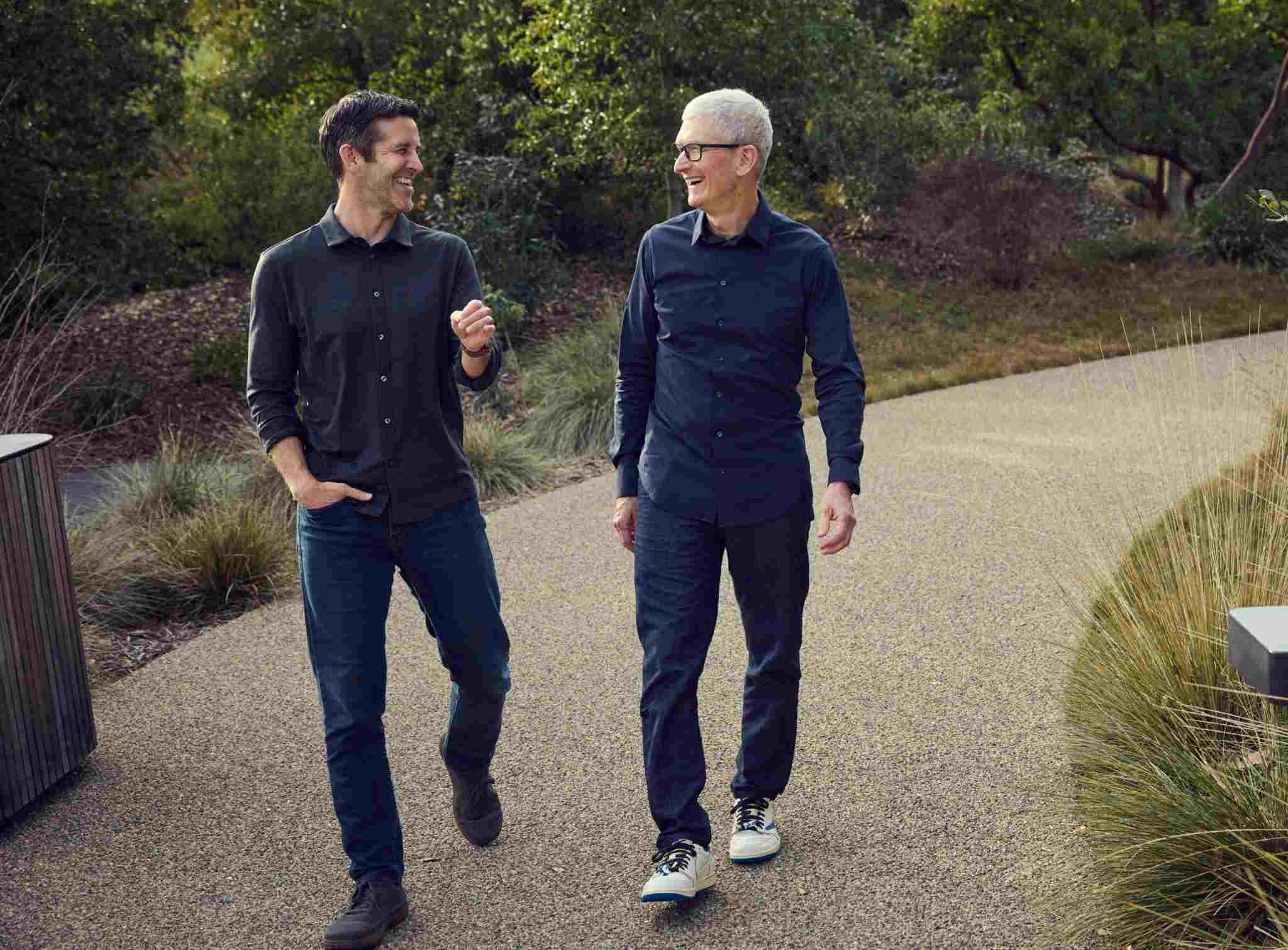
[John Ternus (left) and Tim Cook (right), Source: investor.apple]
Following the announcement, Apple (AAPL) shares slid nearly 2% in after-hours trading and closed down 0.55%, reflecting a relatively restrained market reaction.
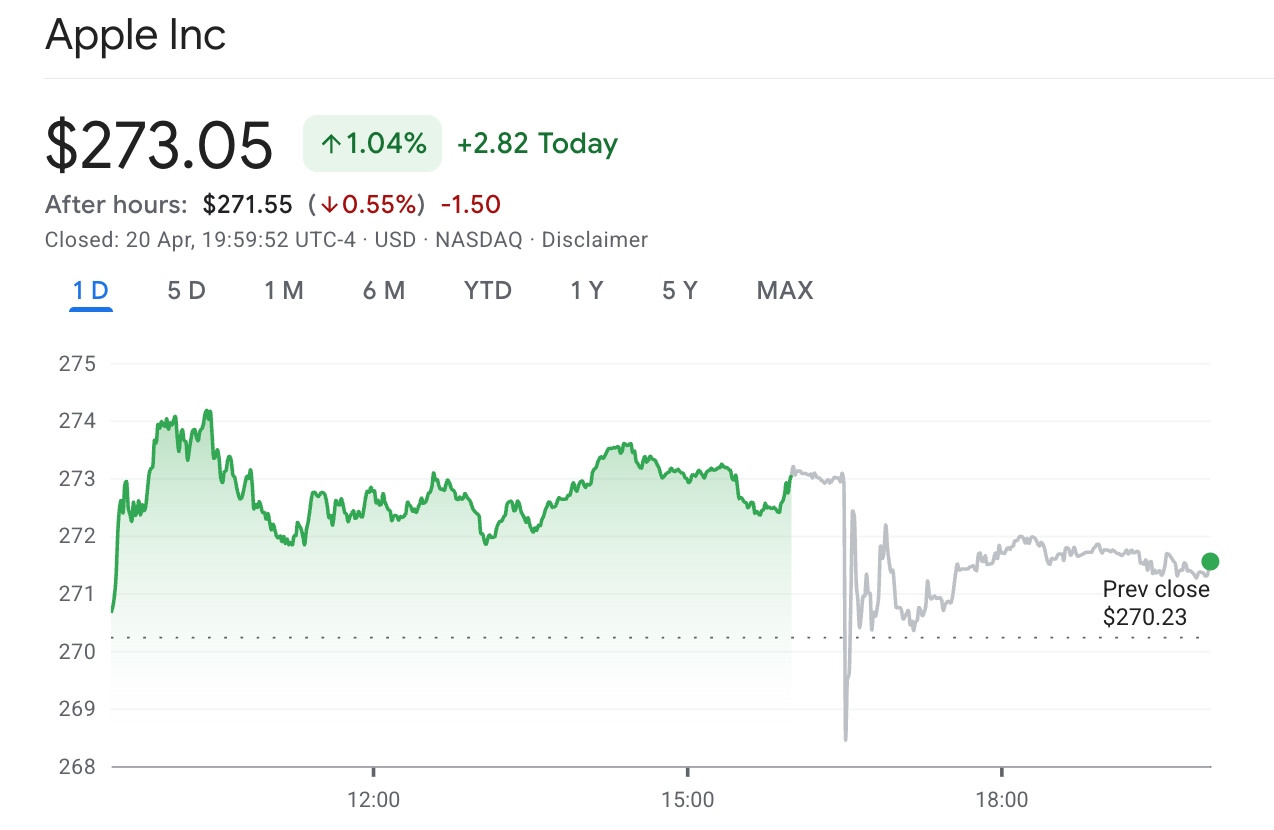
Notably, as of the close on April 20, Eastern Time, Apple's stock is up only about 0.5% year-to-date.
When Steve Jobs passed away in 2011, Apple's market value was approximately $350 billion, and the biggest question facing the company was: without that 'fastidiously perfectionist' product genius, how much longer could the company survive?
Cook provides the answer with a 15-year tenure.
During Cook's tenure, Apple's market capitalization has surged from approximately $350 billion to $4 trillion, with the stock price climbing more than 1,900%. He launched entirely new hardware categories such as the Apple Watch, AirPods, and Vision Pro, building a complete ecosystem encompassing hardware, software, and services. This is a record worthy of being etched into business history.
However, the competitive landscape Apple currently faces is far more complex than when Cook first took the helm.
For the first quarter of fiscal 2026, Apple delivered record-breaking results with revenue of $143.8 billion, up 16% year-over-year. iPhone revenue grew 23% to $85.269 billion, while Greater China sales surged 38% to $25.53 billion. With these stellar figures, Cook responded to skepticism regarding weakening iPhone sales.
But behind this impressive financial performance, sales of the Vision Pro have fallen short of 1 million units since its February 2024 launch. Apple’s strategic hesitation in the AI field and repeated delays of major Siri upgrades have cast a shadow over market expectations for Apple's "next growth curve."
Apple's dilemma, however, lies in the question: "Where is the next blockbuster product?"
Can John Ternus Make Apple Great Again?
John Ternus joined Apple's product design team in 2001, starting as an engineer and rising to Senior Vice President of Hardware Engineering in 2021, eventually becoming the company's top hardware executive. To outsiders, he is a quintessential "continuity candidate"—familiar with Apple's supply chain rhythm, understanding its product design language, and well-versed in hardware development processes.
CNBC previously described John Ternus as a "continuity" candidate rather than a disruptor.
Yet this is the core paradox facing John Ternus: what Apple needs most right now might precisely be "disruption" rather than "continuity."
Tim Cook's achievements lie in operations and the ecosystem, but Apple's growth curve for the next decade will likely no longer stem from incremental hardware iterations, but from strategic breakthroughs in emerging sectors like AI.
It is on this point that Apple's pipeline is concerning. In early 2026, Apple confirmed a partnership with Google to integrate Gemini into the Apple Intelligence ecosystem to power the new version of Siri.
Simeon Bochev noted that Apple's AI strategy has retreated from the grand promise of full device penetration two years ago to a pragmatic approach of "embedding enough AI features to retain users while heavily relying on third parties." The repeated delays in Siri upgrades could expose Apple to structural risks of being marginalized during the migration to agent-based ecosystems.
Furthermore, the pricing strategy for the Vision Pro, exceeding $3,000, is widely interpreted by the market as a signal that "large-scale adoption is impossible in the short term," which is extremely rare in Apple's history. The market is increasingly perceiving that "Apple is losing its innovation," and John Ternus is taking over a company that appears somewhat lost in its strategic direction.
From the perspective of Wall Street consensus, institutions generally maintain a "wait-and-see" attitude toward John Ternus's appointment.
In the short term, key signals investors need to see include the depth of AI integration in the next-generation iPhone, the strategic progress of Apple Intelligence, market acceptance of the Vision Pro after price reductions, and whether John Ternus can establish more effective synergy between hardware and software.

[Source: TradingKey]
Wall Street's consensus price target is approximately $292.47, representing an upside of about 10% from current levels.
Whether Apple can be great again depends on whether John Ternus can achieve both a "smooth transition" and a "strategic breakthrough" simultaneously—a synergy that is nearly impossible to achieve in the short term for someone stepping into the CEO role of a $4 trillion company for the first time.
With Q2 earnings imminent, what results will Apple deliver?
Apple's second-quarter fiscal 2026 earnings report was released on April 30. Morgan Stanley analysts stated that this performance could serve as a "clearing event" for Apple's stock price and is expected to drive shares toward $300.
From the perspective of market expectations, there is almost no suspense regarding Apple's revenue. Apple's previous official Q2 guidance called for year-over-year revenue growth of 13% to 16%, corresponding to approximately $107.8 billion to $110.7 billion. The market consensus expectation is around $109.5 billion.
Meanwhile, Goldman Sachs analyst Michael Ng forecasts an EPS of $2.00 and revenue of approximately $113 billion, with confidence stemming from the better-than-expected performance of iPhone and Mac revenues as well as a favorable foreign exchange environment.
The real market divergence is centered on gross margins. Morgan Stanley explicitly warned that the surge in memory chip prices triggered by a spike in AI demand is squeezing Apple's cost margins, with Q2 gross margins expected to be approximately 170 basis points lower than the market consensus.
Data from Counterpoint shows that memory prices rose by 40% to 50% in the first quarter of 2026 and will rise by another 20% in the second quarter. Fortunately, the strong performance of the iPhone in the Chinese, Indian, and Japanese markets supported revenue growth. Apple topped the smartphone market for the first time in a first quarter with a 21% global market share, with sales in China surging 23% year-over-year in the first two months, bucking the trend to outperform the overall 7.7% market decline.
Overall, Apple's Q2 results will partially alleviate concerns about the company "falling behind in the AI field." However, the market has already priced in most expectations of a perfect earnings report. From a long-term perspective, investors still need to focus on the guidance provided during the conference and whether Apple can demonstrate the ability to catch up in the competitive AI landscape.
Recommended Articles


