




8 Best Share Trading Platform Australia (2026): Compare Fees, Features & Brokers

In February 2026, the Australian Stock Exchange (ASX) processed 61.3 million equity trades according to data from its official website.
With a total of 1,903 shares listed on the ASX by the end of this same month, including domestic and foreign issuers, Australian investors have an ample range of choices to engage in share trading.
In this article, we will take a closer look at the 8 best share trading platforms in Australia in 2026, comparing their key characteristics and features to help our readers make an informed choice.
Quick Comparison – Best Share Trading Platforms in Australia (2026)
8 Best Share Trading Platforms in Australia (Detailed Reviews)
#1 - Mitrade
Overview
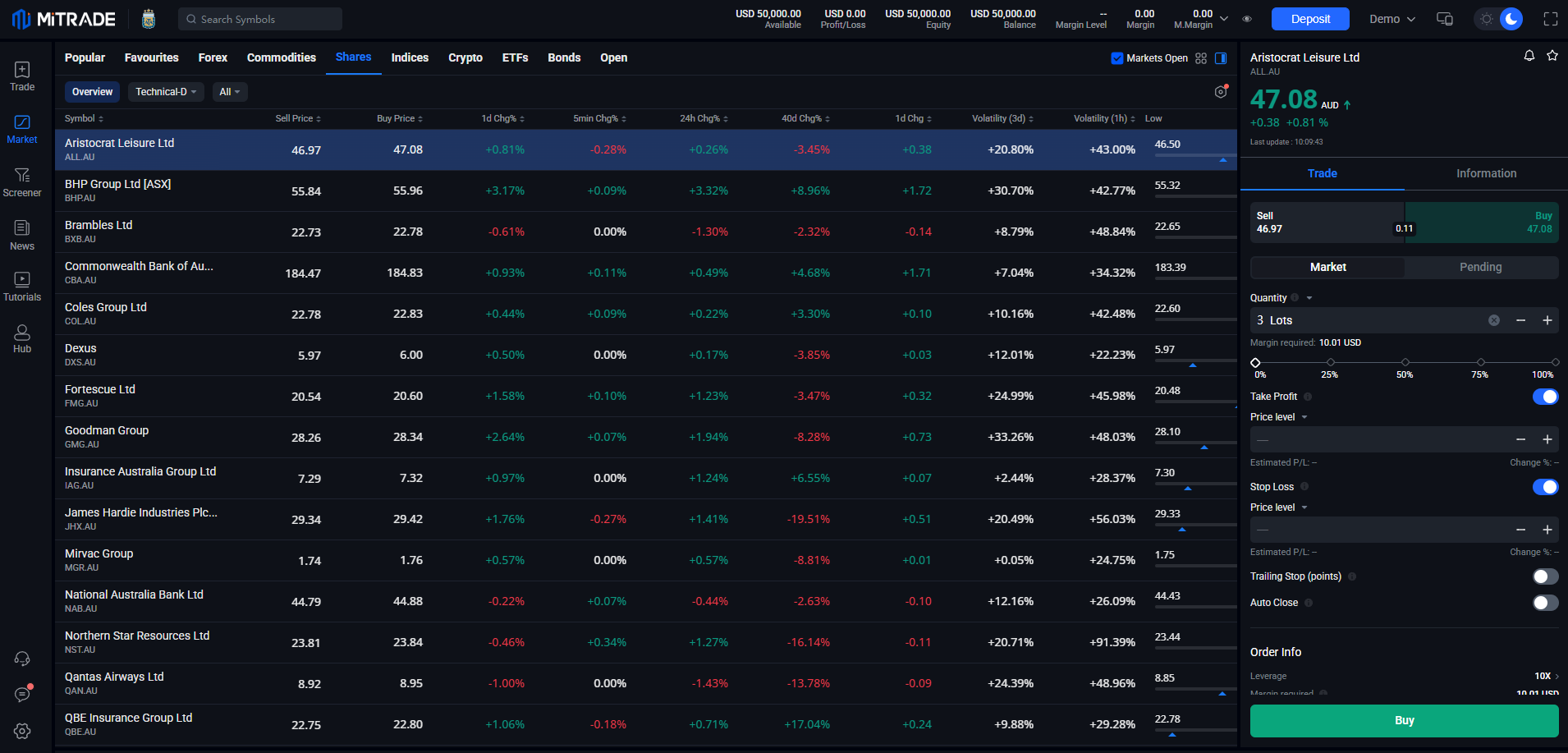
Mitrade is an Australian share trading platform offering access to both domestic and international equity instruments via contracts for difference (CFDs).
Key Features
Traders can choose between hundreds of shares offered by this provider.
Competitive spreads on share trading for both Australian and foreign instruments.
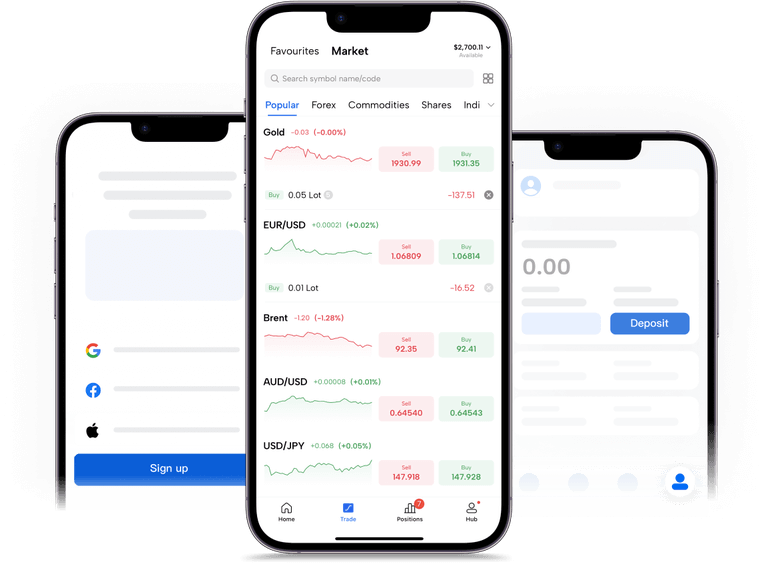
Proprietary trading platform offering advanced charting tools and indicators.
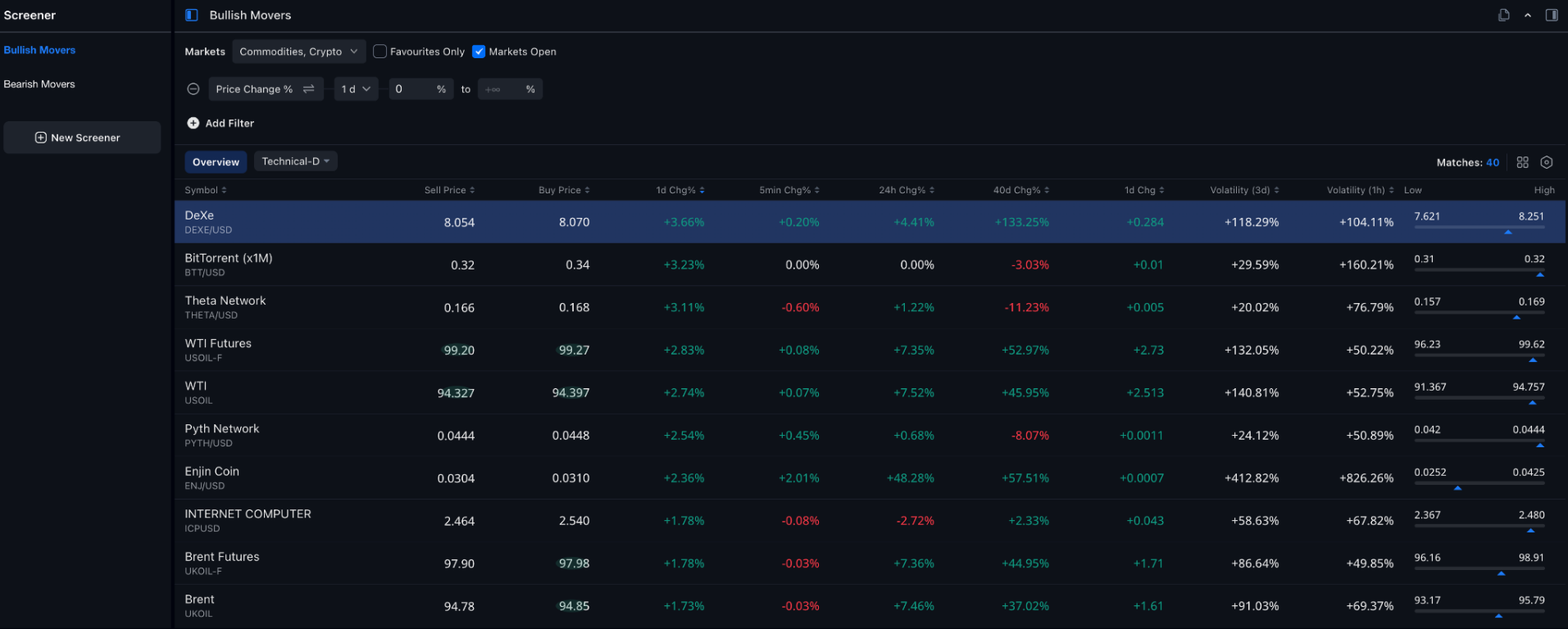
Its sophisticated share screener can be used to identify opportunities by filtering shares based on technical indicators like the RSI or MACD.
Access to a real-time news feed, top-notch educational resources, an economic calendar, and market sentiment indicators.
Fees & Commissions
Mitrade does not charge any fees on share trading. Instead, this CFD broker embeds its commission in the bid/ask spread of each instrument available within its platform.
For example, the floating bid/ask spread of Coles Group (COL.AU) currently stands at AUD $0.05.
In addition, traders are charged an overnight funding fee for keeping their positions open for more than 24 hours.
Pros & Cons
Pros
Highly regulated Australian-based share trading platform.
Proprietary trading tools featuring advanced indicators.
Ample list of available instruments to trade with.
No deposit or withdrawal fees.
Small minimum amount required to open an account.
Cons
CFDs are derivatives. Investors can’t buy shares directly with this broker.

 Enjoy simple and fast tradingFlexible leverage options available Follow real-time trading strategies

#2 - eToro
Overview
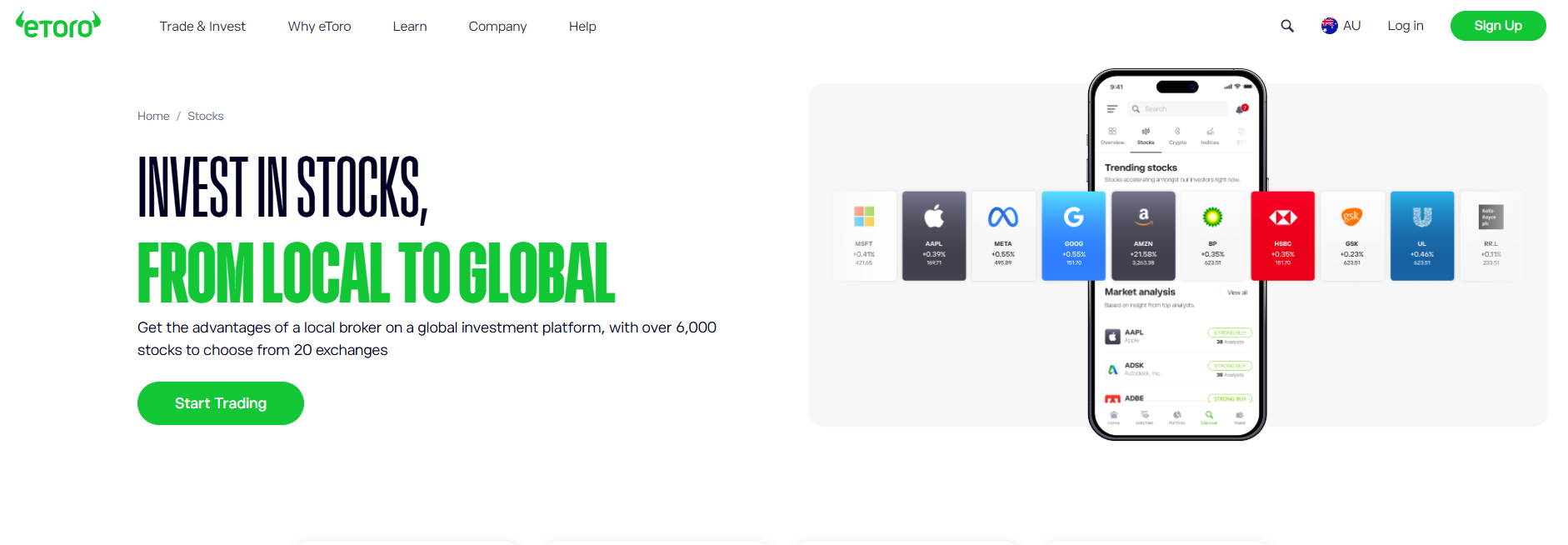
eToro is a global trading platform with a license to operate in Australia. They offer access to over 10,000 different assets, including domestic and foreign shares.
With more than 40 million users globally and affordable trading costs, this share trading platform has earned its place in the Australian market.
Key Features
Flat fees on share trading at $2 per trade.
Supports ISA accounts.
eToro offers both direct share purchases and CFDs.
Investors can buy fractions of a share.
Robust trading tools, including a top-notch copy trading program.
Fees & Commissions
Direct share trading incurs a $2 flat fee per trade for Australian users. Meanwhile, shares bought on margin (by using leverage) pay a 0.15% commission of the trade value per operation.
For CFD trading, eToro collects the spread between the bid and ask price of each share. The typical spread is 0.15% as well. Overnight fees also apply for CFD positions held open to the next day.
Pros & Cons
Pros
Global platform regulated by top-notch jurisdictions and agencies, including the Australian Securities & Investments Commission (ASIC).
Low minimum deposit of $20 required to open an account.
Flat fee for direct share purchases and 0.15% bid/ask spread on CFD trading for shares.
Attractive copy trading features.
Cons
Limited number of Australian shares available for trading.
#3 - Webull

Overview
Webull is a global share trading platform catering to more than 26 million users. This provider holds a license to operate lawfully in Australian soil as a registered Market Participant with ASX.
This broker offers access to Australian, U.S., and Hong Kong-listed shares, along with multiple other instruments. It only offers direct share trading, meaning that it primarily caters to investors, not traders.
Key Features
Ample selection of Australian and international shares.
CHESS-sponsored share trades processed and cleared by Australia’s top registrar.
Zero commissions on direct share purchases.
Auto-investing feature allows users to set automatic share purchases based on pre-defined parameters.
Premium trading tools available, including live data, access to financials, and Vega AI, a generative AI capable of summarizing key financial data from news to reports for individual shares.
Fees & Commissions
Flat fee of $1 per share trade for Australian equities or 0.03% of the trade value (whichever is higher). U.S. and Hong Kong share trades do not incurr any fee.
Pros & Cons
Pros
Top-notch trading platform for direct share purchases.
Low commission on Australian share purchases.
Long list of available U.S. and Asian shares.
Access to an AI-powered chatbot that offers insights on individual shares and the state of the market.
Cons
High minimum investment of $500 required to open an account.
#4 – CMC Invest
Overview
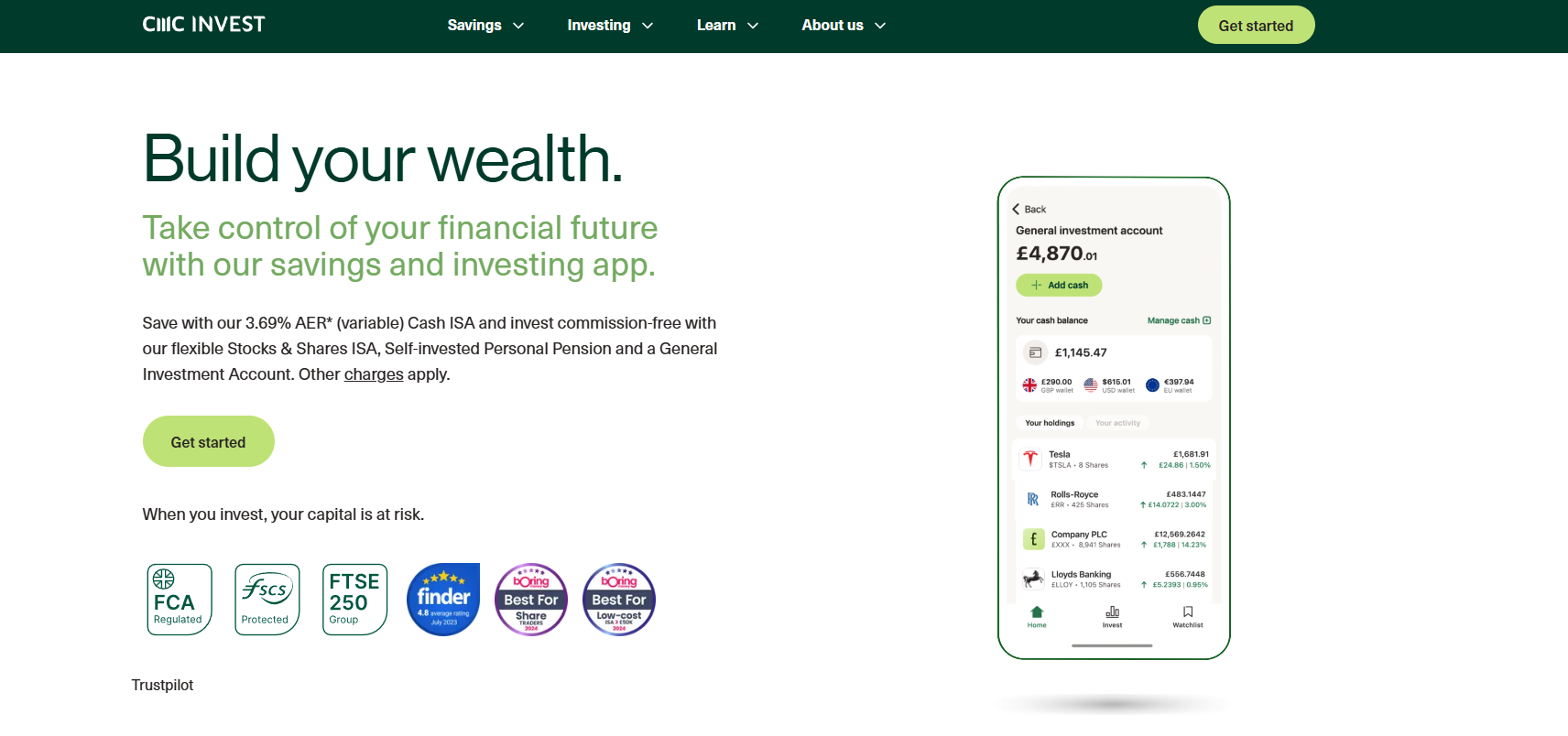
CMC Invest is the proprietary trading platform of CMC Markets, a company with a 35-year track record that serves over 1 million customers globally. Its Australian subsidiary provides access to domestic and foreign equities.
It supports both direct share purchases and CFD trading, and it is a member of both the ASX and the Sydney Stock Exchange.
Key Features
Direct share purchases of Australian and foreign shares.
Advanced proprietary trading platform for active traders.
This provider also supports MetaTrader 4 and webhooks via TradingView.
CFD trading for a long list of instruments, including stock, indexes, and more.
CHESS-sponsored trades, processed by Australia’s top-notch registrar.
Zero-fee trades for the first $1,000 on direct purchases.
Fees & Commissions
CMC Invest follows a hybrid model for direct share purchases. The first $1,000 bought are exempt from paying any fees. After that, a $11 fee applies or 0.10% of the trade value (whichever is the highest).
Meanwhile, Alpha account holders get attractive discounts on trading fees. However, only investors with over $2.5 million in assets qualify for this program.
Pros & Cons
Pros
Top-notch broker with many years of positive track record.
Long list of supported equity instruments, including Australian and foreign shares.
Advanced proprietary share trading platform and support for third-party systems like MT4 and TradingView.
CMC’s Premium “Alpha” program for advanced traders offers discounts on trading fees.
Cons
High fees on direct share purchases, starting at $11 per security per day or 0.10% of the trade value (whichever is greater).
Minimum commission of AUD $7 per every CFD trade.
#5 - Stake
Overview
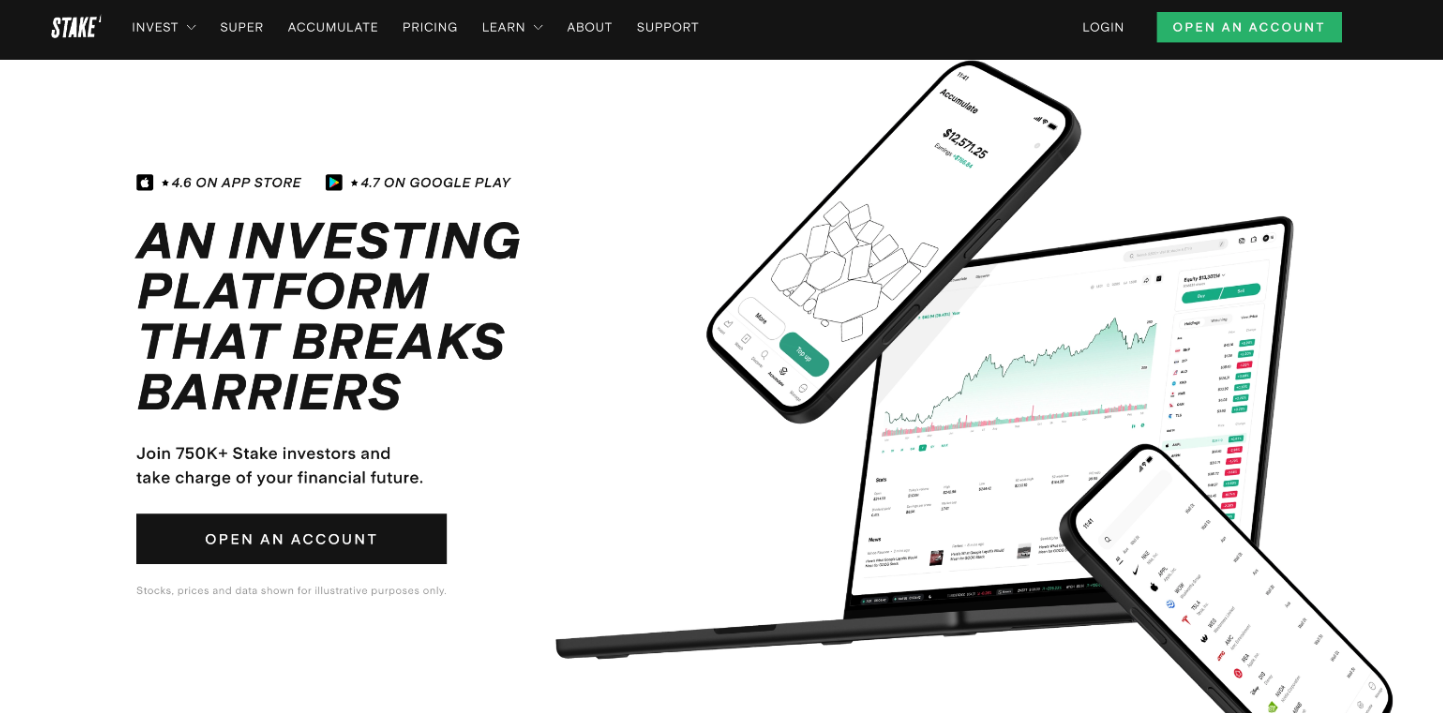
Stake is an investment platform designed for mobile devices that offers direct share purchases at a low cost. The app caters to more than 700,000 users and has received great ratings on the Google Play Store and App Store.
It offers access to more than 2,500 ASX-listed instruments, including Australian shares and exchange-traded funds (ETFs), along with access to a selected number of U.S.-listed instruments.
Key Features
This share trading platform charges A$3 per trade.
It offers CHESS-sponsored transactions for the highest transparency.
Its SUPER program allows investors to invest in shares by using a tax-advantaged account called an SMSF.
A minimum investment of $500 is required to open an account.
Fees & Commissions
Stake charges a flat fee of AUD $3 for every trade involving ASX-listed instruments like stocks or ETFs, or a 0.01% commission if the trade value exceeds AUD $30,000. Similarly, trading U.S. stocks generates a USD $3 fee or a 0.01% commission if that same threshold is exceeded.
Pros & Cons
Pros
Highly user-friendly Australian trading app focused on long-term investing.
Low fees for share trading.
Both domestic and international shares are available.
Access to tax-advantaged investment accounts via the SUPER program.
Cons
Stake is primarily an investment platform. It does not offer access to leveraged trading, margin accounts, or derivatives like CFDs or futures.
The minimum deposit to open an account is high compared to other providers.
This broker does not support desktop or web-based platforms.
#6 - Moomoo
Overview
Moomoo is a U.S.-based global share trading platform serving more than 28 million users and managing nearly $160 billion in assets for its customers.
The platform expanded to the Australian market in 2022 as trading gained popularity during and after the pandemic. Moomoo offers access to both domestic and international shares, allowing investors to execute trades at a competitive cost.
Key Features
Access to ASX, U.S., and Hong Kong-listed shares via its proprietary trading platform.
Low flat fees per trade for both shares and exchange-traded funds (ETFs).
Supports CHESS-sponsored transactions, processed by Australia’s top-notch clearing house.
Sophisticated educational and research hub with hundreds of videos and written materials.
This provider supports fractional shares, allowing investors with a small investment budget to buy fractions of a stock starting at $5.
Fees & Commissions
Moomoo charges AUD $3 per trade for ASX-listed instruments or 0.03% of the trade value (whichever is greater). Meanwhile, U.S.-listed shares can be traded for USD $0.99, while trading Hong Kong shares costs HK $3 per transaction or 0.03% of the ticket value.
Pros & Cons
Pros
Heavily regulated US-based share trading platform with a large user base.
Moomoo is licensed to operate in Australia and offers specific products for locals, like SMSF and access to ASX-listed shares.
Active traders can access the U.S. options market via this provider’s proprietary trading platform.
Competitive fees for trading Australian and foreign shares.
Access to high-quality research materials and tools.
Cons
The platform requires a minimum initial share purchase of AUD $500 to activate the account.
#7 – Interactive Brokers
Overview
Interactive Brokers is one of the largest global share trading platforms, with licenses to operate in dozens of countries and 49 years in the business. IB currently caters to more than 4.4 million users and has been available for Australians since 1997.
This broker manages over $20 billion in capital for its customers and processes more than 4 million daily trades through its proprietary IBKR trading platform.
Key Features
Access to instruments listed in more than 170 different financial markets, including Australian shares.
Investment and trading accounts can be funded by using more than 29 different currencies.
Extensive list of proprietary trading interfaces and systems catering to both beginner and advanced traders.
Top-notch trading and analysis tools accessible to all users.
Straightforward percentage-based commissions for trading ASX-listed shares.
Access to foreign shares, CFDs, and other instruments for active traders.
Fees & Commissions
For trades below AUD $300,000, Interactive Brokers charges a 0.08% commission for ASX-listed shares with a minimum of $5.5 per order. Meanwhile, Australian shares can also be traded via CFDs, incurring a 0.05% commission per trade.
Pros & Cons
Pros
Publicly-listed broker with nearly five decades and a positive track record in the financial markets.
IB provides access to both domestic and foreign shares at a competitive cost.
This provider does not require a minimum deposit to activate an account for individual investors.
The IBKR platform provides access to financial instruments listed in more than 170 different markets, including shares, CFDs, ETFs, futures, options, and more.
Superannuation Fund accounts are available with this broker.
Cons
Trading commissions are a bit higher than the average.
#8 - CommSec
Overview
CommSec is an online broker based in Australia, with more than 30 years in business and a solid footprint in this market.
It has the advantage of being a “local” alternative to investors, offering access to both domestic and foreign shares with flat trading fees starting at $5.
Key Features
CommSec offers access to more than 2,000 ASX-listed shares via any of its trading interfaces.
This provider charges a flat fee of $5 for trade values below AUD $1,000.
Foreign shares can also be traded through its platform. Currently, a long list of U.S., Canadian, European, and Asian shares can be traded with this broker.
The minimum trade required to activate an account is AUD $500.
CommSec supports tax-advantaged accounts like SMSFs and offers CHESS-sponsored trades.
Eligible users get access to borrowed funds through margin accounts to boost their portfolio’s performance.
Fees & Commissions
Trading costs for ASX-listed shares start at $5 per trade. Meanwhile, U.S. stocks can be traded for $5 per trade or a 0.12% commission (whichever is greater).
Pros & Cons
Pros
Australia-based share trading platforms with decades of experience in the local markets.
CommSec provides access to foreign shares and ETFs as well.
Tax-advantaged investment accounts are available.
Competitive flat trading fees.
Cons
The minimum deposit to activate an account is high at AUD $500.
CFD or futures trading is not available with this provider.
Trading fees for Australian shares are a bit high at AUD $5 compared to other service providers in this list.
Share Trading vs CFD Trading – What’s the Difference?
How to Start Share Trading in Australia
With so many platforms available to engage in share trading in Australia, users have ample alternatives and can easily open an account to get started.
Here’s a step-by-step guide for beginners in case you feel a bit lost.
Step 1: Choose a Licensed Broker
Users must choose an ASIC-regulated platform that fits their individual preferences. They can pick between a Full-Service Broker (for expert advice) or an Online Trading Platform (for lower fees).
These brokers should support as many markets as possible (ASX or international) and ideally offer CHESS-sponsored transactions for direct purchases.
Step 2: Open and Verify the Account
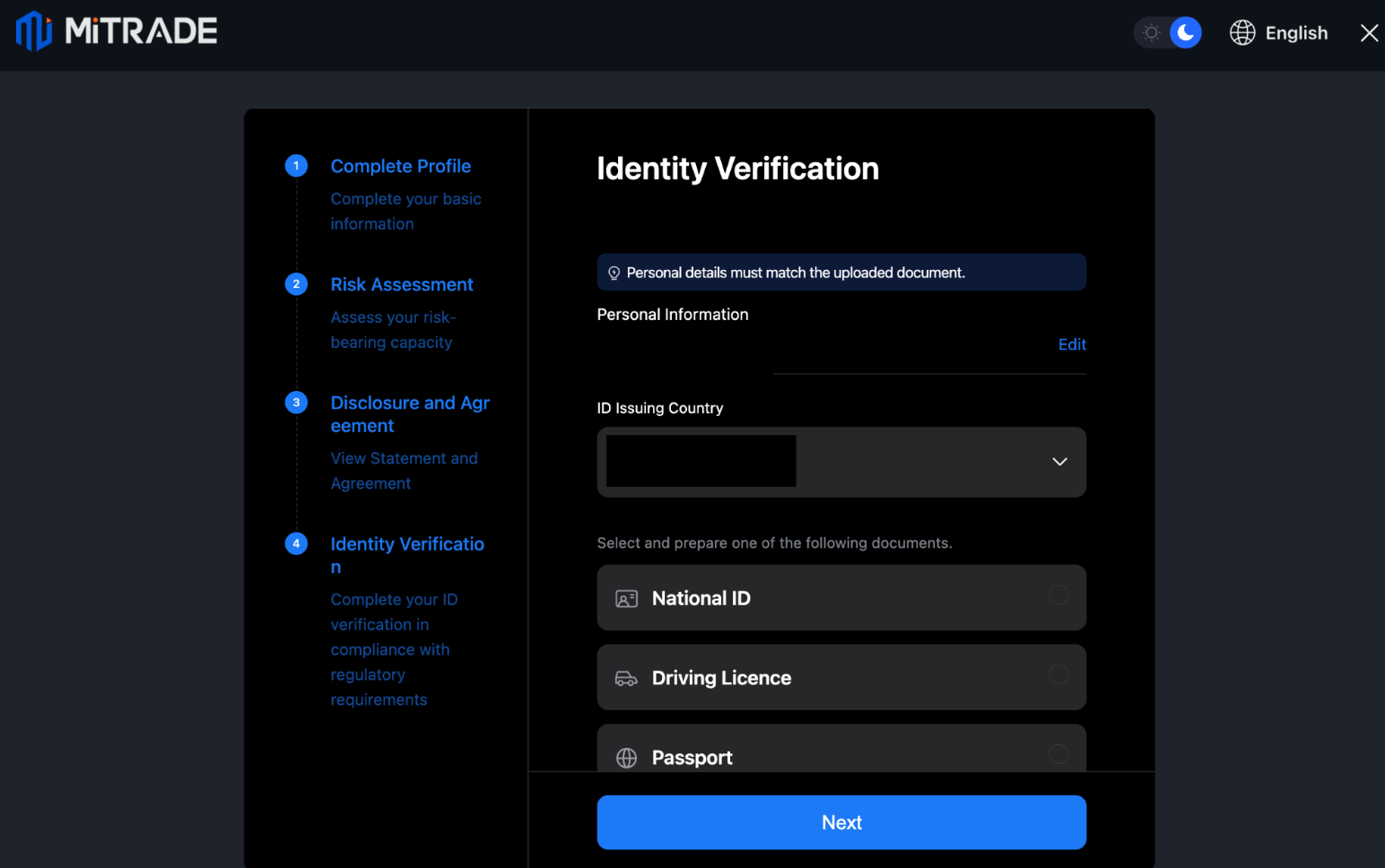
Users must complete an online application by providing their personal details, including a Tax File Number (TFN). They will have to go through a "Know Your Customer" (KYC) check by uploading a digital copy of their ID.
Step 3: Fund the Account
Transfer capital into the new trading account using methods like PayID, Osko, or Bank Transfer.
While some platforms allow users to start with very small amounts (especially for share trading), the industry-standard for a first trade on the ASX is generally AUD $500.
Step 4: Research and Place Your First Trade
Use the available analysis tools to identify and trade the most promising shares in the Australian market or overseas.
Once ready, users must enter the ticker symbol (e.g., WTC for WiseTech), indicate the number of shares they would like to buy, and select a Limit Order (to set a specific price) or a Market Order (to buy instantly) to execute the trade.
1. What is the difference between direct share trading and CFD trading in Australia?
The primary difference is ownership. When you trade direct shares, you legally own the asset and are entitled to dividends and voting rights. With CFD trading, you are speculating on price movements without owning the stock.
2. Why are CHESS-sponsored trades important for Australians?
CHESS sponsorship is a high priority for local investors as it means shares are registered in your name with a unique HIN (Holder Identification Number).
3. Can investors use their Superannuation (SMSF) accounts to trade shares on these platforms?
Yes. Several modern Australian share trading platforms now cater specifically to Self-Managed Super Funds (SMSF).
Disclaimer: The content presented above, whether from a third party or not, is considered as general advice only. CFD trading involves significant risk of loss. Past performance does not guarantee future results. This article serves informational purposes only and does not constitute financial advice. Consider your risk tolerance before trading.


